The best caffeine-free coffee for teenagers isn't competing with coffee — it's competing with a 200mg energy drink
A cup of coffee was never the real caffeine problem for teenagers. A single can of a mainstream energy drink carries 200 milligrams of caffeine — twice the American Academy of Pediatrics' full daily cap for a 13-to-18-year-old. Here's an honest, non-preachy look at the caffeine-free options that actually compete with what teens are reaching for, including one Teeccino line where the caffeine-free name doesn't mean what it sounds like.

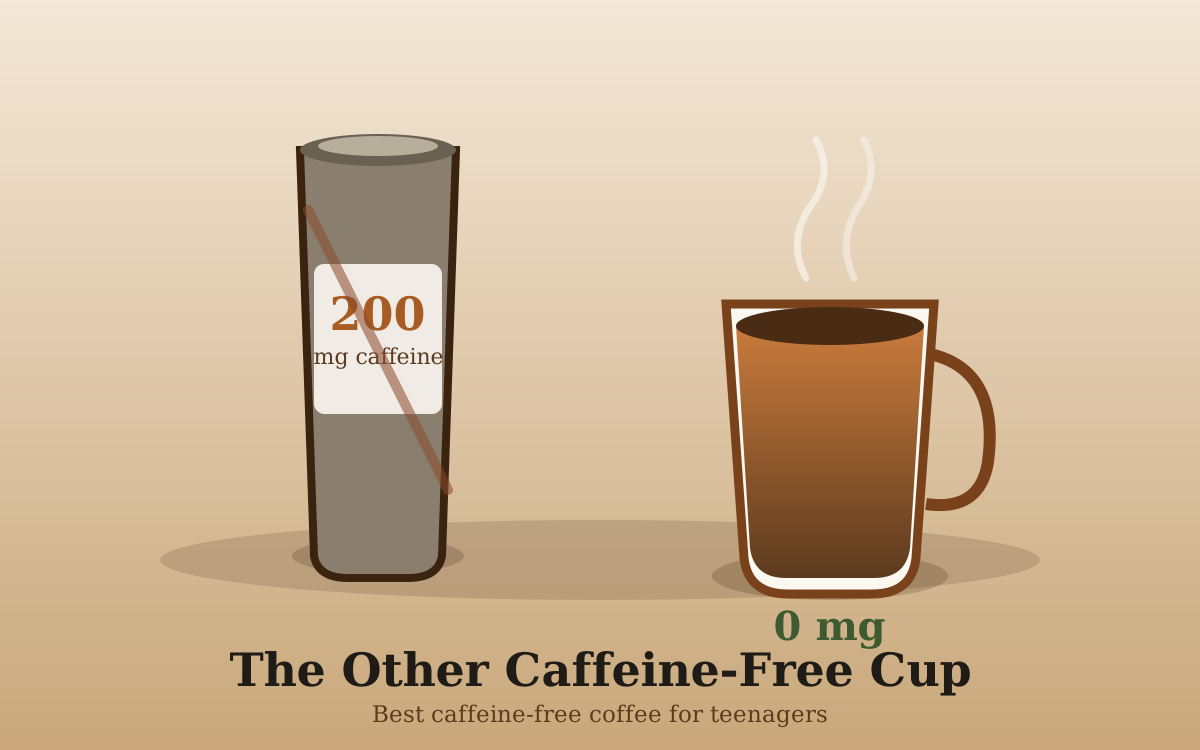
Ask most parents what worries them about their teenager and caffeine, and they picture a coffee habit starting too early — a 16-year-old ordering a latte, maybe graduating to a second cup. That’s not really where the risk sits anymore. It sits in a cold, brightly labeled can that costs about the same as a latte, tastes like candy, and can carry twice a teenager’s entire recommended daily caffeine allowance in one serving. Our guide to caffeine-free coffee for kids and families already covers the babyccino-and-carob end of this question for younger kids. Teenagers are a different, more independent audience — they’re buying their own drinks, they want something that doesn’t feel like a consolation prize, and the thing they’re actually reaching for most days isn’t coffee at all.
The real competition isn’t a latte
Here’s the reframe this piece is built around: if you’re looking for a caffeine-free coffee for a teenager, the honest comparison point is an energy drink or a caffeine pouch, not a cup of drip coffee. Yale Medicine reports that nearly one in four American teenagers consume caffeine most or all days of the week (opens in a new tab), much of it through energy drinks and, increasingly, caffeine pouches sold in tins designed to look like mints — no age gate required in most places. That’s the actual shelf a caffeine-free alternative needs to compete with: cold, sweet, portable, and marketed directly at teenagers rather than at their parents.
That reframing matters because it changes what “good caffeine-free option” even means for this audience. A warm, quiet mug that works beautifully for a tired parent or a curious eight-year-old can miss the mark completely for a 16-year-old who wants something cold, a little fizzy, and grabbable on the way out the door.
What the actual pediatric guidance says
Worth stating plainly before the recommendations: the American Academy of Child and Adolescent Psychiatry’s summary of pediatric guidance (opens in a new tab) caps daily caffeine at 100 milligrams for ages 12 to 18 and states there is “no proven safe dose of caffeine for children” below that. The same guidance lists insomnia, jumpiness, anxiety, irritability, and elevated stress hormones as the well-documented short-term effects, plus a caffeine withdrawal pattern of its own — tiredness, headaches, mood changes — when a regular habit stops abruptly.
Energy drinks get called out specifically, and not because of some special ingredient. It’s the dose. Texas Health Resources cites a single can of Prime Energy at 200 milligrams of caffeine and a 12-ounce Alani Nu Energy at the same 200 milligrams (opens in a new tab) — for comparison, a standard 12-ounce soda runs about 35 milligrams. One can of a mainstream energy drink is already double a teenager’s entire day’s allowance, consumed in the time it takes to finish a can. The same source cites a 2023 CDC study finding energy drinks involved in more than 1,400 emergency department visits among adolescents in a single year — not because caffeine is exotic, but because the doses involved are large and the drinks are consumed quickly, cold, and often on top of whatever else that day already included.
There’s a second wrinkle specific to teenagers that doesn’t apply the same way to adults: the adolescent body clock runs on a naturally delayed schedule (opens in a new tab), so a dose that would clear an adult’s system by bedtime pushes a teenager’s bedtime later still, on top of a sleep schedule that’s already fighting early school start times. Caffeine’s half-life is roughly five to six hours regardless of age — see our half-life and afternoon-crash piece for the adult version of this math — so an energy drink after school is still meaningfully active at 10pm.
None of this is an argument that a teenager who has a cup of coffee now and then is in danger. It’s the argument for why “caffeine-free coffee” is worth having in the house as a real, appealing option — something that delivers the ritual, the flavor, and in some cases the cold-and-sweet format, without the dose that guidance keeps flagging.
What we’re ranking on
Four things, specific to this audience rather than to “how close does it taste to coffee”:
- Genuinely zero caffeine — checked against the product’s own current label, not assumed from the brand or category.
- Doesn’t read as a kiddie drink. A teenager who wants independence isn’t going to reach for a babyccino. The bar here is “feels like an upgrade,” not “feels like a consolation.”
- Fits an actual teen routine — quick to make solo before school, or cold and portable for later, rather than requiring a slow pour-over nobody has time for on a school morning.
- Honest about gluten and allergens, because a teenager managing celiac disease or a tree-nut allergy is often doing their own label-reading by this age, without a parent standing over the pantry.
1. A quick soluble instant — the before-school option
For the five minutes before the bus, an instant is the only realistic format. Dandy Blend, a spray-dried water extract of roasted dandelion, chicory, barley and rye, dissolves directly into hot water with nothing left undissolved in the cup — genuinely fast, no equipment beyond a kettle. The honest catch: it contains barley and rye, so it’s not an option for a gluten-avoiding teen.
Teeccino’s Instant Dandelion Herbal Coffee is built differently — a microground blend of roasted carob, dates, and dandelion alongside a separate chicory extract — and is caffeine-free. It isn’t labeled certified gluten-free in our records, but none of its stated ingredients are grains, which is a meaningfully different starting point than a barley-based instant. If gluten is a hard requirement, check the current label yourself rather than taking that as a guarantee. (teeccino.com) (opens in a new tab)
2. A brewed herbal roast — the after-school ritual
For a teenager who wants the slower version — brewing a pot, the smell filling the kitchen, something that feels adult rather than kid-adjacent — a roasted chicory-and-grain blend like Teeccino’s French Roast brews in a regular drip machine or French press exactly like coffee does. It’s caffeine-free and gives the closest flavor match to actual coffee of anything in this piece.
Two honest flags specific to this audience: French Roast is built on chicory, carob, barley, dates, and almonds, which means it contains both gluten (barley) and a tree-nut allergen (almonds) — worth knowing before handing a jar to a teenager who manages either condition themselves. It’s one caffeine-free option among several roasted blends on the market, not the only one, and the same caveats apply to any barley-based herbal coffee, not just this brand.
3. Caffeine-free “mushroom coffee” — read the second word on the label
This is the single most important caution in this piece, and it applies directly to a teen audience because mushroom coffee has real cachet in that age group right now — it reads as more grown-up and more “wellness” than a plain herbal roast, closer in spirit to the functional-drink marketing that sells energy drinks in the first place.
The catch: caffeine-free is not the default setting for a “mushroom coffee,” even within a single product line. We covered this in detail in which mushroom coffees are actually caffeine-free, and it applies squarely here. Teeccino’s own Miraculous Mushrooms line has three products, and only one of them is caffeine-free:
- Adapt & Protect — labeled caffeine-free, built from carob, chicory, and ramón seed plus mushroom extracts. Worth noting for a nut-allergic teen: the label states the product is produced on machinery that also processes almonds.
- Cacao + 5 — contains 5 milligrams of caffeine from cacao, by its own label, despite sharing the “Miraculous Mushrooms” family name with the caffeine-free product above it.
- Matcha Latte — contains real caffeine from matcha, the most of the three, though there’s no published lab-confirmed figure for exactly how much.
Rasa Original, a separate adaptogen-focused herbal coffee built on chaga, eleuthero, and reishi rather than chicory, is also caffeine-free and is a reasonable alternative if the specific flavor profile of a Teeccino blend isn’t the draw. Either way, the rule for this whole category is the same: a family name on the front of the package tells you almost nothing about caffeine content. Read the individual product’s own label every time, and don’t let a teenager assume “it’s the caffeine-free-sounding one on the shelf” is the same as checking.
4. Cold, sweet, and portable — the actual energy-drink shape
If the goal is genuinely replacing the format of an energy drink — cold, quick, a little sweet — a brewed herbal coffee poured over ice and a splash of milk gets closer than it sounds, and our ready-to-drink caffeine-free roundup covers the canned and bottled options that skip the brewing step entirely. For a homemade version with more sweetness up front, the sweetest caffeine-free alternatives ranking is the place to start — fig and carob-forward blends read noticeably sweeter than a straight chicory brew without needing added sugar, which matters if the whole point is competing with something that tastes like candy.
The direct swap: what’s in the can vs. what’s in the mug
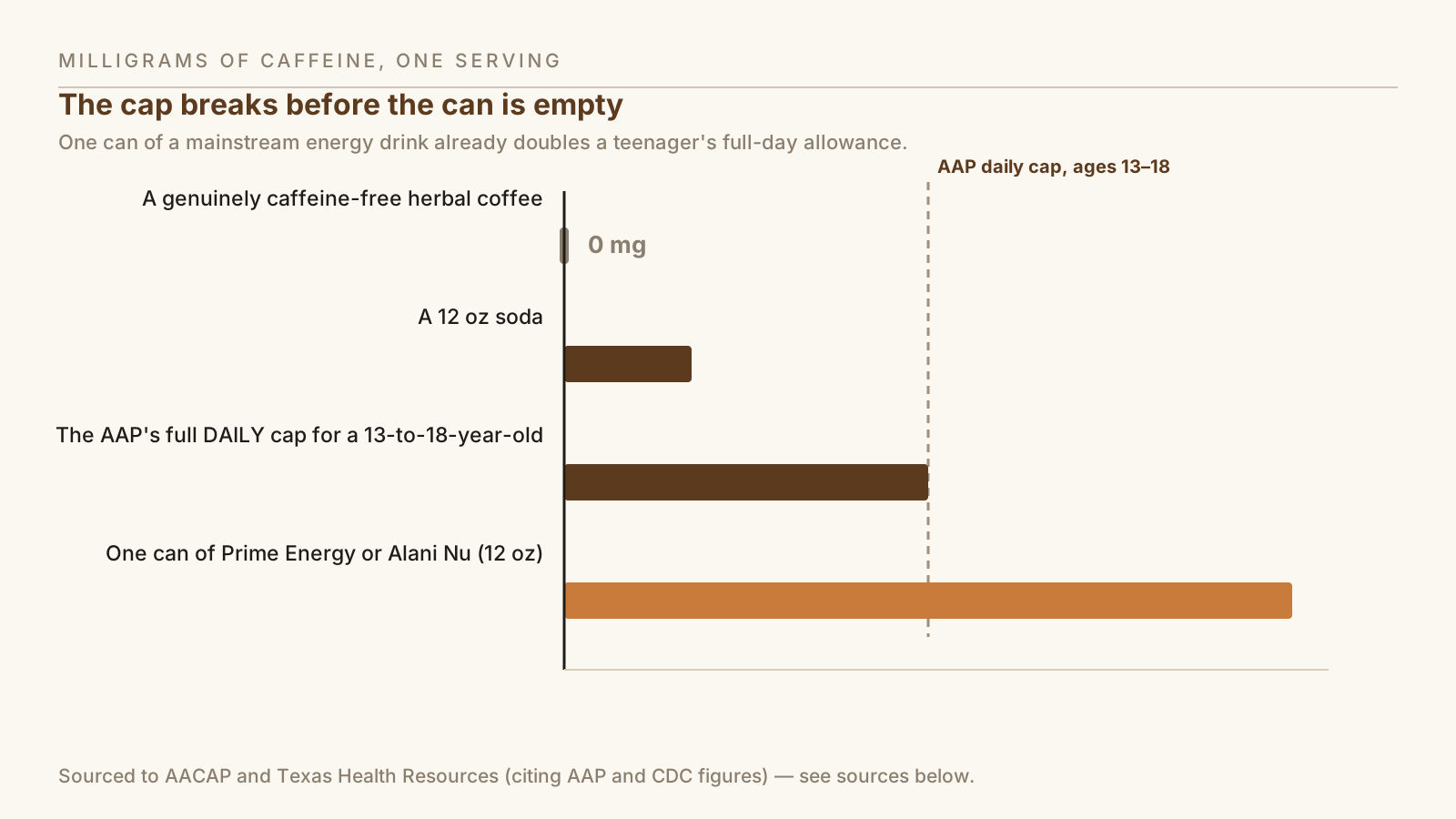
Laid out this way, the actual scale of the gap is easy to lose in conversation and hard to lose looking at it directly: a genuinely caffeine-free herbal coffee sits at zero, a soda sits well under the daily cap, and a single mainstream energy drink sits at double it. That’s the honest case for keeping a caffeine-free option genuinely appealing in the house — not as a replacement for an occasional real cup of coffee, but as the thing that’s actually competitive with the can.
Does it help before a game or a test?
Two scenarios come up constantly with this audience, and the honest answer to both is more modest than the marketing suggests.
Before practice or a game: our deeper dive on caffeine and exercise performance found the evidence for a real, measurable performance edge is genuinely solid — but it’s strongest in people who don’t already use caffeine regularly. A teenager already drinking energy drinks most days has usually built some tolerance, which blunts exactly the boost a pre-game can is sold on. Add the sleep cost from a delayed adolescent bedtime, and the honest trade often nets out worse than it looks on the label.
Before a late study session: the same half-life math applies, just with a different deadline. A dose taken to power through evening homework is often still active well past a normal bedtime, and caffeine consistently makes sleep lighter and harder to drop back into (opens in a new tab) — which is a bad trade the night before a test that actually depends on rested memory the next morning, not on how alert 11pm felt.
None of this is a case against caffeine existing in a teenager’s life in moderation. It’s the case for treating a warm, genuinely caffeine-free cup as a real option for the routine moments — the desk, the practice-day breakfast, the evening study session — rather than treating “caffeine-free” as something only little kids need.
The gluten catch, for a teen managing their own diet
The same rule that applies to a kids’ pantry applies here, just with higher stakes because a teenager is often doing the label-reading alone: roots, pods, and seeds are naturally gluten-free; grains are not. Chicory, dandelion, and carob fall in the first group. Barley, rye, and malt — the backbone of Pero, Dandy Blend, and Teeccino’s French Roast — fall in the second, and a blend can quietly carry gluten even when its headline ingredient (chicory, say) is fine on its own. For a teenager with celiac disease managing their own choices at school or a friend’s house, that distinction is the whole decision, not a footnote. Read the label every time, and default to a straight chicory or carob product if there’s any doubt.
What to grab, by scenario
- Five minutes before the bus: an instant — Dandy Blend if gluten isn’t a concern, Teeccino’s Instant Dandelion if it is (check the current label either way).
- The after-school ritual, brewed properly: a roasted herbal coffee like Teeccino French Roast — caffeine-free, but flag the barley and almonds first.
- Wants the “wellness” mushroom-coffee format: Adapt & Protect or Rasa Original — and only those two from a mushroom line, never assumed from the family name.
- Wants it cold and a little sweet, like the can it’s replacing: a fig- or carob-forward iced brew, or a ready-to-drink option from our canned-and-bottled roundup.
- Managing celiac disease independently: stick to straight chicory, dandelion, or carob — skip anything grain-based, including most instants.
And the bottom line underneath every row above: this is a taste-and-format guide, not medical advice, and it isn’t a case that caffeine is forbidden territory for a healthy teenager in reasonable amounts. It’s a case that the genuinely caffeine-free options in this category have gotten good enough — in flavor, in format, in the “this feels like mine” factor — to be a real answer for the moments an energy drink currently wins by default.
Sources & further reading
- Caffeine and Children (opens in a new tab) — American Academy of Child and Adolescent Psychiatry
- Wired and Tired: How Caffeine Is Reshaping Teen Sleep (opens in a new tab) — Yale Medicine
- What Parents Need to Know About Caffeine, Energy Drinks, and Trendy Beverages (opens in a new tab) — Texas Health Resources
Reader conversation (4)
We read every response. Selected reader notes below.
The Miraculous Mushrooms breakdown is exactly the kind of thing I needed spelled out. I genuinely bought the Cacao + 5 for my son assuming “Miraculous Mushrooms” meant the same caffeine-free thing as the bag we already had. Reading the actual label after this article, yep, right there in small print. Lesson learned.
The 200mg-in-one-can chart is the thing I’m showing my 15-year-old tonight, not because I think one Alani Nu is going to hurt him but because he had no idea it was double what his own guidelines say for a whole day. He assumed it was “about the same as coffee.”
That’s the reaction we hoped for honestly — this isn’t meant as a scare piece, just a real side-by-side. A lot of the marketing genuinely does read as “basically a soda,” and the numbers say otherwise.
Appreciate that this didn’t just say “gluten-free roots good, grains bad” and stop there — actually naming which specific Teeccino products contain barley vs. which don’t is the part most sites skip. My daughter manages her own celiac diet now that she’s in high school and reads every label herself.
Honest question: does the sleep-disruption argument actually hold up for a 4pm energy drink before evening football training, or is that more of a late-night-studying problem? The half-life math in the article reads like it applies either way but I wasn’t sure.
Have something to add? Email us and we may include it in a future update.