The best caffeine-free coffee for kids and families: what to actually pour them
Kids shouldn't have caffeine — but they still want a warm mug that looks like yours. Here's our honest guide to the genuinely caffeine-free 'coffees' for kids and families: the babyccino, carob, roasted chicory, and grain blends, ranked by how kid-friendly they really are, plus the gluten catch and the pediatrician hedge that matters.

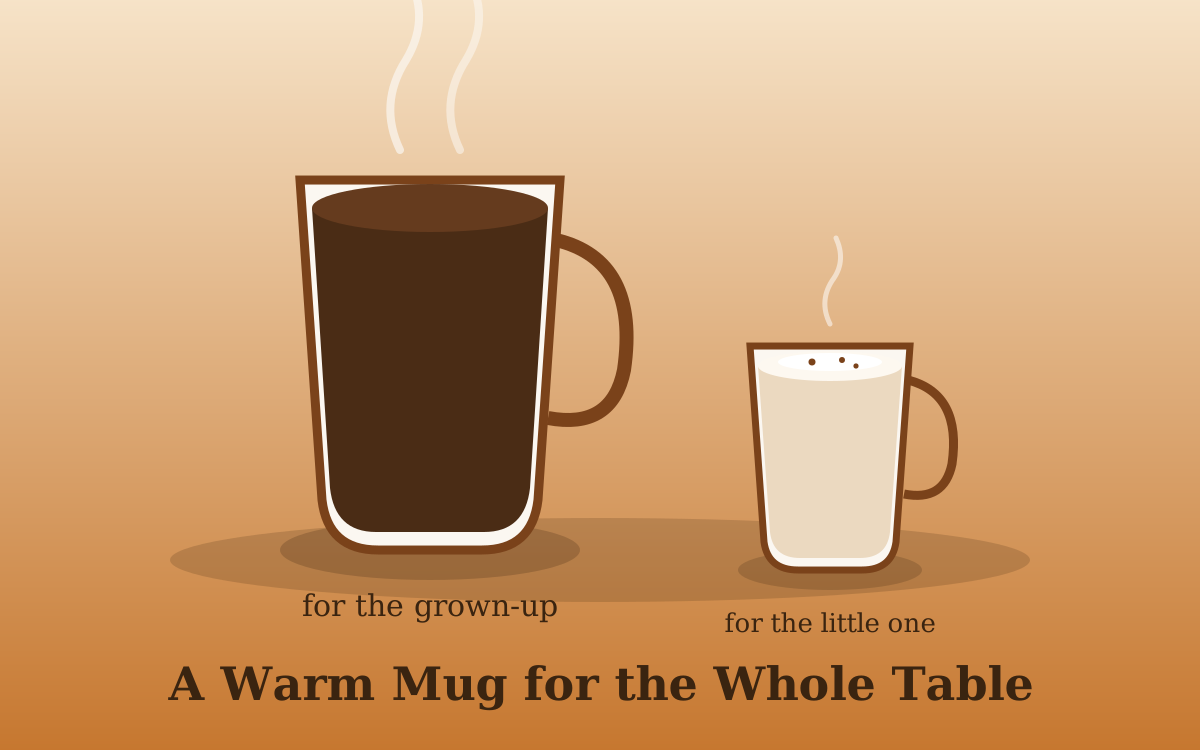
It usually starts at a café table. You’ve got a warm mug in front of you, and a small person across the table decides they would very much like one too — a real one, like yours, with the foam and the grown-up cup. Or it starts at home on a slow Sunday, when the smell of your morning drink is apparently the most interesting thing in the house and a four-year-old is negotiating hard for a taste.
We get some version of this question a lot: what’s a caffeine-free coffee I can actually give my kid? It’s a good question with a slightly awkward first answer, so let’s get that part out of the way honestly, and then get to the genuinely good options — because there are some, and the best of them are simpler than you’d think.
First, the honest part: kids and caffeine
Before the fun part, the thing a responsible roundup has to say plainly: kids and caffeine don’t mix, and no amount of café charm changes that. The prevailing pediatric guidance is that children 12 and under should have no caffeine at all, and that teenagers keep it under roughly 100 milligrams a day — with the American Academy of Pediatrics framing avoiding caffeine as the best choice for all kids (HealthyChildren.org) (opens in a new tab). The concerns are the familiar ones — sleep disruption, jitteriness, effects on a still-developing system — just amplified in a smaller body.
So this isn’t a guide to “kid-friendly coffee.” It’s the opposite: a guide to the warm, dark, grown-up-looking mug that has none of the stimulant in it. The whole point is the ritual without the caffeine. Which, honestly, is the same thing a lot of adults come to this site looking for — we’ve just got a stricter reason to get it right for a five-year-old.
One trap to name up front, because it’s an easy one to fall into: caffeine-free and coffee-adjacent are not the same as actually caffeine-free. Plenty of “mushroom coffees” are built on real coffee, decaf still contains a little caffeine, and some grocery blends sneak coffee into the mix. For a kid, “genuinely zero” is the bar. When in doubt, read the label, and lean on the naturally caffeine-free ingredients below.
What we’re actually ranking
We judged these picks on three kid-specific things, not on “how much does it taste like coffee”:
- Genuinely zero caffeine — non-negotiable for this audience.
- Gentle on a small system — mild flavor, easy on the stomach, low or no added sugar.
- Café-ritual factor — does it deliver the “I have a drink like the grown-ups” feeling that started this whole thing?
Rated on that, here’s the field, friendliest first. If you want the fuller flavor breakdown of any single ingredient, our sweetest caffeine-free alternatives ranking and the grocery-store roundup go deeper on taste and where to buy.
1. The babyccino — the no-brew default
The single best answer for most little kids isn’t a coffee substitute at all. It’s a babyccino: steamed or frothed warm milk, usually finished with a dusting of cocoa or cinnamon, with no coffee or espresso in it whatsoever (Coffee Friend) (opens in a new tab). It’s been quietly taking over café kids’ menus for years, and for good reason — it nails the café ritual (foam, a real cup, a little cocoa on top) with nothing a child shouldn’t have.
Most families introduce it from around a year old, once cow’s milk is appropriate for the child. At home it’s a thirty-second drink: warm some milk, froth it if you’ve got a frother or even a whisk and a jar, and dust the top. That’s it. If your kid mostly wants to do what you’re doing, the babyccino is the whole solution and you can stop reading. Everything below is for older kids, or for parents who want an actual roasted flavor in the cup.
2. Carob — the kid-friendliest roast
When you do want a genuine roasted, coffee-ish flavor, carob is where we’d start for children. Carob is naturally sweet, naturally caffeine-free, and — unusually — also free of theobromine, the other mild stimulant that rides along in cocoa and chocolate. That combination is exactly why carob has long been suggested as a chocolate stand-in for kids and pets, and it’s what makes it our friendliest roasted pick here.
In practice, carob shows up two ways: as a roasted powder you stir into warm milk (basically a caffeine-free hot-cocoa move), or as part of a brewed herbal-coffee blend. Both give you toffee-and-cocoa warmth without a sharp or bitter edge. If you want the full story on how it differs from chocolate, our carob vs cocoa piece walks through the swap, and what is carob coffee covers the ingredient itself. The short version, and the reason it wins for a kid audience: it’s the one dark, sweet flavor in this category with nothing stimulating in it — see our caffeine-in-chocolate breakdown for why that matters more than people expect.
3. Roasted chicory — closest to real coffee (one caveat)
Roasted chicory root is the substitute that tastes most like actual coffee — dark, caramel-edged, with a pleasant roast bitterness — and it’s fully caffeine-free. For a family where an older kid genuinely wants the coffee flavor, weak chicory cut with lots of milk is a reasonable “big-kid” mug.
Here’s the honest caveat, though, and it’s why chicory sits below carob for younger children: chicory root is rich in inulin, a prebiotic fiber. Inulin is good for a lot of grown-up guts, but it can also cause gas, bloating, or a mild laxative effect — especially in someone who isn’t used to it — and some sources specifically advise caution for young children (Medical News Today) (opens in a new tab). We dig into that fiber in chicory coffee and IBS. For kids, the sensible approach is: older children only, keep it weak, dilute heavily, start with a very small amount, and clear it with your pediatrician first — particularly for a toddler or a sensitive stomach. If you want to try the format, how to make a chicory latte scales down easily to a mostly-milk version.
4. Roasted-grain blends — malty and mild
The old-school category — think Pero, Cafix, Postum-style roasted-grain drinks — is mild, malty, and caffeine-free, which makes it an easy, unintimidating flavor for kids. These blends are built from roasted grains, chicory, and sometimes beet or fig, and they dissolve into warm milk without much fuss.
The one thing that matters more for a kid audience than an adult one: most of these contain barley (and sometimes rye or malt), which means gluten. For a child with celiac disease or a gluten sensitivity, a “just grains” drink is not automatically safe — barley and rye are gluten grains, full stop (Celiac Disease Foundation) (opens in a new tab). More on that below, because it’s the single most important label check in this whole category. If gluten isn’t a concern in your house, a weak grain blend heavy on milk is a gentle, wallet-friendly family option — see what is barley coffee (orzo) for how the grain roast actually tastes.
Among brewed herbal-coffee blends, Teeccino is one caffeine-free option a family might already have on the shelf, alongside plain roasted chicory, Pero, or Cafix. Honest framing, since this is a kids’ guide: these are adult roasts, not children’s products — brew them weak and cut heavily with milk for a young palate, lean toward the carob-forward blends for gentler flavor, and remember that the barley-based ones carry gluten while pure chicory or carob don’t. Used that way, one pot can make both the grown-up mug and a milky, mostly-milk “kid coffee.” (teeccino.com) (opens in a new tab)
The five-minute “kid coffee” you build at home
Here’s the not-so-secret truth of this whole category: most “kids’ coffee” is just warm milk plus a caffeine-free flavor and a little theater. You don’t need a special product. A reliable home build:
- Warm the milk (dairy or a kid-appropriate alternative) — this is 80% of the drink.
- Add a caffeine-free flavor: a teaspoon of carob powder, or a small splash of weak, well-diluted brewed chicory or grain blend, or just a dusting of cinnamon.
- Froth it with a handheld frother, a whisk, or a lidded jar you shake — foam is what makes it feel grown-up.
- Dust the top with a little cocoa or cinnamon and serve it in a real (unbreakable) mug.
Keep added sugar minimal — the carob and the warm milk are already sweet — and you’ve got a café-quality moment for pennies, with zero caffeine.
The gluten catch, for a kid audience
This deserves its own flag because it trips up even careful parents. The naturally caffeine-free ingredients split cleanly:
- Gluten-free on their own: carob (a legume pod), chicory (a root), dandelion (a root). Plain milk, cocoa, cinnamon.
- Not gluten-free: barley, rye, malt — which are the backbone of most roasted-grain blends.
The durable rule is roots, pods, and seeds are gluten-free; grains are not — and a blend can quietly reintroduce gluten even when its headline ingredient is safe. For a child with celiac disease, that’s not a footnote, it’s the whole decision. Read the ingredient list every time, and when in doubt, stick to a straight carob or pure-chicory drink.
Sweet vs sweetened: don’t undo the point
One reason parents look for a coffee alternative is to sidestep the sugar bomb that a lot of “kids’ café drinks” turn into. It’s easy to accidentally rebuild that. Carob and warm milk bring their own gentle sweetness, so start with none added and taste before reaching for the sugar. Watch pre-mixed powders and syrups, too — a drink can be naturally sweet or it can be sweetened, and only one of those is doing your kid a favor. The goal is a warm, comforting mug, not dessert in a cup.
What to pour, by age and by goal
- Toddler / young child who just wants “a drink like yours”: a babyccino — frothed warm milk, cocoa or cinnamon dust, no coffee substitute needed.
- Younger child who wants a chocolatey warm cup: carob stirred into warm milk — sweet, caffeine-free, theobromine-free, gentle.
- Older kid who genuinely wants the coffee taste: weak roasted chicory cut heavily with milk — start tiny, watch for tummy upset, and check with your pediatrician first.
- A gentle, familiar family drink (no gluten concern): a weak roasted-grain blend with lots of milk.
- A house with celiac or gluten sensitivity: skip the grain blends; stick with carob, pure chicory, or a plain babyccino.
And the honest bottom line for every row above: this is a taste-and-format guide, not medical advice. Kids’ bodies and sensitivities vary, so anything beyond “warm milk and a nice flavor” — especially chicory’s fiber or a new ingredient for a toddler — is a conversation for your pediatrician. Get the caffeine to genuinely zero, keep the sugar low, hand them a real mug with some foam on top, and you’ve given a kid the best part of the ritual with none of the part they don’t need.
Sources & further reading
- The Effects of Caffeine on Kids: A Parent's Guide — AAP guidance that children should avoid caffeine (opens in a new tab) — HealthyChildren.org (American Academy of Pediatrics)
- Babyccino: the coffee-free trend on kids' menus — steamed milk, no coffee (opens in a new tab) — Coffee Friend
- Chicory coffee: benefits and side effects — inulin, gas and bloating (opens in a new tab) — Medical News Today
- What is gluten? — barley and rye are not gluten-free grains (opens in a new tab) — Celiac Disease Foundation
Reader conversation (5)
We read every response. Selected reader notes below.
The babyccino line was a genuine relief to read. My daughter has thrown a fit every Saturday at the coffee shop because she wants “the big cup,” and I kept overthinking whether I needed some special caffeine-free product. Turns out a jar of milk shaken into foam and a cocoa dusting is the whole thing. She thinks she’s very fancy now.
That’s exactly the reveal we wanted people to have — 80% of it is warm milk and a little theater, and kids are completely sold by the foam. Glad the Saturday standoff is over.
Appreciate that you led with the “kids shouldn’t have caffeine, full stop” part instead of pretending this is kid coffee. A lot of the mushroom-coffee stuff my brother-in-law buys is built on actual coffee and he had no idea. The “genuinely zero, read the label” bar is the right one for a kid.
Learned the carob-vs-cocoa thing the hard way. I’d been making my son a “special hot chocolate” with cocoa on weekend mornings and could not figure out why bedtime got so rough after. The theobromine point clicked instantly. Switched to carob powder in warm milk and it’s the same happy ritual without the wired evening.
Theobromine is the one almost nobody accounts for — it’s milder than caffeine but it’s still a stimulant, and a small body feels it. Carob gives you the toffee-cocoa flavor with neither, which is exactly why it’s our friendliest pick for kids. Smart catch.
Thank you for the honest chicory caveat. My eldest (9) loves the roasty flavour and wanted “proper” chicory coffee, but the first time I made it too strong and, well, the inulin did exactly what you described. Weak and mostly milk is totally fine for her now. Good to know it wasn’t just us.
The gluten flag is the part I wish more of these articles took seriously. My youngest is celiac and every “it’s just roasted grains, so it’s healthy” blend is off the table for us. The roots-pods-seeds-are-safe, grains-are-not rule is the cleanest way I’ve seen it put. We stick to carob and it’s been perfect.
For a celiac household that ingredient list is the whole decision, not a footnote — so we wanted it stated as plainly as possible. Carob and pure chicory are the safe defaults; it’s only the grain blends (and fig coffees that lean on barley) that reintroduce gluten. Glad the rule of thumb helps.
Have something to add? Email us and we may include it in a future update.