Sweetest caffeine-free coffee alternatives, ranked: fig vs carob vs ramón vs chicory
If you want the dark-roast shape of coffee without reaching for the sugar, some caffeine-free alternatives are naturally sweeter than others. Here's our honest ranking of the sweetest roasted substitutes — fig, carob, ramón, chicory, and barley — by how much sweetness they bring on their own, plus the gluten catch and the 'sweet vs sweetened' trap worth knowing.

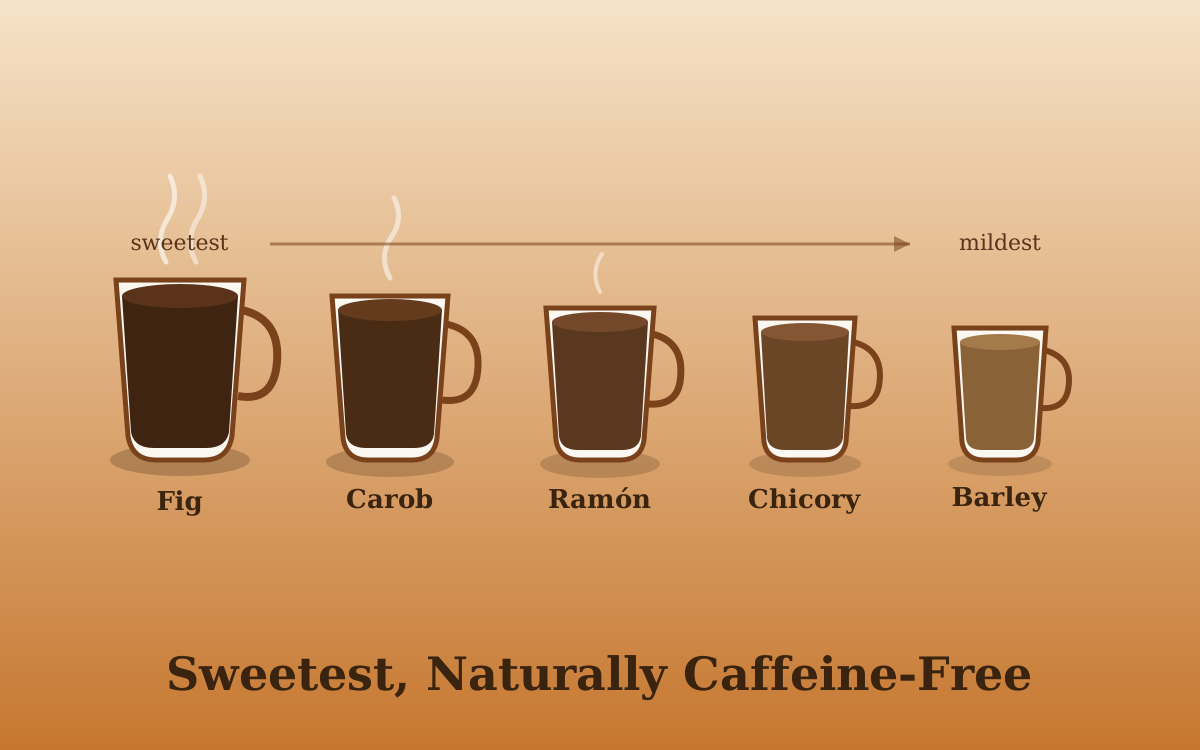
There’s a question hiding inside a lot of the emails we get, and it isn’t usually asked directly: which coffee alternative tastes good without me having to sweeten it? People leaving coffee often want to leave the sugar habit too — the two spoonfuls that quietly rode along in every cup — and a substitute that arrives already tasting round and sweet makes that a lot easier. Sweetness, it turns out, is one of the most useful ways to sort the caffeine-free field, and almost nobody ranks it.
So this is that ranking. We pulled together the naturally sweetest roasted substitutes — the ones built to give you the dark, coffee-shaped cup without either caffeine or added sugar — and lined them up honestly, sweetest to mildest. If you’ve read our individual explainers on fig coffee, carob, ramón, and the two roasted roots, think of this as the piece that finally puts them side by side on the one axis those pieces each mention in passing.
Why sweetness is the axis nobody ranks
Most coffee-alternative roundups sort by “how much does it taste like coffee.” That’s a fair axis, but it misses what a lot of people are actually after once they’ve left the bean behind. If you’re not trying to fool yourself into thinking you’re drinking coffee — if you just want a warm, dark, satisfying cup — then bitterness stops being a virtue and natural sweetness becomes the thing that carries the drink.
Here’s the mechanism that makes some of these naturally sweet: roasting. When you roast a sugar-rich food — a fig, a carob pod, a chicory root — the heat caramelizes and concentrates the sugars already present, which is exactly why roasted fig tastes of molasses and roasted carob tastes of toffee. The sweetness isn’t added; it’s developed. That’s also why these cups read so differently from coffee, which roasts a low-sugar bean and develops bitterness and acidity instead.
One honest caveat up front, because it matters for anyone watching their intake: brewing leaves most of the sugar behind. When you brew roasted pieces and discard the grounds, the bulk of those sugars stays in the spent material rather than crossing into your cup — so a brewed fig or carob coffee is far lighter than the raw ingredient’s sugar content would suggest. Powdered instants made from the whole ingredient deliver more. We’ll come back to that distinction, because it’s the difference between “tastes sweet” and “is sweet.”
What we judged
Three things decided the order:
Natural sweetness in the cup. How sweet the brewed drink actually tastes, unsweetened, straight. Not the ingredient’s raw sugar content — the cup.
Roundness over bitterness. A substitute can be sweet and still have a sharp or bitter edge. We rewarded the ones where the sweetness leads and bitterness stays in the background, because that’s what makes a cup drinkable without doctoring.
Honest about gluten. Naturally gluten-free ingredients can end up in blends that aren’t, so every pick below carries its real gluten status — the same rule that runs through what is barley coffee.
The ranking, at a glance
- Fig coffee — the sweetest and most dessert-like; caramel, dried fruit, low bitterness. Naturally gluten-free, but usually blended (watch for barley).
- Carob — toffee and cocoa, naturally sweet even unsweetened. Gluten-free.
- Ramón (Maya nut) — malty and chocolatey, mild, very low bitterness. Gluten-free.
- Roasted chicory — a caramel edge over more roast and a faint bitterness. Gluten-free.
- Barley — the mildest, gently malty-sweet, most coffee-adjacent. Contains gluten.
1. Fig coffee — the dessert-sweet one
Nothing else in the caffeine-free category tastes quite this sweet. Roasting concentrates the fig’s already-high fruit sugars, so the brewed cup lands dark, malty, and distinctly sweet, with a caramel-and-dried-fruit note — closer to a whisper of date syrup or light molasses than to anything sharp. Bitterness is low, acidity is essentially nil, and the finish is round rather than snappy. It’s the cup most people can drink black and happy, no sugar reached for, and it takes to oat milk beautifully.
The catch: fig coffee is almost always a blend, not pure roasted fig, and the base it’s blended into is frequently roasted barley or rye. The fig is naturally gluten-free — it’s a fruit — but the blend often isn’t. If gluten matters to you, this is the pick where reading the label matters most. When the base is chicory or carob instead of grain, you can have the sweetness and stay gluten-free.
2. Carob — toffee and cocoa
Carob barely has to try to taste sweet. The roasted pod is naturally high in sugar — roughly 40 to 50 percent by dry weight — and even though most of that stays in the grounds when you brew it, enough comes through that a plain cup of carob tastes faintly sweet with no help. The flavor sits somewhere between roasted malt, cocoa, fig, and toffee: warmer and rounder than coffee, sweeter and less bitter than cocoa, with no caffeine and, unlike chocolate, no theobromine either.
Most Western drinkers meet carob as a supporting player in a chicory-and-carob herbal coffee blend rather than as a solo brew, and that’s often where it shines — it rounds off chicory’s edge and adds a chocolatey sweetness the root lacks on its own. Carob comes from a legume pod, so it’s naturally gluten-free, and if you want the chocolate-adjacent version of this sweetness in a recipe, our carob vs cocoa guide covers the swap.
3. Ramón (Maya nut) — malty and chocolatey
Ramón, the Maya nut, is the sleeper here. Roasted and ground, the seed produces what Blue Zones described as a “chocolatey” powder (opens in a new tab), and the brewed cup lands on notes of cocoa and mocha, sometimes with a whisper of cinnamon. It’s malty and mild, notably low in bitterness — no sharp acidic edge, no burnt finish. It reads a touch less overtly sweet than fig or carob, but its cocoa-forward roundness makes it feel sweet, and it’s one of the easiest cups to drink black.
Ramón is a tree seed, so it’s naturally gluten-free, and because it’s still relatively uncommon on Western shelves you’re most likely to find it as single-origin roasted grounds or powder rather than buried in a blend — which means fewer label surprises than fig. The full ramón explainer covers sourcing and how it brews.
4. Roasted chicory — caramel with an edge
Chicory is where the ranking turns the corner from “sweet” toward “roasted.” Roasted chicory root brings a genuine caramel note — the inulin fiber it’s rich in carries a mild natural sweetness — but it also has more of coffee’s earthy, faintly bitter backbone than fig, carob, or ramón do. That’s not a knock: it’s exactly why chicory is the most convincing stand-in for coffee’s body, and why it anchors so many blends. But if pure sweetness is your goal, chicory brings a little more edge to negotiate.
Chicory is a root, so it’s naturally gluten-free, and it’s the backbone of the whole caffeine-free category — the chicory vs dandelion head-to-head gets into how it compares with its cousin. One note for sensitive guts: the same inulin that lends the sweetness is a FODMAP, so a strong chicory habit can be a lot for some digestive systems.
5. Barley — the mildest, malty sweet
Roasted barley coffee — the Italian orzo — is the gentlest sweetness on this list. It’s malty and mellow, with a soft grain-sugar note and very little bitterness, which is why it’s such a comfortable everyday cup and brews so convincingly in a moka pot. But its sweetness is quiet; it doesn’t announce itself the way fig or carob do. Think “mild and pleasant” rather than “dessert.”
And barley is the one pick here that is not gluten-free — it’s a gluten grain, full stop. We declined to treat the “roasting destroys the gluten” argument as a green light, because celiac organizations don’t classify barley as gluten-free, and the Celiac Disease Foundation is clear (opens in a new tab) that barley and rye don’t make the cut. If you need gluten-free, this is the pick to skip — reach for fig-on-a-chicory-base, carob, ramón, or chicory instead.
The gluten catch, pick by pick
Here’s the pattern worth carrying out of this piece, because it’s more useful than any single ranking: roots, seeds, and pods are naturally gluten-free; grains are not. Chicory (root), ramón (seed), carob (pod), and fig (fruit) all start gluten-free. Barley and rye are grains and don’t.
The complication is blends. Fig coffee especially is rarely sold pure — it’s a rounding, sweetening element folded into a base — and that base is often roasted barley or rye. So a naturally gluten-free fruit can land in a cup that isn’t gluten-free at all. The only reliable move is to read the ingredient list: if barley, rye, or malt appears, it isn’t gluten-free, regardless of how the front of the bag reads. This is the same fine-print discipline we walk through in the grocery-store roundup.
Sweet vs sweetened: the label trap
One more distinction, and it’s the one the marketing blurs. Naturally sweet means the sweetness comes from roasting the ingredient itself, with nothing added — that’s fig, carob, and the rest tasting round on their own. Sweetened means someone added sugar, cane syrup, or a sweetener to the blend. Both can read “sweet” on the front of the package.
If part of why you’re leaving coffee is to leave the sugar too, this matters. A naturally sweet, unsweetened fig or carob coffee gives you the round cup with none of the added sugar. A “sweet caramel” flavored blend might be a naturally mild base with a lot of added sweetener doing the work. Check the ingredient list: the naturally sweet ones list a roasted fruit, pod, or root and little else; the sweetened ones list sugar early. Neither is wrong — but only one lets you decide how sweet your cup gets.
If you’d rather not chase single ingredients at all, a good ready-made blend does the balancing for you — a chicory-and-carob herbal coffee like the roasts at teeccino.com (opens in a new tab) leans on carob and fig for a naturally sweeter cup without added sugar, and is one of several blends that take this approach. As always, it’s one option among many; if you already brew a chicory or grain blend you like, the naturally-sweet-vs-sweetened label check applies to it just the same. (Standard blends are barley-based and contain gluten; gluten-free seekers should choose a chicory-based line.)
What to buy, by what you want
There’s no single winner — it depends on how sweet you want the cup and whether gluten is on the table:
- You want the sweetest, most dessert-like cup, black: fig coffee — on a chicory or carob base if you need it gluten-free.
- You want naturally sweet with a chocolatey, toffee edge, gluten-free: carob, solo or in a chicory-carob blend.
- You want mellow, cocoa-forward, and low-bitterness, gluten-free: ramón (Maya nut).
- You want real coffee body with a caramel note and don’t mind a little edge: roasted chicory (also gluten-free).
- You want the gentlest, most coffee-adjacent everyday cup and gluten isn’t a concern: roasted barley (orzo).
The honest bottom line: if you’re leaving coffee and the sugar that rode along with it, natural sweetness is the axis to shop on — and fig and carob are the two that give you a round, satisfying cup with nothing added. Read the label so “sweet” doesn’t quietly mean “sweetened,” check the base if you need gluten-free, and let the roast do the work the sugar spoon used to. When you’re ready to see how these fit the whole caffeine-free landscape, start with our best caffeine-free coffee alternatives map.
Reader conversation (5)
We read every response. Selected reader notes below.
This is the exact ranking I asked for on the fig piece — thank you for actually making it! I’m the pregnant one hunting for cups that don’t taste like sad hot water, and “naturally sweet vs sweetened” turned out to be the whole game. I’d been about to buy a “caramel” blend that lists sugar second on the label. Went with a fig-on-chicory-base instead and it’s genuinely sweet with nothing added. Reading labels for real now.
You planted the seed — glad it’s useful. That caramel-blend catch is exactly why we split the “sweet vs sweetened” section out. And smart to check the base for the gluten side too; fig itself is fine, it’s whatever it’s blended into that decides it. Enjoy the fig.
I came in assuming chicory would top this because everyone talks it up, so I was surprised to see it at #4. But you’re right — it has that caramel note AND a real bitter edge, which is why I keep wanting to sugar it. Tried carob solo after reading and it’s rounder, sweeter, no edge to fight. Switched my afternoon cup.
The “brewing leaves most of the sugar behind” point was new to me and honestly a relief. I’d been avoiding fig and carob assuming a sweet-tasting cup meant a sugar hit, but if most of it stays in the grounds when you brew the pieces, that changes the math. Powdered instants are the ones to watch then. Good distinction.
Exactly right — brewed-from-grounds is far lighter than the raw ingredient’s sugar suggests, because you discard the grounds. The whole-ingredient powders deliver more since nothing gets left behind. If it’s a specific dietary concern, that’s a good one to bring to your clinician, but the brewed-vs-powder split is the practical lever.
Celiac here, and I really appreciate that the gluten status is per-pick instead of one buried disclaimer. The “roots, seeds, and pods are gluten-free; grains are not” rule is the cleanest way anyone’s put it. Fig sounded perfect until you flagged that it’s usually blended onto barley — so it’s fig-on-chicory or nothing for me. That one line probably saved me a bad afternoon.
Tried ramón on your recommendation and it’s the sleeper you said it was. Cocoa-ish, malty, zero bitterness, drinks fine black. Harder to find than the others but worth the order. My kid drinks the carob version like a treat, which is its own small miracle.
Have something to add? Email us and we may include it in a future update.