Does 'low-acid' coffee actually help acid reflux? We checked the research and the aisle
Low-acid coffee is marketed as the fix for heartburn, and a controlled trial found it isn't. The mechanism that actually moves reflux risk is caffeine, not pH — which points somewhere the marketing doesn't: genuinely caffeine-free coffee alternatives.

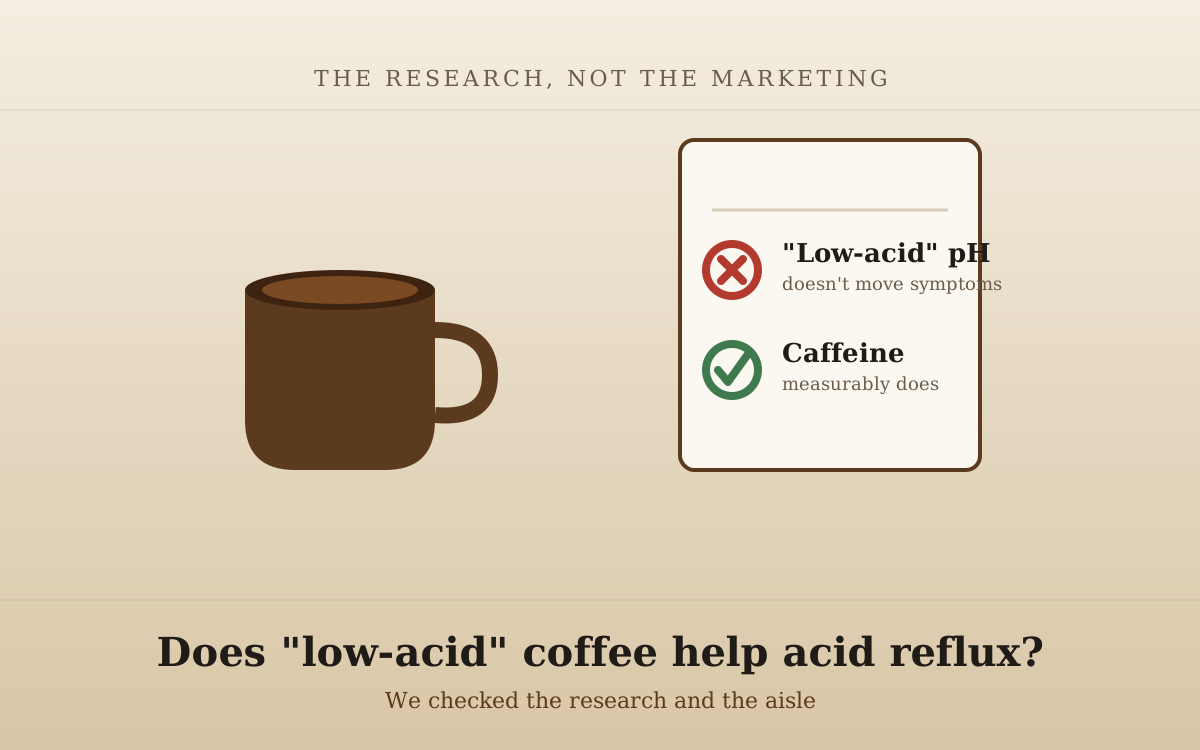
Ask a search engine “what coffee won’t give me heartburn” and it will hand you a small industry’s worth of “low-acid” beans, all claiming their gentler pH means a gentler morning. We went looking for the study behind that promise. We found one — a controlled trial that tested it directly — and it didn’t come out the way the marketing suggests.
The short answer
Coffee’s pH is real, but it isn’t the thing reliably causing reflux for most people who blame their coffee. A randomized, double-blind trial that gave coffee-sensitive people both a low-acid coffee and a regular coffee found no meaningful difference in heartburn afterward. What does have controlled clinical evidence behind it is caffeine: it measurably relaxes the valve that’s supposed to keep stomach acid down, and it increases how much acid your stomach makes in the first place. That points somewhere the “low-acid” aisle doesn’t — toward coffee alternatives that are actually caffeine-free, not just less acidic.
What “low-acid” coffee actually claims
“Low-acid coffee” is a real, definable category, not just a marketing phrase. Per the summary on Wikipedia’s low-acid coffee page, it’s generally defined as coffee with a pH above 5.5, or with at least 50% less measured acid than a regular coffee of the same origin and roast. Regular brewed coffee typically falls between pH 4.85 and 5.10. The acidity is driven largely by chlorogenic acids, and roasting breaks those down — a dark roast can reduce chlorogenic acid content by more than 99% compared to green beans, which is the whole reason “go darker” is common reflux advice.
Here’s the part the marketing tends to skip: a 2024 lab review cited on that same Wikipedia page tested 11 commercial “low-acid” coffees and found that only one of them actually cleared the pH 5.5 threshold that defines the category. The rest measured between roughly 5.0 and 5.29 — indistinguishable from the range of ordinary coffee. Whatever these brands are doing, most of them aren’t reliably producing a coffee that’s measurably less acidic than what’s already on the shelf next to it.
The trial that tested the claim directly
Measuring pH is one thing. Whether that pH difference actually changes how someone’s stomach feels is a separate question, and it’s the one that matters. NutritionFacts.org, summarizing a randomized, double-blind study, describes a trial where 30 people who identified as coffee-sensitive drank both a low-acid coffee and a conventional coffee on different occasions. The result: both triggered heartburn and indigestion in most participants at close to the same rate. The company behind the low-acid coffee in that trial had previously marketed a 90% customer-satisfaction figure; the controlled test didn’t reproduce anything close to that gap.
The distinction NutritionFacts draws is worth sitting with: “low acid,” in this context, usually means lower chlorogenic acid — which happens to be a beneficial antioxidant, not a digestive irritant — while the acid that actually reaches your stomach and esophagus comes overwhelmingly from your own gastric secretions, not from the coffee’s starting pH. Reducing a compound that isn’t the one doing the damage doesn’t reliably fix the damage.
The mechanism that actually moves the needle
If pH isn’t the lever, what is? Cleveland Clinic’s own explainer on coffee and acid reflux names caffeine specifically: it relaxes the lower esophageal sphincter, the muscular valve between your esophagus and stomach that’s supposed to stay shut except when food is passing through. A relaxed valve lets stomach contents travel back up. Separately, caffeine increases gastric acid secretion, meaning there’s more acid in the stomach to begin with. Older clinical research — including a Diseases of the Esophagus study of healthy volunteers — has measured this directly, showing caffeine intake lowering baseline sphincter pressure within minutes; we’re citing that one with a caveat, since our direct attempts to read the full study were blocked and we’re relying on a search summary rather than the paper itself.
Cleveland Clinic’s own practical advice follows from this: decaf, because it strips out most of the caffeine, is one of its recommended swaps for people who don’t want to give up coffee’s flavor. Notably, the Clinic also lists chicory and mushroom “coffee” as options worth considering — the same caffeine-free category this site covers.
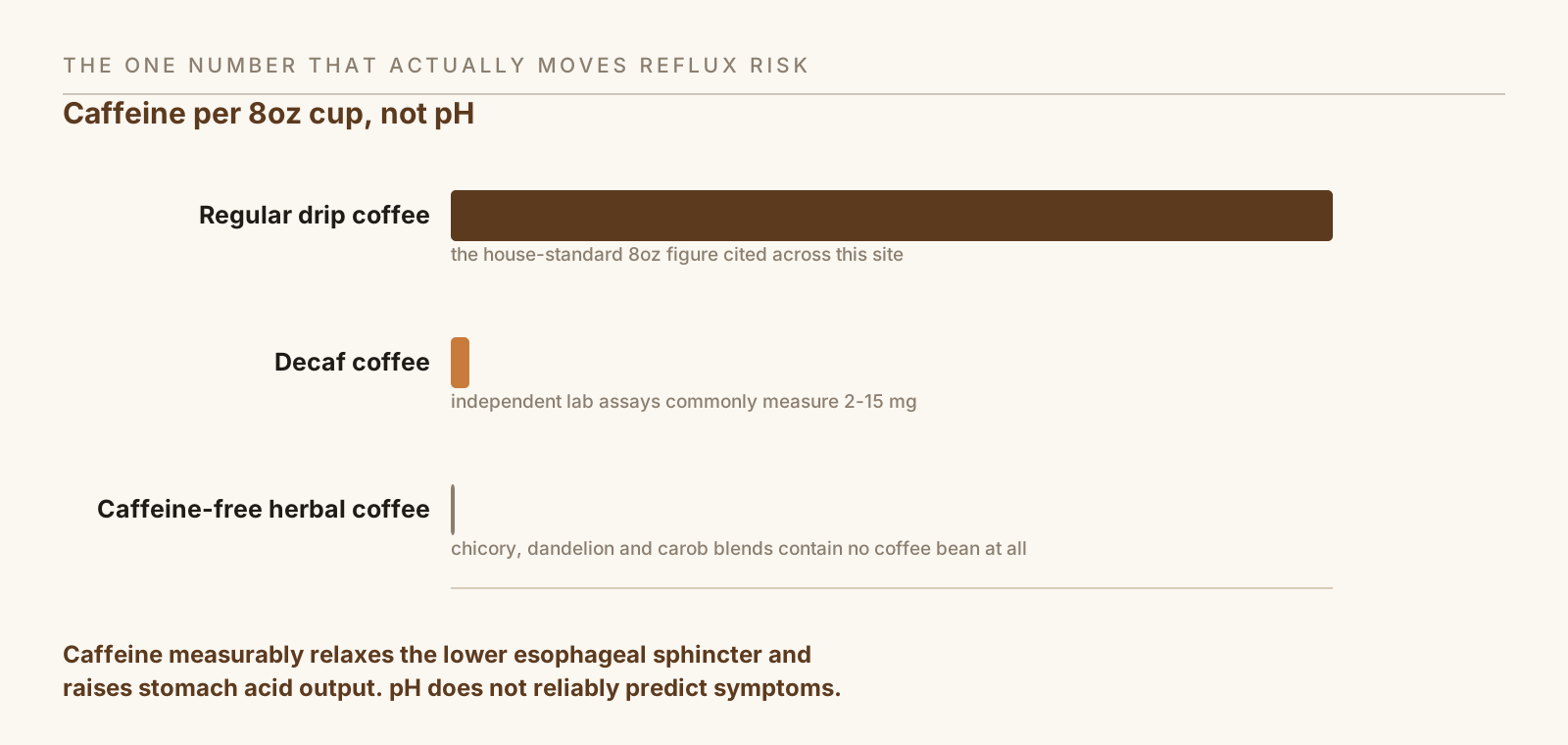
Decaf takes you most of the way there — down to roughly 2mg per cup by USDA figures, though independent lab assays have measured decaf as high as the low teens of milligrams, as we’ve covered in how much caffeine is actually in decaf. A genuinely caffeine-free coffee alternative takes you the rest of the way, to zero, without needing to trust a label’s decaffeination process at all.
One number we won’t chart
We want to be straight about a limit in our own research here. Several sources describe roasted chicory root as having a notably higher (less acidic) pH than coffee — one puts a specific figure around 6.3 — and Teeccino’s own site makes a related but more careful claim: that its potassium and inulin content “help you stay alkaline,” while explicitly warning that a pH test strip isn’t a valid way to measure how a food actually behaves in your body once you’ve eaten or drunk it.
We looked for independent, third-party pH testing of chicory coffee from a named lab or institution and didn’t find any. That doesn’t mean the commonly cited figure is wrong — it means we can’t verify it ourselves, and we’d rather say that plainly than chart a number we can’t stand behind. It’s the same industry pattern this whole piece is about: a plausible, frequently repeated figure that nobody seems to have published a primary source for. What we can verify, and did chart above, is caffeine content — which is also the one part of the story with actual clinical measurement behind the mechanism.
The honest buying guide
If caffeine is the lever that actually has evidence behind it, here’s how the realistic options stack up:
| Option | Caffeine | Why it might help | The caveat |
|---|---|---|---|
| Decaf coffee | ~2mg (USDA), 2–15mg in independent assays | Removes most of the caffeine load without changing the flavor much | Not zero, and keeps the same natural acids as regular coffee |
| Dark roast or cold brew (real coffee) | Full caffeine | Genuinely lower measured acidity from roasting/extraction | Does nothing about the caffeine-driven mechanism — this is the myth this piece is about |
| Teeccino French Roast (opens in a new tab) (chicory, carob, barley, dates, almonds) | 0mg | Fully removes caffeine; closest-to-coffee flavor among herbal roasts | Contains barley and almonds — not gluten-free, not tree-nut-free |
| Teeccino Dandelion Dark Roast (opens in a new tab) | 0mg | Caffeine-free and gluten-free | Root-based flavor, less coffee-like than French Roast |
| Dandy Blend | 0mg | Caffeine-free instant, widely available | Built on barley, rye, dandelion and chicory — check its allergen labeling yourself if that matters to you |
| Brewed cacao (Crio Bru and similar) | Contains theobromine, a separate mild stimulant | Naturally low in the chlorogenic acids that make coffee itself acidic | Cleveland Clinic separately flags chocolate/cacao’s own methylxanthine content as a possible reflux trigger for some people — a different plant, not automatically a safer one |
| Rooibos or ginger tea | 0mg | Naturally caffeine-free, gentle | Doesn’t taste like coffee at all |
None of these is a medical treatment, and reflux has enough individual variation that a table can’t replace paying attention to your own body. If you’ve found a specific low-acid coffee that genuinely helps you, the trial data above doesn’t erase your own result — it just means you shouldn’t expect that pattern to generalize to every “low-acid” label on a shelf.
What still matters besides caffeine
Caffeine having the clearest evidence doesn’t mean it’s the only factor. Cleveland Clinic’s broader coffee-and-reflux advice includes eating something before your coffee to buffer stomach acid, keeping to a few cups a day rather than many, using a lower-fat milk if dairy is part of your routine, and avoiding very hot temperatures, which can add their own irritation on top of anything chemical. Volume and timing are real levers independent of what’s in the cup.
It’s also worth separating “coffee alternative” from “reflux-safe” as categories, because they don’t automatically overlap. We’ve written before about how caffeine-free doesn’t mean digestively neutral — chicory and dandelion root, the base of most herbal coffee, are both concentrated in inulin, a fiber that’s genuinely prebiotic for most people but genuinely uncomfortable for people managing IBS. A chicory coffee that helps your reflux by removing caffeine could still bother a sensitive gut for an entirely different reason. If you’re managing more than one condition, that’s worth reading before you swap.
If your actual goal is dropping caffeine broadly rather than solving reflux specifically, our comparison of Teeccino and Dandy Blend and our wider caffeine-free coffee alternatives roundup cover flavor and format without the reflux lens. And if what you’re weighing is whether decaf is even worth the trouble versus going fully caffeine-free, is decaf coffee bad for you is the more general version of that question.
None of this is medical advice, and persistent or severe reflux is worth bringing to a doctor rather than solving by label-reading alone — GERD can have causes and complications a coffee swap won’t touch. What we can say with real evidence behind it is narrower and more useful than the marketing: if coffee is triggering your heartburn, the pH on the bag is very likely not why, and the milligrams of caffeine in the cup are a more honest place to look.
Frequently asked questions
Answered in the front matter above and repeated here for anyone skimming: the controlled trial evidence says low-acid coffee doesn’t reliably reduce heartburn; caffeine’s effect on the lower esophageal sphincter and gastric acid output is the mechanism with real clinical measurement behind it; decaf helps by removing most (not all) of the caffeine; and genuinely caffeine-free coffee alternatives remove the mechanism entirely, with the tradeoff being that some of them carry their own allergen or digestive considerations worth checking before you switch.
Sources & further reading
- Does Coffee Cause Acid Reflux? (opens in a new tab) — Cleveland Clinic
- Less Acid Reflux from Low-Acid Coffee? (opens in a new tab) — NutritionFacts.org
- Low-acid coffee (opens in a new tab) — Wikipedia
- Is coffee acidic? Teeccino's potassium and inulin help you stay alkaline (opens in a new tab) — Teeccino
- Effect of caffeine on lower esophageal sphincter pressure in Thai healthy volunteers (opens in a new tab) — Diseases of the Esophagus, 2006 (accessed via search summary — direct fetch blocked, treat as corroborating not primary-verified)
Reader conversation (5)
We read every response. Selected reader notes below.
Spent $28 on a bag of a well-known low-acid brand two years ago hoping it would fix my afternoon heartburn and it did absolutely nothing, which at the time I chalked up to bad luck or a placebo failure on my part. Genuinely relieving to see an actual trial say it wasn’t just me.
That’s exactly the pattern the trial data describes — not a “you’re doing it wrong,” just a claim that doesn’t hold up under a controlled test. Sorry about the $28, though.
GP told me years ago it was almost certainly the caffeine and not the coffee itself, which at the time felt like she was just guessing, but this lines up with what she said almost word for word. Switched to decaf and the evening reflux mostly settled down within a week.
Appreciate that you flagged the chicory pH number as unverified instead of just repeating it like every other site selling the stuff does. Half of what I read about this topic states a number with total confidence and never once links to where it came from.
My reflux is worse from tomato sauce than it ever was from coffee, caffeinated or not, so this is a good reminder that the “avoid coffee” advice doctors hand out by default isn’t universal. Everybody’s trigger list is different and mine apparently just isn’t coffee shaped.
That’s a fair pushback and worth other readers seeing — this piece is about the mechanism with the best evidence behind it, not a claim that coffee is everyone’s trigger. If tomatoes are yours, a caffeine swap was never going to be the fix.
Been drinking dandelion root coffee for a completely unrelated reason and only just realized it’s probably also why my reflux has been quieter lately. Never connected the two until reading this.
Have something to add? Email us and we may include it in a future update.