Which caffeine-free coffee is actually gluten-free? We checked every label in the aisle
Caffeine-free doesn't mean gluten-free — several popular herbal coffees are built on barley or rye. We checked ingredient lists brand by brand, and found one product labeled 'gluten-free' that's been the subject of FDA complaints and inconsistent lab results since 2014.

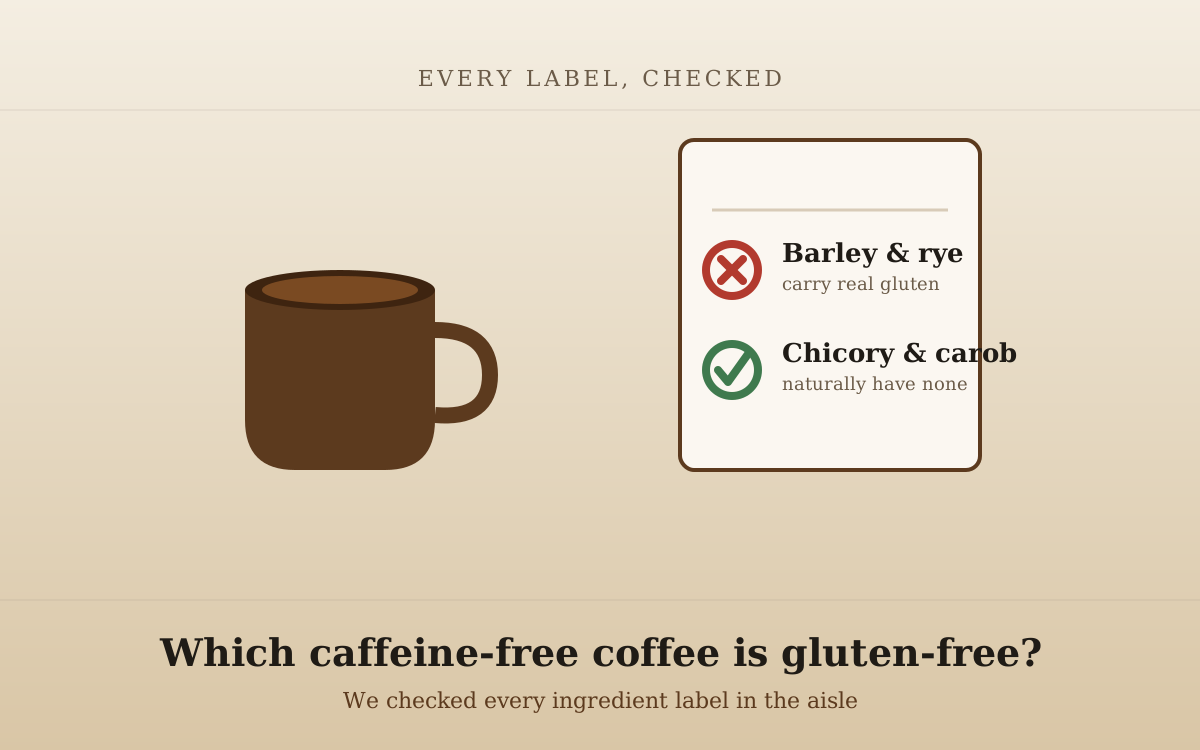
“Caffeine-free” and “gluten-free” get treated like the same kind of claim in this aisle, and they aren’t. We’ve already checked this shelf for FODMAPs; this time we went ingredient by ingredient specifically for gluten, because two of the most common bases in herbal coffee — barley and rye — are gluten grains, and at least one brand’s “gluten-free” label has been formally disputed with the FDA for over a decade.
The short answer
Gluten status in this category comes down to one question: does the ingredient list contain barley, rye, wheat, or malt? Chicory, dandelion, carob, dates, ramón seed, cacao, coffee beans, and tea leaves are not gluten grains and don’t require any special processing to be gluten-free. Barley and rye, on the other hand, are — no amount of roasting changes that.
Two well-known brands build their signature blends on barley or rye and don’t claim to be gluten-free: Pero (barley, malted barley, rye) and Teeccino’s French Roast and Hazelnut herbal coffees (organic barley). That’s a straightforward, honestly labeled situation. The more complicated case is Dandy Blend, which also uses barley and rye extracts but does claim “gluten-free” — a claim built on a water-extraction argument that an independent watchdog group has spent more than ten years contesting with the FDA, with real lab numbers to back the dispute up.

What actually carries gluten here
Gluten is the protein family found in wheat, barley, and rye specifically — not a general property of “grain” or “roasted” foods. None of the other common bases in this category are gluten grains:
- Chicory root — a flowering plant root, not a grain
- Dandelion root — same category as chicory
- Carob — a legume pod
- Dates and ramón seed — fruit and seed, respectively
- Cacao — a bean, unrelated to cereal grains
- Coffee beans — a fruit pit, botanically speaking
- Tea leaves — a leaf, not a grain at all
Barley and rye are where things actually change. Both are true gluten grains, on par with wheat, and the FDA requires food labeled “gluten-free” to test under 20 parts per million (ppm) of gluten — a threshold set low enough to protect people with celiac disease, for whom even small amounts of gluten trigger an autoimmune reaction, not just discomfort.
One argument you’ll see from brands that use barley or rye anyway: water extraction. The claim is that gluten and gliadin proteins aren’t water-soluble, so if you extract a beverage base in water and discard the solids, the gluten stays behind in the spent grounds. It’s not a crazy idea on its face — malt extract, though, is defined by the FDA as exactly that: a water extract of germinated barley. If water extraction reliably removed the gluten, malt extract wouldn’t need a gluten warning either, and it does. That tension is the center of the dispute below.
One “gluten-free” brand’s FDA paper trail
Dandy Blend’s own FAQ page states plainly: “Due to the kind of water extraction processing our ingredients go through, the gluten is removed.” The brand backs this with third-party sandwich ELISA testing that it says shows gluten “not detected,” and its ingredient list is roasted barley, rye, dandelion root, and chicory root extracts.
Gluten Free Watchdog — an independent nonprofit that buys and lab-tests products carrying gluten-free claims — has been reporting a different picture to the FDA since January 2014, and has retested the product multiple times since:
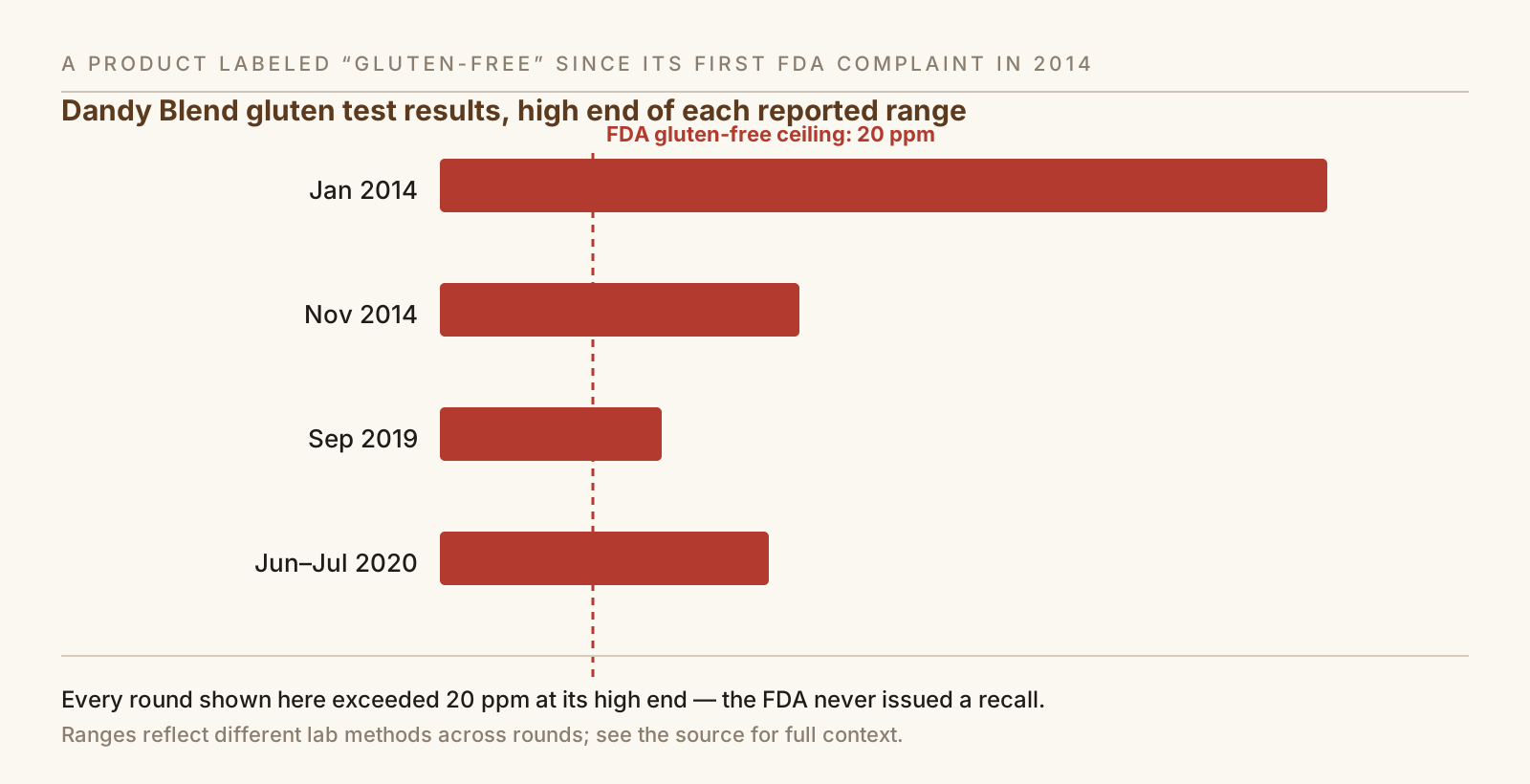
The organization’s core argument is the malt-extract comparison above: if the FDA doesn’t accept “it’s water-extracted” as a reason to exempt malt extract from gluten warnings, it shouldn’t accept the same argument here either. As of the most recent reporting we could verify, no recall or FDA enforcement action has followed, and the product still carries its “gluten-free” label. We weren’t able to access Gluten Free Watchdog’s full subscriber-only test reports to check testing methodology round by round, so treat the exact ppm figures as reported by the organization rather than independently re-verified by us — but the underlying facts aren’t in dispute: this is a barley-and-rye product, labeled gluten-free, with a documented decade-long disagreement between its manufacturer and an independent testing group about whether that label is accurate.
If you have celiac disease, this is exactly the kind of situation where “the brand says it’s fine and has its own tests to prove it” isn’t the same as an unresolved dispute being settled. A milder gluten sensitivity is a different risk calculus than an autoimmune condition — only you and your doctor can weigh that.
Brand by brand: what’s actually in the tin
We checked every product we could find a current ingredient list for, sourced directly from each brand’s own product page wherever possible.
| Product | Contains barley/rye/wheat? | Gluten-free claim made? | Notes |
|---|---|---|---|
| Teeccino French Roast | Yes — organic barley | No | Also contains almonds; not nut-free either |
| Teeccino Hazelnut | Yes — organic barley | No | Contains almonds and hazelnut |
| Teeccino Dandelion Dark Roast | No gluten grains in ingredients | No explicit claim on the product page | Carob, chicory, dandelion, ramón seed — verify directly if celiac-level certainty matters |
| Teeccino Miraculous Mushrooms (all three) | No gluten grains in ingredients | No allergen statement on file | Carob/chicory/ramón seed base, but absence of a statement isn’t confirmation |
| Pero | Yes — barley, malted barley, rye | No | Ingredients and lack of claim both stated plainly on packaging |
| Dandy Blend | Yes — barley and rye extracts | Yes, disputed | See the FDA paper trail above |
| Plain roasted chicory root | No | Naturally gluten-free | Cleanest option in this lineup by ingredient count |
| Rasa Original | No grains listed | Not Certified Gluten-Free, per the brand | Brand states no gluten ingredients and a dedicated gluten-free facility |
| Crio Bru | No | Yes | Pure ground cacao beans; flavored varieties add natural flavoring only |
| Four Sigmatic mushroom coffees | No (coffee-bean based) | Varies by specific SKU | Check the exact product — not every Four Sigmatic item carries the same label |
| MUD\WTR Rise | No grain ingredients directly | Yes | Mushroom blend cultured on organic oats and sorghum — see below |
| RYZE Mushroom Coffee | Unconfirmed | Unconfirmed | RYZE publishes its nutrition panel only as an image with no searchable ingredient text, a gap we first flagged in our mushroom-coffee labeling piece |
Teeccino’s Dandelion Dark Roast is worth pausing on. Its ingredients contain no barley, rye, or wheat, which is a meaningfully different starting point than French Roast or Hazelnut. But when we checked the product’s own current page directly, it doesn’t carry an explicit “gluten-free” statement or certification badge — a gap between what the ingredient list suggests and what the brand actually states in writing. For most people that gap won’t matter. If you’re managing celiac disease rather than a preference, it’s worth a direct call to the manufacturer rather than an assumption either way.
The oat wrinkle in mushroom coffees
Oats themselves are not a gluten grain — they don’t naturally contain the proteins that trigger celiac disease. But conventionally farmed and milled oats are grown and processed alongside wheat, barley, and rye often enough that cross-contact is common, which is why “certified gluten-free oats” is a specific, separate label distinction in the food industry, not a redundant one.
MUD\WTR’s mushroom blend is cultured on organic oats and sorghum before extraction, and the product carries a gluten-free label. According to the brand, the oats and sorghum function as a growing medium for the mycelium rather than a significant component of the finished product, and the company has said Whole30 made a specific exception to its usual “no oats or sorghum on the label” rule on that basis. That’s a reasonable explanation, but it’s also a brand’s own account of its own process, not an independently verified test result — the same category of claim as Dandy Blend’s, even though the underlying facts are different and far less disputed. If a celiac-safe oat source specifically matters to you, it’s a fair question to ask the company directly rather than infer from “gluten-free” on the front of the bag.
The honest buying guide
- If you have celiac disease and want the least ambiguity possible: plain roasted chicory root, Crio Bru, or Rasa Original — all built from ingredients with no gluten grains at all, and none of them are carrying an active labeling dispute.
- If you’re fine with a barley-based blend and don’t need it gluten-free: Teeccino’s French Roast and Hazelnut, and Pero, are all honestly labeled — they contain barley (Pero also rye), and none of them claim otherwise. That’s the accurate, low-risk version of “not gluten-free.”
- If a product’s ingredients look barley- or rye-free but you have celiac disease specifically: don’t stop at the ingredient list. Look for an explicit “gluten-free” claim or third-party certification on the product itself, and when you can’t find one — as with Teeccino’s Dandelion Dark Roast on the page we checked — contact the manufacturer directly rather than assuming the absence of barley means the absence of risk.
- If a product claims gluten-free despite listing barley or rye: that’s not automatically wrong — water extraction is a real process, and third-party testing showing “not detected” is real evidence — but it’s the one claim in this category worth researching further before trusting outright, especially for celiac disease rather than general sensitivity. Dandy Blend is the clearest example we found of a claim with a documented, unresolved dispute behind it.
None of this makes caffeine-free coffee inherently riskier or safer than regular coffee on the gluten question — plain brewed coffee has never contained gluten either. It just means “caffeine-free” and “gluten-free” are two completely separate facts about a product, and this aisle in particular has enough barley- and rye-based options that it’s worth checking both rather than assuming either one implies the other. For the broader shelf, our roundup of caffeine-free coffee alternatives and our chicory coffee explainer are good places to keep comparing once gluten is off your list of open questions.
Sources & further reading
- Frequently Asked Questions (opens in a new tab) — Dandy Blend
- Dandy Blend Instant Herbal Beverage: Where is the Enforcement FDA? (opens in a new tab) — Gluten Free Watchdog
- French Roast Herbal Coffee (opens in a new tab) — Teeccino
- Dandelion Dark Roast Herbal Coffee (opens in a new tab) — Teeccino
- Hazelnut Herbal Coffee (opens in a new tab) — Teeccino
Reader conversation (5)
We read every response. Selected reader notes below.
I have celiac disease and have been drinking Dandy Blend for two years because every “best gluten-free coffee alternative” list I found online recommended it without any caveat. This is the first time I’ve seen the actual FDA complaint history laid out. Switching to plain chicory root immediately.
That’s exactly the gap we were trying to close — the “gluten-free” claim isn’t fabricated, but it’s also not settled, and almost nothing we read mentioned the dispute at all. Glad the chart was useful for an actual decision.
Didn’t realize barley and rye were doing that much work in Pero and Teeccino’s French Roast. I’ve been giving both to my partner who has a mild wheat sensitivity, assuming “herbal coffee” meant no grains at all. Good thing her reaction is mild rather than celiac-level.
The oat cross-contact section is an angle I hadn’t considered for MUD\WTR specifically. Appreciate that you didn’t just call it a problem — you actually explained why oats need their own “certified gluten-free” label separate from the grain itself.
The table format made this genuinely useful as a shopping reference — I screenshotted it. Would love a similar one for soy and tree nut allergens across the same shelf sometime.
Noted — allergen-by-allergen breakdowns take real per-brand verification to do honestly, so we’re adding it to the list rather than rushing one out, but it’s a good next entry in this series.
Never would have guessed a decade-old FDA dispute was sitting behind a product I see recommended constantly on gluten-free forums. This is the kind of thing that should be common knowledge in those communities and clearly isn’t.
Have something to add? Email us and we may include it in a future update.