Does birth control make your coffee hit harder? The 1985 study behind the jitters — and the twist that cuts the other way
Estrogen in combined birth control pills slows the liver enzyme that clears about 95% of caffeine, stretching its half-life by roughly two and a half hours in the classic study. But the same interaction also blunts one of caffeine's own downsides.

A reader wrote in after reading our piece on why the afternoon crash hits some people harder than others, which mentions in passing that “pregnancy and certain medications, including some oral contraceptives” can slow caffeine clearance. She wanted to know: is that a real, measured thing, or a throwaway line? She’d started a combined pill a few months earlier and her usual afternoon coffee had started leaving her wired well past dinner — same brand, same size, same time of day.
It’s real, it’s been measured since 1985, and the number is bigger than most people expect.
The short answer
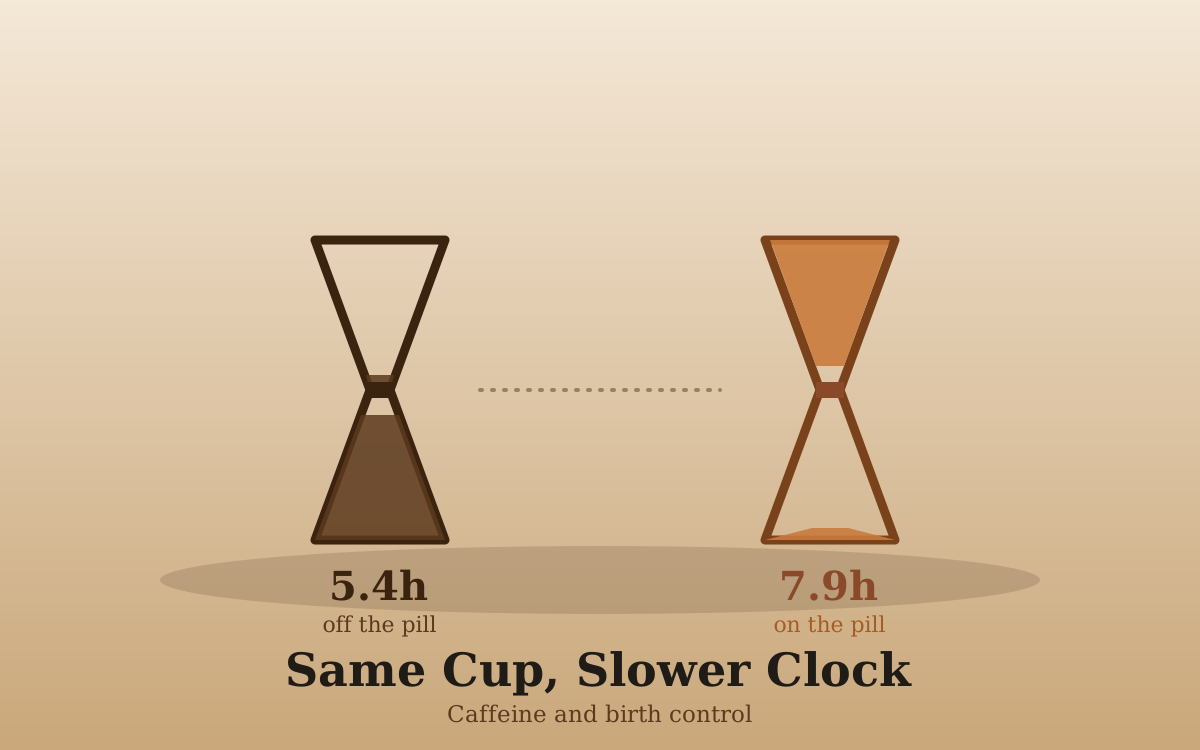
If you’re on a combined oral contraceptive — the kind that contains estrogen — your body clears caffeine noticeably slower than it did before, or than it would without the pill. The classic study on this found caffeine’s average half-life stretched from 5.37 hours to 7.88 hours, roughly a 40 percent increase. That means a cup of coffee you drink at 2pm is still meaningfully active in your system well into the evening, in a way it wasn’t before.
This isn’t dangerous. It’s not a reason to panic or to quit caffeine. But it is a real, specific, measurable reason your usual cup might suddenly feel like more than it used to — and it deserves a better answer than “you’re probably just more stressed lately.”

The enzyme that does the work
Caffeine doesn’t just wear off — your liver breaks it down, mostly via a single enzyme called CYP1A2, which is responsible for the great majority of caffeine’s metabolism into its downstream compounds (paraxanthine, theobromine, and theophylline). How fast that enzyme works varies a lot between people to begin with — smokers clear caffeine faster, and genetics alone produce “fast” and “slow” metabolizers who can differ several-fold in how quickly they process the same cup.
Estrogen is one of the things that slows CYP1A2 down. When you’re taking a combined oral contraceptive, the estrogen component appears to partially inhibit the same enzyme pathway that would otherwise be clearing caffeine, so the two compete for the same processing capacity. Caffeine doesn’t get broken down as quickly, so it stays active in your bloodstream longer.
This is the same enzyme our piece on the afternoon crash mentioned only in passing while explaining why some people can drink espresso after dinner and sleep fine. Estrogen-containing birth control is one of the more common, and more overlooked, reasons someone might have quietly shifted from a “fast” caffeine profile to a slow one without changing anything about how they drink coffee.
The number from the classic study
The finding people cite here traces back to a single, frequently-referenced 1985 study by Abernethy and Todd, published in the European Journal of Clinical Pharmacology. They compared caffeine pharmacokinetics in women who’d been using a low-dose estrogen-containing oral contraceptive for at least three months against a matched group of women who weren’t.
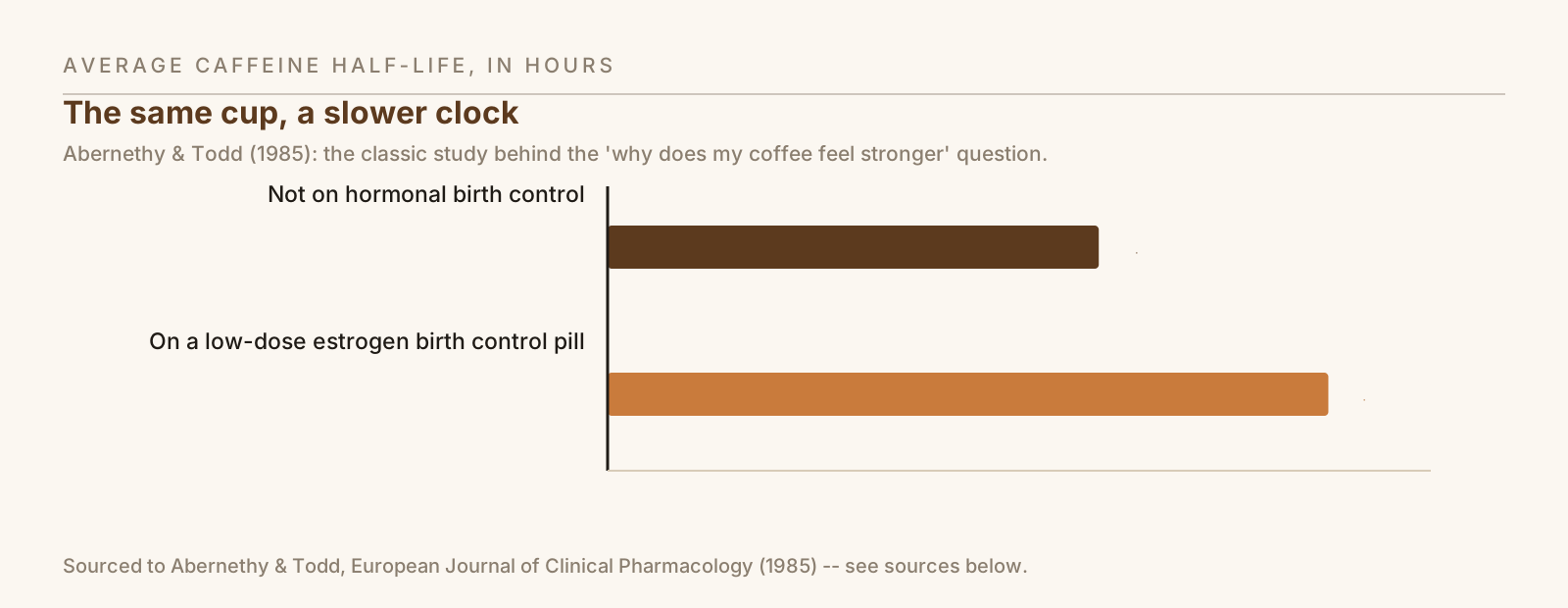
The oral-contraceptive group’s caffeine plasma clearance was roughly cut in half compared with the control group, which is the underlying reason the half-life stretched the way it did — slower clearance is mathematically what produces a longer half-life. Time to peak caffeine concentration was also moderately prolonged in the pill-using group.
One honest limitation worth naming up front: the original paper itself sits behind a journal paywall, so I couldn’t read the full methodology directly. The 5.37-versus-7.88-hour figures are corroborated consistently across multiple independent secondary sources that cite the same study and report identical numbers, which is the standard I hold any walled primary source to before printing a number as fact — but it means I’m reporting a widely-repeated, consistent citation rather than something I verified line-by-line in the original tables.
Not every “birth control” does this
This is the detail that gets flattened almost every time this topic comes up online: the interaction that’s actually been studied is specific to estrogen, not to hormonal contraception generally.
“Birth control” covers a wide range of methods, and they don’t all contain the same hormones:
- Combined pills (most common pills) contain both estrogen and a progestin. These are the ones the Abernethy & Todd study actually tested.
- The mini-pill (progestin-only pill), hormonal IUDs (like Mirena or Kyleena), the implant (Nexplanon), and the shot (Depo-Provera) contain progestin only — no estrogen.
Since the documented mechanism is estrogen slowing CYP1A2, progestin-only methods don’t have the same evidence behind them for this specific interaction. I want to be careful about how I phrase that, though: I could not find a study that directly tested caffeine clearance in women using a progestin-only method and compared it against a real half-life number, the way Abernethy & Todd did for combined pills. That’s an absence of evidence, not confirmed evidence of no effect. If you’re on a progestin-only method and still notice caffeine hitting you harder, hormones aren’t automatically ruled out as a factor — it just isn’t the specific, well-documented interaction this article is mainly about.
The twist that cuts the other way
Here’s the part that complicates the “birth control and caffeine is just bad news” framing, and it’s worth knowing because it’s a genuinely different kind of finding than the half-life one.
Caffeine, on its own, is known to modestly increase how much calcium you lose through urine after a dose — a small but real effect that’s part of why caffeine intake sometimes comes up in conversations about bone health. A 2003 study published in The Journal of Nutrition, by Ribeiro-Alves, Trugo, and Donangelo, found that this calciuric effect of caffeine was blunted in women using oral contraceptives — meaning the pill actually reduced one of caffeine’s minor downsides, rather than compounding it.
I want to be precise about what I can and can’t confirm here: I could locate this study’s title and abstract-level finding consistently across several independent academic indexes (PubMed, ScienceDirect, and an FAO agricultural research index all list the same paper with the same conclusion), but the full text sits behind a paywall I couldn’t get past, so I don’t have the exact number of milligrams involved. What I can say with confidence is the direction of the finding: this is one documented case where the birth-control-and-caffeine interaction doesn’t stack risk on risk. It’s a reminder that “hormones change how a drug behaves” isn’t automatically bad news across the board — sometimes it’s genuinely mixed, in the same way we found caffeine’s relationship with hot flashes cuts in opposite directions depending on menopausal stage rather than pointing one clean way. Calcium is also just one of several minerals caffeine and diet compete over — see our broader look at the plate’s mineral traps if that angle interests you.
What this actually feels like
In practice, women who’ve made this connection tend to describe a specific pattern: the same cup that used to wear off by mid-afternoon is still giving them a faint buzz at bedtime, or their usual amount of caffeine that never used to bother them starts producing more jitteriness, a faster heartbeat, or a harder time settling down at night — without having changed their coffee habit at all.
That’s consistent with what the mechanism predicts. A longer half-life doesn’t make caffeine’s effects more intense at the moment you drink it; it makes them last longer than you’re used to planning for. If you built your caffeine cutoff time around how your body used to clear caffeine, that cutoff may no longer be early enough.
What to actually do about it
None of this requires a medical intervention for most people. It’s a scheduling problem more than a pharmacological emergency, and the fixes are the same ones that work for any slow metabolizer:
- Move your cutoff time earlier. If a 2pm coffee used to be gone from your system by 7pm, on a slower clearance rate it might still be meaningfully present at 9 or 10pm. Our half-life piece has the fuller math on setting a cutoff, but the short version is: if you’ve started a combined pill and your sleep has gotten worse for no other obvious reason, try moving your last cup two to three hours earlier before you assume something else is wrong.
- Consider the total, not just the cup. Caffeine from chocolate, tea, and some medications adds to the same slow-clearing pool. Our piece on caffeine in chocolate is worth a look if your afternoon treat has been quietly adding to a dose that’s already lasting longer than it used to.
- This is a comfort decision, not a safety one. Nothing here means you need to quit caffeine, and nothing here is a reason to stop or switch a birth control method that’s otherwise working well for you. If jitteriness, anxiety, or sleep disruption are new and bothersome since starting a hormonal method, that’s worth mentioning to whoever prescribed it — not because the interaction is dangerous, but because your prescriber should have the full picture of what you’ve noticed.
- If you’re also managing anxiety or sleep issues, our piece on caffeine and sleep architecture covers how caffeine affects sleep quality even when it doesn’t keep you from falling asleep at all.
- This is one entry in a pattern, not a one-off. We’ve covered a similar “the assumption is wrong, the real answer is timing” shape before, for coffee and thyroid medication — a different hormone, a different mechanism, but the same lesson that a medication or hormone can quietly change what your usual cup does to you.
Where herbal coffee actually fits
I’ll say plainly what this is and isn’t: switching to a caffeine-free herbal coffee doesn’t change the CYP1A2 interaction — nothing about chicory, carob, or roasted dandelion root touches how your liver processes estrogen or caffeine. What it changes is simpler and more direct: it lowers your total caffeine intake, which matters more, not less, once your body is clearing whatever caffeine you do drink more slowly.
If your afternoon or evening cup is the one causing the problem, swapping just that cup — while keeping your morning coffee as-is — is a low-effort way to cut your total dose without giving up the ritual entirely. Teeccino’s French Roast (opens in a new tab) is roasted chicory, carob, barley, dates, and almonds — genuinely caffeine-free, though worth knowing it contains barley (gluten) and almonds (tree nuts) if either is a concern. Rasa’s Original leans on chaga, eleuthero, and reishi instead of chicory, for anyone who’d rather avoid the root-vegetable flavor profile altogether. Neither is a “fix” for the pharmacokinetics here — they’re just a caffeine-free option for the part of the day where slower clearance matters most.
The bottom line
Estrogen in combined birth control pills measurably slows how fast your body clears caffeine — a documented, nearly 40 percent stretch in half-life, from 5.37 to 7.88 hours in the classic study. It’s specific to estrogen, so progestin-only methods likely don’t carry the same effect, though that hasn’t been directly tested. It isn’t dangerous, and it isn’t the whole story either: the same hormonal shift appears to blunt one of caffeine’s own minor downsides, its effect on urinary calcium loss. The practical takeaway is small and unglamorous: if your usual cup has started lasting longer than it used to, move your cutoff time earlier before you assume something bigger has changed.
This article is educational and is not medical advice. If new anxiety, jitteriness, or sleep problems appear alongside a hormonal birth control method, that’s worth raising with your prescriber alongside anything else about the method that isn’t working for you.
Sources & further reading
- Impairment of Caffeine Clearance by Chronic Use of Low-Dose Oestrogen-Containing Oral Contraceptives (Abernethy & Todd) (opens in a new tab) — European Journal of Clinical Pharmacology, 1985
- Use of Oral Contraceptives Blunts the Calciuric Effect of Caffeine in Young Adult Women (Ribeiro-Alves, Trugo & Donangelo) (opens in a new tab) — The Journal of Nutrition, 2003
- Caffeine Half-Life Factors (opens in a new tab) — Roon
- Caffeine And Birth Control: Does Coffee Affect Your Pill? (opens in a new tab) — Doctronic
Reader conversation (4)
We read every response. Selected reader notes below.
This explains an entire year of my life. I started Lo Loestrin and genuinely thought I’d developed an anxiety disorder out of nowhere — turns out my usual two cups were just never fully clearing anymore. Moving my cutoff to 11am instead of 2pm made a bigger difference than anything else I tried.
That’s exactly the pattern the research would predict, and I’m glad the timing shift helped. Worth mentioning to whoever manages your prescription too, just so it’s on record alongside anything else you’ve noticed.
Genuinely didn’t know the mini-pill and combined pill were different enough that this wouldn’t necessarily apply to both. I’ve been progestin-only (IUD) for years and always assumed “birth control” was one bucket for stuff like this.
The calcium finding is the first genuinely surprising thing I’ve read about caffeine in months — everything else I find online is some version of “caffeine bad, more bad on hormones.” Appreciate that this one didn’t flatten it into a single direction.
Would love a follow-up on whether this compounds with pregnancy’s own slowdown for anyone who goes off the pill trying to conceive — is there a “double slow” window, or does it reset pretty quickly once you stop?
Good question, and I don’t have a clean number for the transition window specifically — most of what’s published looks at steady-state use in one condition or the other, not the handoff between them. I’ll add it to the list of things worth a dedicated look.
Have something to add? Email us and we may include it in a future update.