Does caffeine make hot flashes worse? What a Mayo Clinic study of 1,800 women found — and where it disagrees with itself
A widely cited 2014 Mayo Clinic study found caffeine intake tracked with more bothersome hot flashes and night sweats in postmenopausal women — but the same study found the opposite trade-off in perimenopausal women. What the research actually shows, why it's genuinely mixed, and how to test it on yourself.

If you’re up at 2am with the sheets kicked off and the fan going, “does my coffee habit have anything to do with this” is a reasonable question to be asking yourself. It’s also one of the more honestly unsettled questions in this whole space — the research exists, it’s more interesting than a flat yes or no, and it doesn’t say what most headlines about it implied.
The question behind the question
Search “does caffeine make hot flashes worse” and you’ll mostly find the same 2014 finding repeated, usually flattened into “caffeine is bad for menopause.” That’s not quite what the study found, and it’s not the whole study. The actual research has a second half that rarely makes it into the summary, plus a body of other work that doesn’t agree with it. Worth walking through the real thing before you decide whether to give up your afternoon cup.
The study everyone cites
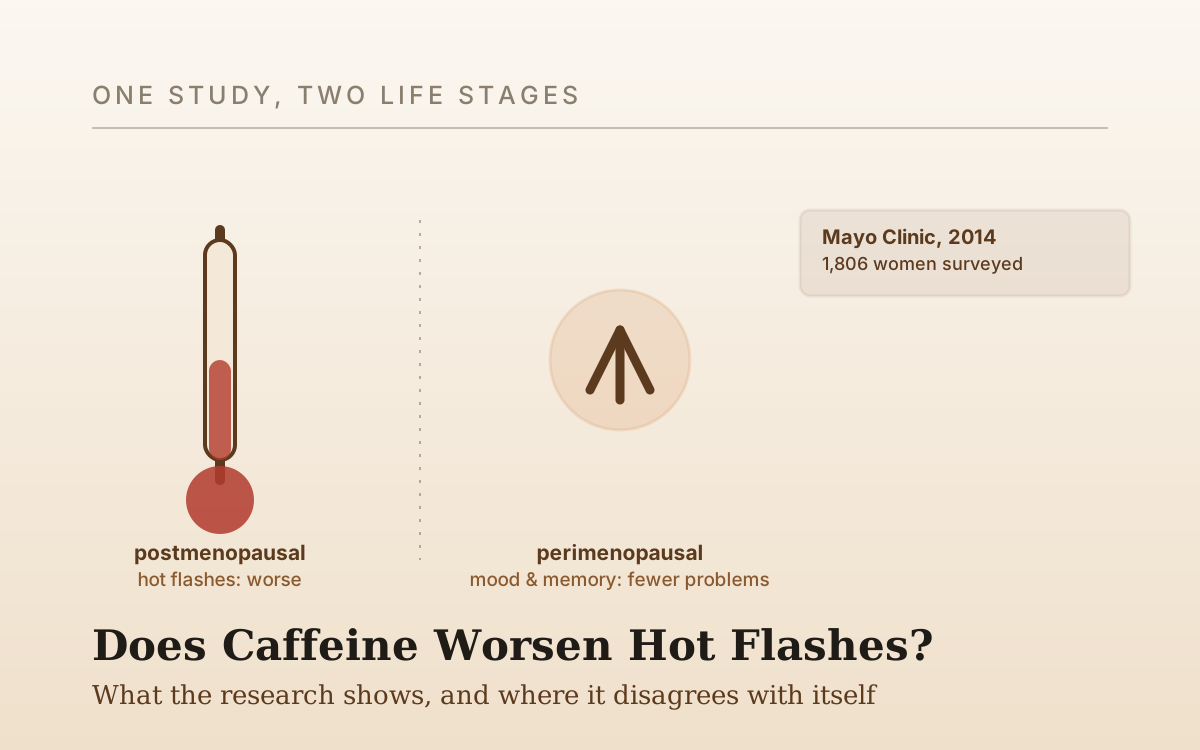
The finding traces back to one piece of research: a Mayo Clinic survey led by Dr. Stephanie Faubion, published in the journal Menopause in July 2014. Researchers surveyed 2,507 women who visited Mayo’s Women’s Health Clinic between July 2005 and July 2011, using a detailed self-report tool called the Menopause Health Questionnaire; 1,806 of those surveys met the criteria for analysis.
The headline result: among postmenopausal women, caffeine intake was associated with more bothersome hot flashes and night sweats. Faubion’s own stated takeaway was measured, not alarmist: “limiting caffeine intake may be useful for those postmenopausal women who have bothersome hot flashes and night sweats” — a suggestion worth testing, not a verdict.
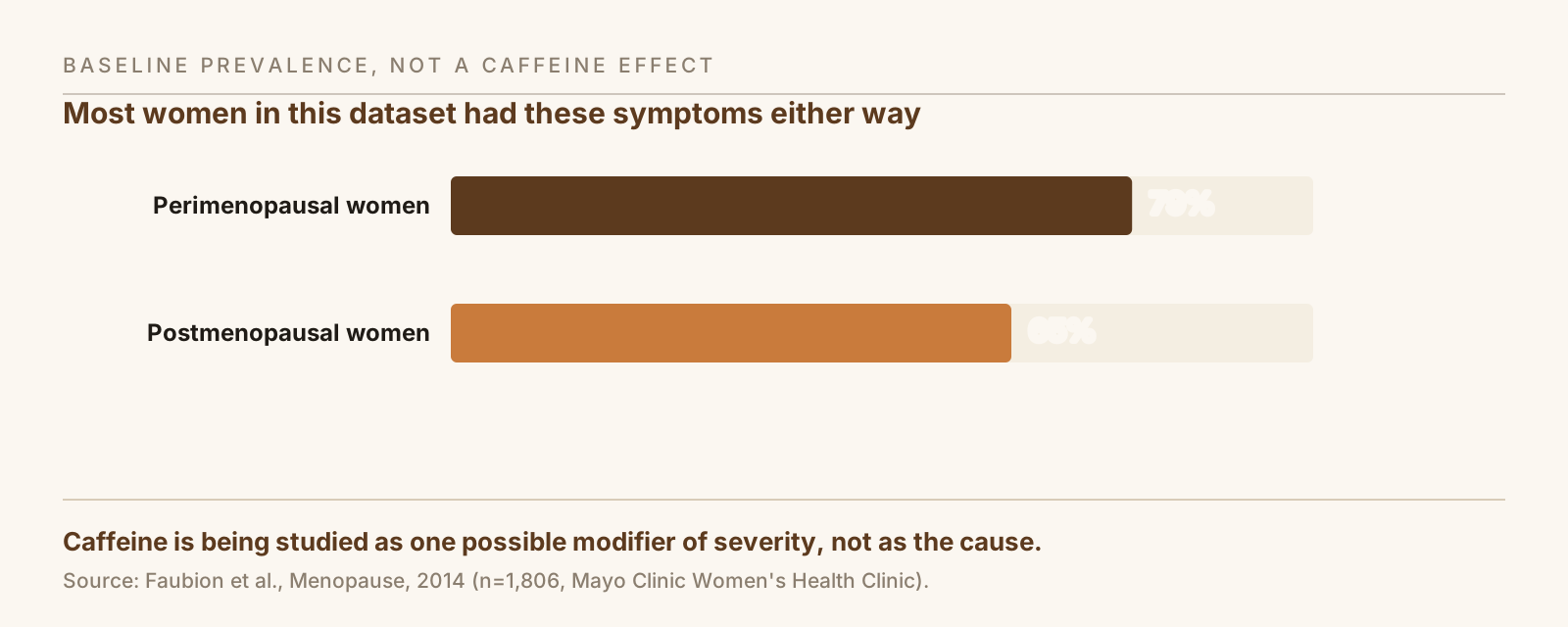
It’s worth sitting with how common these symptoms are in the first place, caffeine aside entirely. In this same dataset, hot flashes and night sweats were reported by 79% of perimenopausal women and 65% of postmenopausal women. Caffeine is being studied as one possible modifier of how bothersome those symptoms are — not as the reason they happen to begin with.
A plausible mechanism, not a proven one
Here’s a reasonable-sounding explanation researchers have proposed, and it’s worth being precise about what kind of claim this is: physiological plausibility, not a demonstrated cause-and-effect chain.
Caffeine is a stimulant. It activates the sympathetic nervous system, nudges heart rate and metabolic activity upward, and produces a small thermogenic effect — a slight rise in core body temperature. It’s also an adenosine-receptor antagonist, and adenosine plays a role in normal vasodilation, so caffeine has the potential to affect how heat moves from your core to your skin.
Separately, and unrelated to caffeine specifically: declining estrogen during the menopause transition is understood to narrow the brain’s internal thermostat — the “thermoneutral zone” the hypothalamus tries to keep your core temperature inside. A temperature swing that wouldn’t register at all before menopause can be enough to trigger the flushing-and-sweating response afterward, because the tolerance window has gotten smaller.
Put those two facts next to each other and you get a plausible story: a small caffeine-driven nudge in temperature or arousal might be just enough to tip an already-narrowed thermostat into a flash, for some women. That’s a coherent hypothesis. It is not the same thing as a clinical trial that gave women caffeine and watched hot flashes follow — nobody has run that trial. Faubion’s survey shows an association at a point in time, which is a real and useful thing to know, but it can’t by itself prove which direction the arrow points.
The trade-off the headlines leave out
Here’s the part that gets dropped almost every time this study gets summarized: the same survey found the opposite trade-off in a different group of women.
Among perimenopausal women — the years of irregular cycles and fluctuating hormones leading up to actual menopause — caffeine intake was associated with fewer problems with mood, memory, and concentration. The likely explanation is the mundane, well-established one: caffeine is a mild cognitive stimulant, and for women in this earlier stage it appeared to still be doing that ordinary job.
So the honest one-line summary of this study isn’t “caffeine is bad for menopause.” It’s closer to: caffeine’s trade-off looks different depending on where you are in the transition. Later on, it may be nudging symptoms researchers were measuring as hot flashes and night sweats. Earlier on, the same habit was tracking with fewer reported problems in a completely different category. A study that found only the first half would be a cleaner story. It isn’t the study that got run.
Why the research doesn’t agree with itself
If the Faubion study were the last word, this would be a simpler article. It isn’t. Faubion herself described the findings as preliminary, and the broader research on caffeine and menopausal symptoms is genuinely inconsistent — some studies have found no meaningful association at all, and the picture shifts across populations with different average coffee and tea habits.
Some of that inconsistency is just what you’d expect from the study design here: a cross-sectional self-report survey captures a snapshot, not a controlled experiment. It can’t fully separate caffeine from things that tend to travel with it — smoking (which the Mayo analysis did adjust for), overall diet, stress levels, alcohol, or how habituated a given woman’s body already is to regular caffeine intake, which changes how strongly she responds to it. None of that means the finding is wrong. It means it’s one data point in a body of evidence that hasn’t converged on a single answer, and any article that tells you this is settled science is overstating what’s actually known.
That’s not a reason to ignore it. It’s a reason to treat “cutting caffeine might help my hot flashes” as a hypothesis worth testing on your own body, rather than a fact to adopt on faith.
So should you cut it? A framework, not a rule
Given how mixed the evidence is, the most honest answer is: it’s genuinely worth a personal experiment, and there’s no way to predict from a study whether it’ll do anything for you specifically.
A reasonable version of that experiment: track hot flash and night sweat frequency for one to two weeks at your normal caffeine intake, then run a comparable window at meaningfully reduced or zero caffeine — ideally tapered down rather than stopped cold, both because a hard stop can trigger its own withdrawal headache that muddies your read of the results, and because a taper gives you a fairer side-by-side comparison. While you’re tracking, try to hold other known triggers roughly steady — alcohol, spicy food, room temperature, stress — so you’re not accidentally crediting or blaming caffeine for something else entirely.
Set your expectations honestly going in: even in the group where this study found an association, it was a modifier, not a cure. If you cut caffeine and nothing changes, that’s a normal result, not a sign you did the experiment wrong. If your hot flashes are frequent, severe, or wrecking your sleep regardless of what you try, that’s worth a conversation with your doctor about options that have actually been studied for this specific purpose, rather than an indefinite personal-experiment loop.
If you want to test it, here’s how
The easiest way to run a clean version of this experiment is to swap out the caffeine rather than just cutting back — habit and ritual intact, caffeine actually gone, so you’re testing one variable instead of also fighting the loss of your morning routine.
A few practical options: a half-caf blend as a bridge if you want to step down gradually, or a fully caffeine-free herbal coffee if you want the test to be clean from day one — chicory-based blends like Teeccino (opens in a new tab), dandelion-root coffee, or roasted-grain blends all brew and taste closer to actual coffee than tea does, which matters if the ritual is half the point for you. Our herbal coffee vs. decaf guide covers how these actually differ, including the fact that decaf still carries a small amount of caffeine while a genuine herbal coffee carries none — worth knowing if you want your experiment to test zero caffeine rather than mostly-zero.
One honest caveat: switching your coffee removes caffeine from the equation. It does nothing about alcohol, spicy food, a warm bedroom, or stress, all of which show up independently in the research on hot flash triggers. If you swap your morning cup and nothing changes, that’s useful information too — it may mean caffeine wasn’t your lever, and one of those other, unrelated factors is worth looking at next. For the sleep-disruption side of this specifically, our piece on caffeine and sleep architecture covers how even a daytime cup can reshape the night you don’t consciously notice, which is worth reading if night sweats are only part of what’s waking you up.
Sources & further reading
- Caffeine intake may worsen menopausal hot flashes, night sweats (opens in a new tab) — ScienceDaily, reporting on Mayo Clinic research
- Is coffee aggravating your hot flashes? (opens in a new tab) — Medical Xpress
- Caffeine and menopausal symptoms: what is the association? (opens in a new tab) — Faubion SS, et al. Menopause, 2014 (PubMed)
- Study Suggests Caffeine Intake May Worsen Menopausal Hot Flashes, Night Sweats (opens in a new tab) — Mayo Clinic News Network
- How much caffeine is actually in decaf — CoffeeAlternatives.com
Reader conversation (5)
We read every response. Selected reader notes below.
Finally an article that doesn’t just say “caffeine bad” and stop there. I’m two years postmenopausal and my night sweats genuinely do seem worse on days I have a second cup, but my sister who’s perimenopausal swears coffee is the only thing keeping her sane through the brain fog. Reading this, that’s not a contradiction — that’s literally what the study found.
That’s exactly the split the data suggests, and it’s a good example of why “just cut caffeine” isn’t universal advice here. Your sister’s experience with the cognitive side is consistent with the perimenopausal finding; yours with the postmenopausal one. Two real experiences, same study, no contradiction.
Ran almost exactly the experiment described here a year ago without knowing there was research behind it — two weeks on, two weeks mostly off. Genuinely couldn’t tell a difference in flash frequency, but I slept better regardless, which I now realise was probably the caffeine-and-sleep mechanism rather than anything to do with hot flashes specifically. Worth separating the two effects.
The 79% vs 65% chart is such a useful bit of context on its own. I think a lot of women (myself included, before I read pieces like this) assume hot flashes are something caffeine or diet causes rather than something that’s already extremely common on its own and gets modified around the edges. Reframes the whole question.
Appreciate that this didn’t tell me to just white-knuckle through cutting caffeine cold turkey. I tried that once for an unrelated reason and the headache alone nearly sent me back to bed for two days. Tapering with a chicory blend some mornings instead of a hard stop is a much saner way to actually run this kind of test.
My OB-GYN actually said something close to “we don’t have great evidence either way, but it’s cheap to test on yourself” when I asked about this last year — matches what this piece is saying almost word for word. Wish more of what I read online was this comfortable saying “we don’t fully know” instead of picking a side.
Have something to add? Email us and we may include it in a future update.