The plant-based plate has four mineral traps on it, and nobody writes them down together
Iron and calcium compete. Phytate blocks iron. Phytate blocks zinc even harder. Coffee and tea add a fourth. Individually these are known interactions; almost nobody maps all four onto one plate. A dietitian's guide to what actually competes at dinner, and the handful of moves that fix most of it.

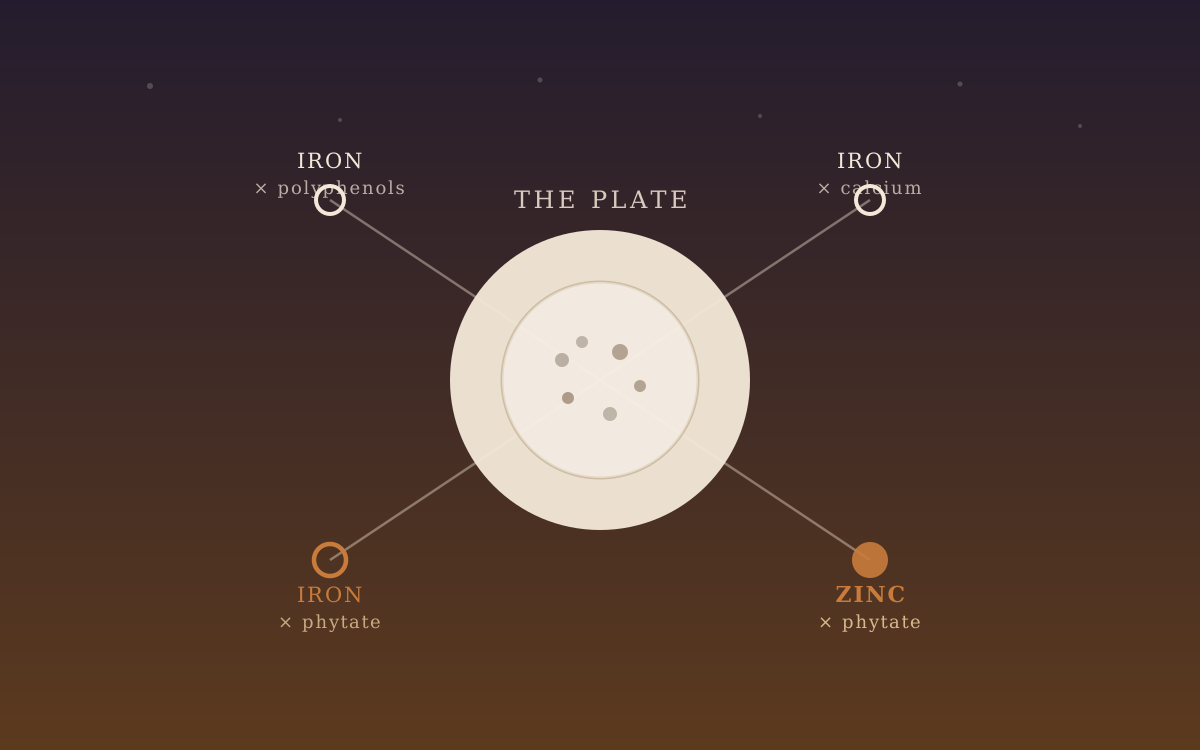
A reader named Marisol wrote in after our piece on coffee, tea and iron with a sentence that has been sitting with me since: her haematologist was far more exercised about her calcium supplement sitting next to her iron pill than about her tea. She’s vegan and a regular blood donor, so she’s watching this closely, and her point was simple — the plant-based plate has about four of these interactions stacked on it, and I’ve never seen them written down in one place, only ever one at a time.
She’s right, and I went looking to confirm it. Iron-and-polyphenols, iron-and-calcium, iron-and-phytate, zinc-and-phytate: each one has its own literature, its own specialists, its own single-topic explainer. Nobody puts all four on the same plate. So here they are.
The short answer
A meal built mostly from plants — beans, grains, leafy vegetables, nuts, seeds — carries real mineral inhibitors, and they overlap. Some of that overlap is well-established and large. Some of it is smaller than the internet believes. None of it means a plant-based diet is deficient by design; it means a few specific pairings deserve specific attention, and most of the fixes are free.
The map, in order of how confident the evidence is:
- Iron and phytate — the strongest, most consistent effect on this list, and the one with the clearest fix.
- Zinc and phytate — the same chemistry as #1, but zinc is more vulnerable to it than iron is.
- Iron and calcium — real in concentrated single doses, much weaker or absent across a normal day’s eating. Genuinely contested science, and worth understanding why.
- Iron and coffee/tea polyphenols — covered in full elsewhere; included here only for completeness.
Four interactions, one plate
Here’s why a plant-forward plate collects more of these than a plate built around meat and dairy. Whole grains, legumes, nuts and seeds all store phosphorus as phytic acid (phytate), which chelates — binds tightly to — several minerals in the gut before your body gets a chance to absorb them. Iron and zinc are the two minerals it affects most. Separately, plant meals are also where most people get their calcium if they eat dairy alongside them, and where they get their coffee or tea if that’s part of the meal. Put those together and the same plate that’s doing a lot of nutritional good is also where every one of these four interactions is most likely to show up at once.
That’s not an argument against the plate. It’s an argument for knowing which parts of it are worth a small adjustment.
Iron and calcium: the interaction that argues with itself
Start with the one that’s genuinely unsettled, because the honest version of this story is more useful than the tidy one.
The classic result. In 1991, Hallberg and colleagues gave people a test meal with varying doses of calcium and measured iron absorption directly. Calcium doses of 300 to 600 mg cut nonheme iron absorption by 50 to 60 percent (opens in a new tab), and the effect was dose-related up to 300 mg. Oddly, the same doses also reduced heme iron absorption — the form found in meat — which is unusual, because almost nothing else on this list touches heme iron at all. The proposed mechanism is that calcium interferes at a shared step late in the transfer of iron out of the gut lining, after heme and nonheme iron have already entered a common pool.
The complication. A 2011 trial by Gaitán and colleagues tested a wider range of doses in the same style of single-meal study and found no effect at all from 0 to 800 mg of calcium on 5 mg of nonheme iron — the inhibition only showed up at 1,000 mg and higher, where it cut absorption by about 49.6 percent. Heme iron absorption dropped by about 37.7 percent at 800 mg in the same study. So even within single-meal test designs, the dose at which calcium starts to matter is contested.
The bigger complication. A 2004 trial by Grinder-Pedersen and colleagues (opens in a new tab) skipped the single-meal design entirely and gave people calcium from milk or fortified foods as part of a whole diet over four days. Result: no measurable effect on nonheme iron absorption at all.
I find that last result the most important one, and it rhymes with something we found writing about coffee and iron absorption: vitamin C’s benefit to iron absorption is dramatic in single-meal studies and much smaller across a complete, real diet. Calcium’s inhibition of iron shows the same pattern in reverse. Single-nutrient test meals are built to isolate one variable and they do that well — but a real day of eating has more calcium sources, more iron sources, and more meals, and that complexity seems to blunt effects that look large in a lab.
What that means practically: the strongest, most reproducible version of this interaction is a concentrated calcium supplement taken at the same time as a concentrated iron dose — exactly Marisol’s haematologist’s concern. The weakest version is “I had cheese with my lentils.” Both technically involve calcium and iron in the same meal. They are not the same risk.
Iron and phytate: the biggest lever nobody pulls
If you want one number that matters more than any other on this page, it’s this one.
Phytic acid is a potent inhibitor of iron absorption, and the effect is large enough that the field has a standard shorthand for it: the phytate-to-iron molar ratio. Get that ratio below 1:1, and ideally below 0.4:1, and iron absorption improves substantially; leave it high, and iron sits next to a compound built specifically (from the plant’s point of view) to store phosphorus and lock down minerals until they’re needed for germination.
The size of the effect is not subtle. In single-meal studies on cereal-and-legume-based porridges, complete dephytinization — full enzymatic removal of the phytate — raised iron absorption roughly twelvefold (opens in a new tab), from under 1 percent to over 11 percent, in foods reconstituted with water. That’s not a rounding-error effect. It’s the difference between a food that barely delivers its iron and one that delivers most of it.
The practical version doesn’t require an enzyme lab. Soaking, sprouting and fermenting all degrade phytate, because they activate the bean’s or grain’s own phytase enzyme, or introduce microbial ones. A 2014 study on faba beans found that 24 hours of soaking cut phytate by roughly 27 to 33 percent, and sprouting cut it by a similar amount (opens in a new tab) — and in-vitro iron availability nearly doubled with either treatment. This is not a novel discovery. It’s the scientific explanation for why nearly every traditional bean-and-grain cuisine involves an overnight soak, a sprout, or a slow ferment — sourdough bread being the most familiar example in Western kitchens.
One honest caveat, because it matters: milk added to a dephytinized cereal food can undo some of the benefit, since calcium and casein bring their own inhibitory effects. Which is one more reason the “add milk” instinct doesn’t reliably solve mineral-absorption problems — a point that came up in our iron-and-coffee piece too, where adding milk to tea did nothing for the polyphenol effect either.
Zinc and phytate: the one almost nobody names
This is the interaction Marisol’s comment was really pointing at, and it deserves to be a headline in its own right rather than a footnote to the iron story.
Phytate binds zinc even more aggressively than it binds iron. The NIH Office of Dietary Supplements puts it plainly: phytates “bind some minerals such as zinc in the intestine and form an insoluble complex that inhibits zinc absorption,” and the amount of zinc your body actually absorbs from food ranges from about 5 percent to more than 50 percent, depending mostly on how much phytate-carrying plant food is in the meal.
There’s a modeling framework, built by nutrition researchers working on population-level zinc deficiency risk, that turns this into a usable rule of thumb: the phytate-to-zinc molar ratio.
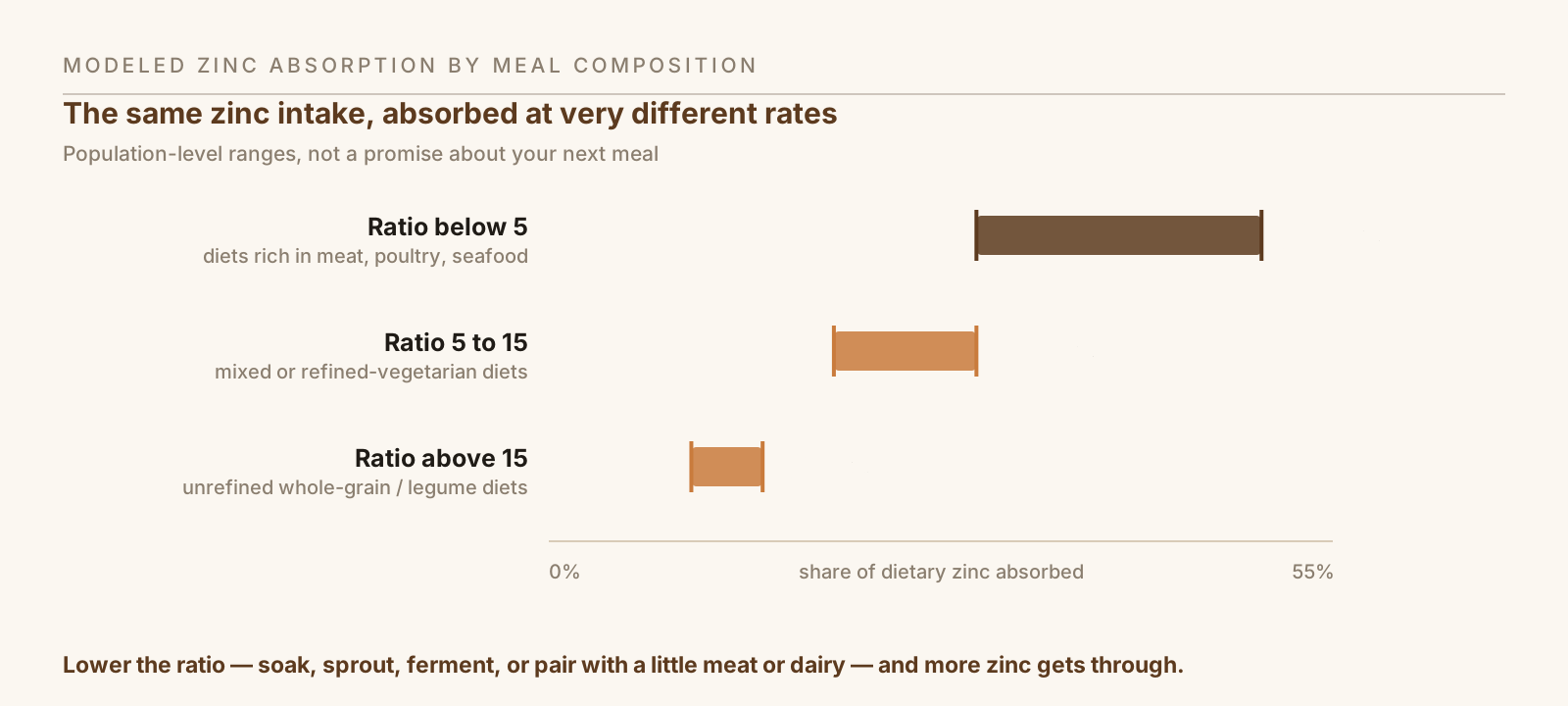
Read that chart plainly and it says something worth sitting with: a diet built mostly on unrefined grains and legumes can absorb roughly a third the share of its zinc that a diet richer in meat, poultry, seafood and dairy does — not because it contains less zinc, necessarily, but because more of what’s on the plate is actively holding onto it in the gut.
The NIH fact sheet is direct about the population this affects: vegetarians and vegans “usually have lower dietary intakes of zinc and lower serum zinc levels” than people who include animal products, specifically because of the volume of legumes and whole grains — and it lists soaking, fermenting, sprouting, or a supplement as the standard responses, the same toolkit that helps iron.
None of this is a reason to fear beans and whole grains, which bring genuine, well-documented nutritional benefits — fiber, folate, magnesium, and the plant compounds that got the inulin-and-blood-sugar question its own honest answer on this site. It’s a reason to know that “high in zinc on the label” and “absorbs well” are two different claims, and a plant-heavy plate is the exact place they can quietly diverge.
Where coffee and tea fit on this map
We’ve written the coffee-and-tea half of this story in full elsewhere, so I’ll keep this to the connective tissue: polyphenols in coffee, black tea and several caffeine-free herbal teas inhibit nonheme iron absorption on their own, independent of caffeine — peppermint tea, entirely caffeine-free, out-inhibited cocoa in the best controlled study we have.
That’s why we treat any roasted-plant brew — chicory, carob, roasted barley, herbal coffee blends like Teeccino’s (opens in a new tab) — as a polyphenol-containing beverage until proven otherwise, and apply the same timing rule: move the cup away from the meal rather than assuming a caffeine-free swap solved anything. But it’s worth being precise that this is a separate lever from the three above it. Switching your drink doesn’t touch a calcium-supplement timing problem, and it doesn’t lower the phytate in your lentils. They’re four different interactions that happen to share a plate, not four symptoms of one cause.
What actually helps, and how much
In descending order of how much it’s worth doing:
- Separate concentrated iron and calcium supplements by a couple of hours. This is the highest-confidence, lowest-cost fix on the list, and it targets the scenario where the calcium-iron interaction is most reliably shown — a supplement dose, not a meal.
- Soak dried beans and grains before cooking, and sprout them if you’re set up for it. Expect roughly a quarter to a third less phytate from an overnight soak, and better than that from sprouting or a real ferment — the sourdough effect, applied to beans.
- Pair plant-heavy meals with a small amount of vitamin C — citrus, peppers, tomatoes — which counteracts phytate’s effect on iron specifically (it does less for zinc). We’ve covered the dose and the honest caveat that this effect is smaller across a whole diet than in a single test meal in the iron-and-coffee piece.
- A little meat, poultry, seafood or dairy in the same meal measurably improves nonheme iron absorption from the rest of the plate, if that’s compatible with how you eat. This isn’t an argument against plant-based eating — it’s one more lever among several, and the other three work with no animal products at all.
- Don’t lean on “avoid dairy with dinner” as your main strategy. The calcium evidence that holds up best is about supplement timing, not about cheese next to lentils.
Who this actually matters for
Most people eating a varied diet with reasonably adequate iron and zinc status don’t need to restructure meals over any of this. The people for whom it’s worth real attention:
- Vegetarians and vegans, whose iron requirement is reckoned at 1.8 times higher than for people eating animal products, and whose zinc intake and serum zinc levels run lower on average per the NIH fact sheets.
- Anyone with diagnosed iron or zinc deficiency, or taking a supplement for either.
- Menstruating people and anyone pregnant, both of whom have meaningfully higher iron and zinc requirements — a context we’ve looked at from the chicory side in is chicory coffee safe during pregnancy and coffee alternatives for breastfeeding.
- Frequent blood donors, who are replacing iron on a schedule that doesn’t wait for a slow diet fix.
- Infants and young children on plant-based complementary foods, where this research base actually originates — a lot of the phytate-degradation literature exists because of infant feeding in food-insecure settings, not wellness content for adults.
If none of those describe you, this is genuinely interesting nutrition science rather than something to act on urgently.
What I actually tell people
When someone asks me to make this simple, here’s the actual order of operations:
- If you take separate iron and calcium supplements, space them out. Free, high-confidence, do it today.
- Soak your beans and grains overnight, as a habit rather than a special occasion. It’s the single biggest, cheapest lever on this whole page.
- Put some vitamin C on the plate at your main plant-iron meal — it’s doing real, if more modest than advertised, work.
- Don’t restructure your diet over the calcium question. The strongest evidence for it is about supplements taken together, not food eaten in the same sitting.
- If you’re vegetarian, vegan, deficient in either mineral, or donating blood regularly, this is worth a conversation with your clinician about levels, not just a diet tweak — a blood test tells you something a comment section never will.
The bottom line
Iron and phytate is the strongest, most actionable interaction on this list, and soaking is the cheapest fix available for it. Zinc and phytate runs on the same chemistry and deserves the same attention, especially on a diet built mostly from unrefined grains and legumes. Iron and calcium is real at supplement doses and much less clear across ordinary meals — treat it as a supplement-timing issue, not a “no dairy with dinner” rule. And coffee or tea is a separate, fifth variable that a caffeine-free switch does nothing to resolve.
None of this is an argument against a plant-based plate. It’s the map Marisol asked for — the one that puts all four interactions where you can actually see them, instead of finding one at a time, one comment section at a time.
This article is educational and is not medical advice. If you have or suspect a mineral deficiency, that’s a blood test and a conversation with your clinician, not a diet decision made from an article — including this one.
Sources & further reading
- Iron — Fact Sheet for Health Professionals (opens in a new tab) — NIH Office of Dietary Supplements
- Zinc — Fact Sheet for Health Professionals (opens in a new tab) — NIH Office of Dietary Supplements
- Calcium: effect of different amounts on nonheme- and heme-iron absorption in humans (Hallberg, Brune, Erlandsson, Sandberg & Rossander-Hultén) (opens in a new tab) — American Journal of Clinical Nutrition, 1991
- Calcium Does Not Inhibit the Absorption of 5 Milligrams of Nonheme or Heme Iron at Doses Less Than 800 Milligrams in Nonpregnant Women (Gaitán et al.) (opens in a new tab) — The Journal of Nutrition, 2011
- Calcium from milk or calcium-fortified foods does not inhibit nonheme-iron absorption from a whole diet consumed over a 4-d period (Grinder-Pedersen et al.) (opens in a new tab) — American Journal of Clinical Nutrition, 2004
- Phytic Acid Degradation as a Means of Improving Iron Absorption (Hurrell) (opens in a new tab) — International Journal for Vitamin and Nutrition Research, 2004
- A Review of Phytate, Iron, Zinc, and Calcium Concentrations in Plant-Based Complementary Foods Used in Low-Income Countries and Implications for Bioavailability (Gibson, Bailey, Gibbs & Ferguson) (opens in a new tab) — Food and Nutrition Bulletin, 2010
- Effect of soaking and sprouting on iron and zinc availability in green and white faba bean (Luo & Xie) (opens in a new tab) — Journal of Food Science and Technology, 2014
Reader conversation (4)
We read every response. Selected reader notes below.
I did not expect the article I asked for in a comment to actually show up, so thank you for that. Reading the calcium section, I think my haematologist was reacting to exactly the distinction you draw — she was never worried about the tofu and greens I eat together, only about the two pills I used to take at breakfast. I’ve since moved my calcium to lunch and my iron to dinner and haven’t thought about it since. The zinc section was the one I actually needed, though, and it didn’t exist anywhere before this.
Your comment is the reason this exists, so thank you for pushing rather than letting it sit as an aside in the other piece. The calcium research turned out to be the most interesting part to untangle precisely because it argues with itself depending on study design — we tried to show that honestly rather than pick the version that made a tidier story.
Pharmacist here again. The supplement-timing point in this one is the single highest-yield piece of counselling advice in either article, and I want to underline why: people who take both iron and calcium are very often taking them for two completely unrelated reasons on two completely unrelated recommendations, from two different clinicians who never discussed each other’s advice. Nobody designed the interaction. It’s just what happens when a multivitamin, a calcium chew and a ferrous sulfate tablet all land at breakfast.
That’s a better description of how this actually happens than anything we wrote, and it explains why the fix has to be this boring: not “stop taking one of them,” just “don’t take them at the same moment.” Boring advice is usually the advice that survives contact with an actual morning.
Ten years vegetarian, and the phytate:zinc ratio chart is the first time I’ve seen a number attached to something I’ve always suspected was true just from how tired the “eat more pumpkin seeds” advice always felt. Soaking lentils overnight is already my habit for digestion reasons; good to know it’s pulling double duty. Genuine question: does soaking dried chickpeas for hummus do anything, or does the long simmer afterward wash out the benefit?
Good question and I don’t have a study that isolates hummus specifically, so I’ll reason from the mechanism rather than invent a number: soaking still degrades phytate before the simmer starts, so the reduction it buys you shouldn’t be undone by cooking afterward — cooking isn’t what re-forms phytic acid. What I can’t tell you is how tahini, lemon and salt in the finished dip interact with the iron and zinc that are left, because nobody has run that meal specifically. Soak it anyway; the mechanism gives no reason not to.
Isn’t this all a bit moot for anyone eating a genuinely varied diet? You say as much in the “who this matters for” section, but the headline and the four-part map imply more urgency than the actual advice does. Feels like the framing is doing more work than the content underneath it.
Fair pushback, and you’re reading the “who this matters for” section correctly — most people don’t need to act on any of this. We kept the map framing because the point isn’t “you are at risk,” it’s “these four things have never been listed in one place,” which was true before this piece regardless of how many readers need to act on it. If the piece reads as more urgent than the content underneath, that’s worth us watching for next time.
Have something to add? Email us and we may include it in a future update.