Caffeine-free affogato: the two-minute dessert, and the herbal-coffee sauce it turns into
Affogato is the easiest classic dessert to make caffeine-free — the whole dish is hot-over-cold, and roasted chicory or herbal coffee does that job as well as espresso. Here's the ratio, the two rules that decide whether it works, the coffee-ice-cream trap that quietly puts the caffeine back, and how to reduce the same brew into a dessert sauce that keeps in the fridge.

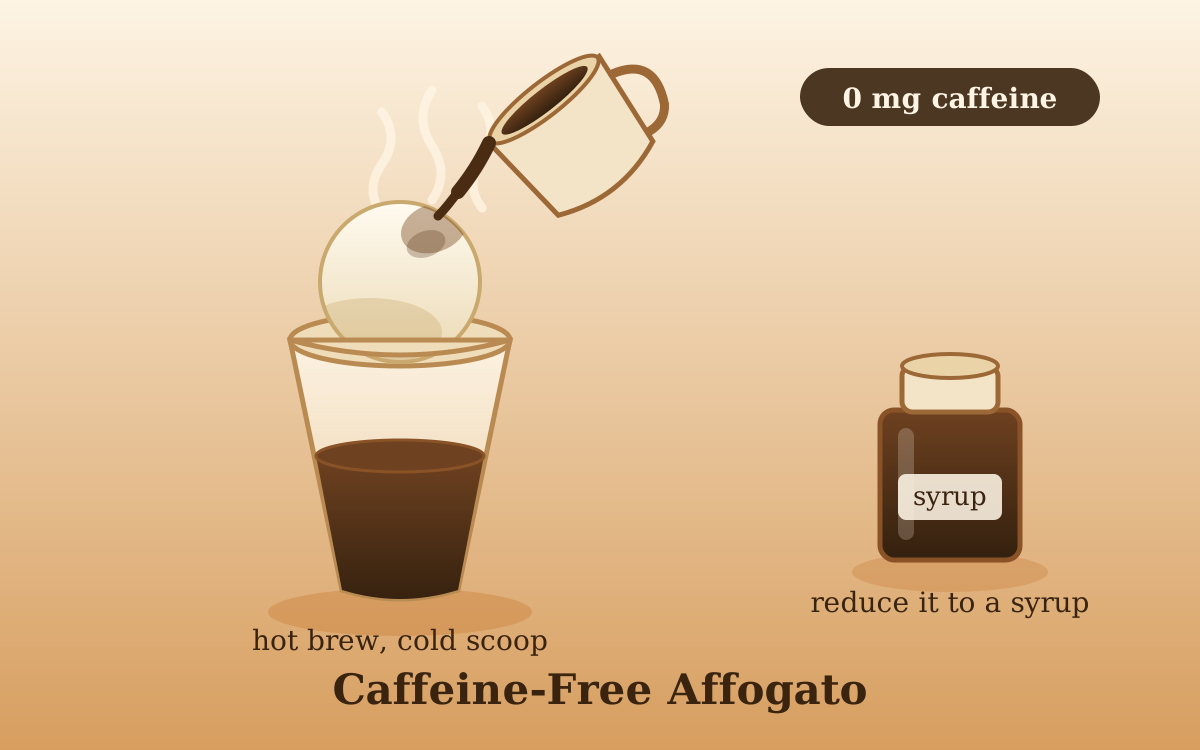
A few weeks ago I wrote up caffeine-free tiramisu, which is the hard one — a dessert where the espresso is load-bearing, where you have to think about egg safety and gluten and an overnight chill, and where getting the soak wrong means you serve sweet cream on dry biscuit. This is the opposite piece. Affogato is the two-minute version of the same idea, and it is genuinely the easiest classic dessert to hand someone who doesn’t drink caffeine.
That’s not a consolation prize, it’s a structural fact about the dish — and it explains something odd. Search for a caffeine-free affogato and essentially every result tells you to use decaf espresso, which is strange advice given that decaf isn’t caffeine-free. A shot still carries a real, if small, dose, precisely in the situations where someone goes looking for this recipe.
So: the ratio, the two rules that decide whether it works, the trap that quietly puts the caffeine back in, and then how to reduce the same brew into a dessert sauce that lives in your fridge for a fortnight.
Why affogato is the easy one
Affogato al caffè means “drowned in coffee,” and the name is doing more work than it looks like. A shot of espresso over a scoop of gelato — traditionally fior di latte, plain milk-flavoured, or vanilla — served immediately, usually in a tall glass with a narrow bottom so the melt collects at the base. In Italy it’s typically eaten as a dessert; outside Italy, restaurants and cafés tend to list it as a beverage. That ambiguity is a hint about what the dish really is.
Because here’s the thing: affogato is not a coffee recipe. It’s an event. Hot meets cold, thin meets dense, bitter meets sweet, all in about ninety seconds before the whole thing collapses into a milkshake. The espresso is there to be hot, dark, and intense. It is not there because of caffeine, and it isn’t structurally embedded the way tiramisu’s soak is — nothing needs to absorb overnight, nothing sets, nothing depends on it.
Which makes the substitution unusually simple: anything genuinely hot, dark, and a bit bitter will do the job. Roasted chicory root, roasted barley, roasted dandelion root, and the blended herbal coffees built from them are roasted to the same dark, faintly burnt place coffee is. They brew opaque brown, they’re bitter in the right register — roasted-caramel, not the tannic edge that makes tea a poor fit here — and they contain no caffeine.
The one thing they’re not is as concentrated as espresso. Which brings us to the only part of this you can get wrong.
The two rules: genuinely hot, genuinely strong
I’ve written some version of the strength rule into nearly every cold recipe here — it’s the whole subject of why iced herbal coffee tastes watery and it drives the granita and popsicles too. Affogato is where it bites hardest, because the dilution is instant and enormous: you’re pouring a small amount of liquid onto a frozen mass that immediately gives up its own water and fat into it.
Rule one: brew it at roughly double strength. Twice the grounds you’d use for a mug you’d sit down and drink — more material, not more time. Over-steeping roasted roots makes them ashy rather than strong; four to five minutes in a press is plenty. Straight from the cup it should taste a shade too intense, almost medicinal. That is correct. If it tastes nice on its own you’ve already lost, because a normal-strength brew over ice cream is warm sweet milk.
I usually do a small press with two heaped tablespoons of grounds to 150 ml of water. The chicory latte piece has the base-brew method in more detail, and our brewable-grounds roundup covers which grounds survive a press without turning to silt.
Rule two: it has to be genuinely hot. This one gets skipped, and it’s the difference between a dessert and a bowl of soup. The pleasure of an affogato is a thermal shock: the outer millimetre of the scoop melting on contact while the centre stays firm and cold. That requires a real temperature gap. Brew it, pour it immediately, and — this is the bit worth adopting — pour it at the table, over the scoop, in front of whoever is eating it. Not in the kitchen. Thirty seconds of walking is enough to lose the moment.
If you’re making several, brew into a small warmed jug, put the glasses out with the scoops already in them, and carry the jug over. Nobody minds pouring their own.
The recipe: two minutes, three things
Serves 2.
- 2 generous scoops gelato or ice cream — fior di latte, vanilla, or see the next section
- 120–160 ml (½–⅔ cup) double-strength roasted chicory, barley, dandelion, or blended herbal coffee, brewed hot
- Optional: a pinch of flaky salt, a grating of carob or dark chocolate, a few toasted hazelnuts
Method.
- Put two tall, narrow-bottomed glasses in the freezer while you brew. Five minutes is plenty. Cold glass buys you maybe twenty extra seconds of contrast, which at this timescale is a lot.
- Brew the herbal coffee at double strength. Keep it in the pan or press — don’t let it sit in a cold cup.
- Take the gelato out of the freezer about two minutes before you serve and put one scoop in each chilled glass. Slightly softened at the surface, still hard through the middle.
- Carry glasses, jug, and spoons to the table. Pour 60–80 ml over each scoop, in front of the person eating it.
- Finish with the salt or the grating if you’re using it, and eat straight away.
That’s it. The classic ratio is one 30–40 ml espresso shot per one or two scoops; I pour closer to double that volume because herbal brews are less concentrated, and because the pooled sauce at the bottom of the glass is the best mouthful in the dish and I want there to be some.
What to scoop — and the coffee-ice-cream trap
Gelato behaves better than ice cream, for reasons of physics. Gelato is typically formulated (opens in a new tab) at around 4–8% fat with only about 20–35% air whipped in; standard ice cream runs roughly 10–16% fat with anywhere from 50% to over 100% air, and is served colder — around −14 to −16°C against gelato’s −11 to −13°C. For an affogato all three differences point the same way: denser and less airy melts into a sauce instead of foaming, less fat means fewer fat globules coating your palate so the roasted flavours land harder, and the warmer starting point means the surface gives way immediately.
Ice cream absolutely works — I use it more often, because it’s what’s in the freezer. Just expect a frothier, sweeter result, and take it out a couple of minutes earlier so it isn’t rock-solid when the brew hits.
Now the trap. The instinctive move, if you’re making a coffee dessert, is to reach for coffee ice cream. Don’t — not if caffeine is the reason you’re here. Coffee ice cream is made with real coffee, and it carries real caffeine: published estimates for a half-cup serving generally sit somewhere around 20 to 50 milligrams depending on the brand. Not a large dose, but not zero — and the FDA specifically notes (opens in a new tab) that consumers should take care with packaged foods where the caffeine content isn’t declared on the label, which for ice cream it generally isn’t.
So you can build the perfect caffeine-free brew, pour it over two scoops of coffee ice cream, and hand someone a dessert carrying more caffeine than a cup of green tea. It’s the same shape as the decaf assumption: the caffeine ends up in the component nobody thought to check. Scoop plain and let the brew supply the coffee flavour, which it will, because that’s the entire point of the dish. Same logic for chocolate ice cream and cocoa-based swirls or shells — a little caffeine, considerably more theobromine. Usually irrelevant; occasionally not, if the dessert is for a seven-year-old or it’s ten at night.
What to brew. Loose roasted chicory or dandelion root is the cheapest way in. The instant grain-and-chicory powders — Pero, Caro, Dandy Blend — dissolve in seconds, though at double strength some start tasting thin and salty rather than intense. Among the blended herbal-coffee roasts, Teeccino (opens in a new tab) is the one I reach for most for this particular job, for a boring practical reason: it’s ground for a normal drip basket or press, so doubling the dose is a one-scoop decision rather than a guess, and one brew makes both the affogato and a batch of the sauce below. Honest caveats — it costs more per cup than loose chicory, most blends are barley- and rye-based and therefore contain gluten (opens in a new tab), and the chicory content carries the usual inulin caveat if your gut is sensitive. The gluten point applies to anything grain-based, orzo and roasted barley very much included; for a naturally gluten-free brew stay with plain chicory root, dandelion root, or carob. Our full alternatives roundup covers the shelf properly.
The sauce: reduce the same brew down
Here’s the part that turns a two-minute dessert into something you get value out of all week. The same double-strength brew, plus sugar, reduced on the stove, becomes a dark roasted dessert sauce that keeps in the fridge.
The pouring sauce (what I actually make):
- 500 ml (2 cups) double-strength herbal coffee
- 200 g (1 cup) granulated or light brown sugar
- A pinch of salt
- Optional: a strip of orange peel, a split vanilla pod, or a cinnamon stick
Combine in a wide pan, bring to a simmer, and let it reduce uncovered for 15–20 minutes, stirring occasionally, until it has come down by roughly half and coats the back of a spoon in a thin sheet. It will look thinner than you want while it’s hot — syrups thicken substantially as they cool, so pull it early rather than late. Cool, strain out the aromatics, and bottle.
Brown sugar gives you more caramel and molasses depth and is what I’d use for anything involving ice cream. White sugar keeps the roasted-root flavour cleaner and is better if you’re pouring it over fruit.
Keeping it. This matters more than recipes usually admit, because the sugar ratio is the shelf life. A sauce like the one above, roughly equal parts sugar and liquid by the time it’s reduced, is a two-week fridge item. If you want something that keeps for months, make a rich syrup instead: 250 ml brew to 400 g sugar (about 1 cup to 2 cups), warmed just until the sugar dissolves — no reduction needed, because the sugar concentration is doing the work. It’s sweeter and less complex, but it’s stable. Either way: clean jar, sealed, fridge, and out it goes if it clouds, smells fermented, or grows anything. There are no preservatives in this. Small batches, made often, beat one heroic jar.
If all of that sounds like more effort than you want on a Tuesday, ready-made caffeine-free concentrates exist and some of them are decent — that piece is about exactly this shelf.
Making it stimulant-free all the way through
If you want a version with no caffeine and no theobromine anywhere in it — which is the version I make when there are kids at the table, or when it’s late — swap every chocolate element for carob. Carob powder contains neither compound, where cocoa carries a little caffeine and a lot more theobromine. The carob vs cocoa comparison has the full trade-off, including the honest part: carob is sweeter, fruitier, and less bitter than cocoa, so it isn’t a flavour-for-flavour swap. In a dessert this sweet, that’s much less of a problem than it is in, say, a mocha.
For a carob swirl: whisk 2 tablespoons carob powder into 100 ml of the hot sauce until smooth, then ripple it back through. Grated over the top, carob behaves like a mild sweet chocolate and looks identical in a photograph.
Five other places the sauce goes
Once there’s a jar of this in the fridge, it stops being an affogato component:
- Over pancakes or waffles, instead of maple syrup. The one my family asks for — roasted-root sweetness against butter is a real combination.
- Stirred into cold milk for a two-second iced drink, a shortcut version of everything in the iced-strength piece.
- Over roasted or grilled stone fruit — peaches and plums especially. Sharp fruit, dark sauce, a spoon of yoghurt.
- Brushed onto plain sponge cake before assembly, as a one-layer nod to tiramisu with no overnight commitment.
- Blended into a milkshake or frappé as the sweetener and the flavour at once.
The traditional affogato variations add a liqueur — amaretto, Kahlúa, a local bicerin. Amaretto is caffeine-free and works beautifully here; Kahlúa is coffee liqueur and does contain caffeine, so it’s out on the same logic as the ice cream. If you’re serving anyone who’s avoiding alcohol, a splash of almond extract in the sauce gets you a surprising amount of the way to the amaretto version.
Troubleshooting: soupy, weak, or lukewarm
It went straight to soup. Too much liquid, too warm a glass, or the scoop was already soft. Chill the glasses, cut to 60 ml per scoop, and take the gelato out later than feels right.
It tastes like sweet milk. Under-brewed — the single most common failure. Double the grounds, not the brew time; over-steeping roasted roots makes them harsh rather than strong.
It was lukewarm by the second spoonful. You poured in the kitchen. Pour at the table.
The sauce set like toffee in the fridge. Reduced too far. Warm it gently with a tablespoon or two of water or hot brew and it will come back. Next time, pull it while it still looks slightly too thin.
It’s gritty. Fine grounds got through. Strain the brew through a paper filter or a fine sieve before it goes anywhere near dairy — grit that’s invisible in a mug is very obvious against gelato.
What’s different, honestly
I’m not going to tell you this is indistinguishable from an espresso affogato. It isn’t, and you’d notice within one spoonful.
What you lose is the sharp top edge. Espresso is concentrated, acidic and slightly aggressive, and that brightness cuts through fat in a way roasted chicory doesn’t. The caffeine-free version is rounder, sweeter, more caramel and less citrus — anyone who orders affogato specifically for that acidic jolt will register the difference immediately.
What you gain is quieter but real: nobody has to decide whether it’s too late for this. Made with a proper double-strength brew and the pinch of salt, it’s a good dessert on its own terms rather than a substitute being graded against something absent — which is the whole trick with these swaps. And unlike tiramisu, it takes two minutes and nothing can go wrong overnight.
For the closest approximation of that espresso sharpness, the caffeine-free espresso-alternatives piece covers the most concentrated cup these ingredients can manage. And if it’s a mixed table with children at it, the family piece covers what’s fine to pour them.
This article is general information about food and drink, not medical or nutritional advice. If you’re pregnant or breastfeeding, managing a medical condition, taking medication, or dealing with coeliac disease or a food allergy, check ingredient lists yourself and talk to your own clinician about what belongs in your diet.
Sources & further reading
- Affogato — definition, composition, and how it's categorised in and outside Italy (opens in a new tab) — Wikipedia
- Spilling the Beans: How Much Caffeine is Too Much? (opens in a new tab) — U.S. Food and Drug Administration
- Gelato vs ice cream: fat, overrun, and serving-temperature formulation differences (opens in a new tab) — Formul.io
- Sources of Gluten — barley and rye are not gluten-free (opens in a new tab) — Celiac Disease Foundation
- Carob powder: nutrition, and why it contains no caffeine or theobromine (opens in a new tab) — Healthline
Reader conversation (5)
We read every response. Selected reader notes below.
I had a tub of coffee ice cream in the freezer and a pregnant friend coming for dinner on Saturday, and my whole plan was chicory affogato over the coffee ice cream because I thought that was the clever version. Read this on Thursday. I genuinely had not once considered that the ice cream was the part with the caffeine in it — I’d been so focused on replacing the espresso. Bought vanilla, made the salted version, she had two.
This is exactly why that section is in there, so I’m glad it caught you before Saturday rather than after. It’s a genuinely counterintuitive failure — you do the hard work on the obvious component and the caffeine walks in through the one nobody audits. Same shape as buying a chicory-labelled coffee that turns out to contain coffee. Worth checking the chocolate elements too if it comes up again, though that’s a much smaller amount.
As an Italian I want to endorse the pour-at-the-table instruction very strongly. In my family the glasses go out with the gelato already in them and the caffettiera comes to the table, and this is not ceremony, it is because an affogato assembled in the kitchen arrives dead. Also worth knowing: orzo affogato is not an invention. My grandmother made it with roasted barley for the children while the adults had the real thing, in the sixties, and nobody thought of it as a substitute. It was simply what children were given.
Thank you for this — the orzo detail is the kind of thing I’d rather hear from someone’s actual kitchen than read in a food history. It also quietly makes the better argument than anything I wrote: the caffeine-free version was never a compromise dessert in the place the dessert comes from, it was just the one you gave to whoever shouldn’t have coffee. I’ve had this comment open in a tab all morning.
Mild pushback, or possibly a confession. First attempt was harsh and slightly ashy and I nearly wrote the whole idea off — I’d read “double strength” and left the press for eight minutes instead of four, because that’s what doubling means in my head. Second attempt with double the grounds and the same four minutes was completely different, actually sweet. The line about doubling the grounds and not the time is in your article and I skimmed past it, so this is on me, but it might be worth being even blunter about it.
Not on you — if a reader skims past a sentence, the sentence wasn’t loud enough. I’ve been assuming that distinction was obvious and your comment is good evidence that it isn’t, so I’ve gone back and put it in bold in the strength section rather than leaving it as an aside. The short version for anyone else here: roasted roots and grains give up what they’ve got fairly quickly, and past about five minutes you stop extracting flavour and start extracting the ashy tannic end. More material, not more time.
The affogato is nice but the syrup is the actual recipe here and I think you buried it in section five. I made the rich two-to-one version with a dark barley blend because I wanted it to keep, and it has been in the fridge three weeks with no trouble. Went on pancakes twice, into cold oat milk most mornings, and over grilled peaches once, which was the best of the three by a distance. One note: mine crystallised slightly around the rim of the jar after week two. Still fine, I just rinsed the neck.
Made the carob version for my daughter’s birthday — she is eight and had been asking for “the coffee pudding” she saw her uncle eating. The carob swirl was indistinguishable from chocolate to a table of children, and I liked knowing there was nothing in it at all rather than just less of something. One question for anyone else trying it: we used a coconut frozen dessert rather than dairy and it melted much faster than I expected, so we were down to soup within a minute.
That melt speed is real and worth flagging for others: a lot of the coconut and oat frozen desserts run higher on air and lower on milk solids than dairy gelato, which is precisely the combination that collapses fast under hot liquid. Two things help — freeze the glasses for longer than five minutes, and cut the pour to about 50ml per scoop so there’s less heat arriving at once. Also, “the coffee pudding” is now what I’m calling it.
Have something to add? Email us and we may include it in a future update.