Why your iced herbal coffee tastes watery — and how to fix the strength
If your iced chicory or herbal coffee keeps coming out thin, pale, and disappointing, it isn't the ingredient's fault — it's almost always a strength problem hiding behind two culprits: ice-melt dilution and shallow extraction. Here's the extraction science in plain terms, the frozen-brew trick that stops the watering-down, the cold-steep ratios that actually work for roasted roots and grains, and a fix for every way an iced herbal cup goes weak.

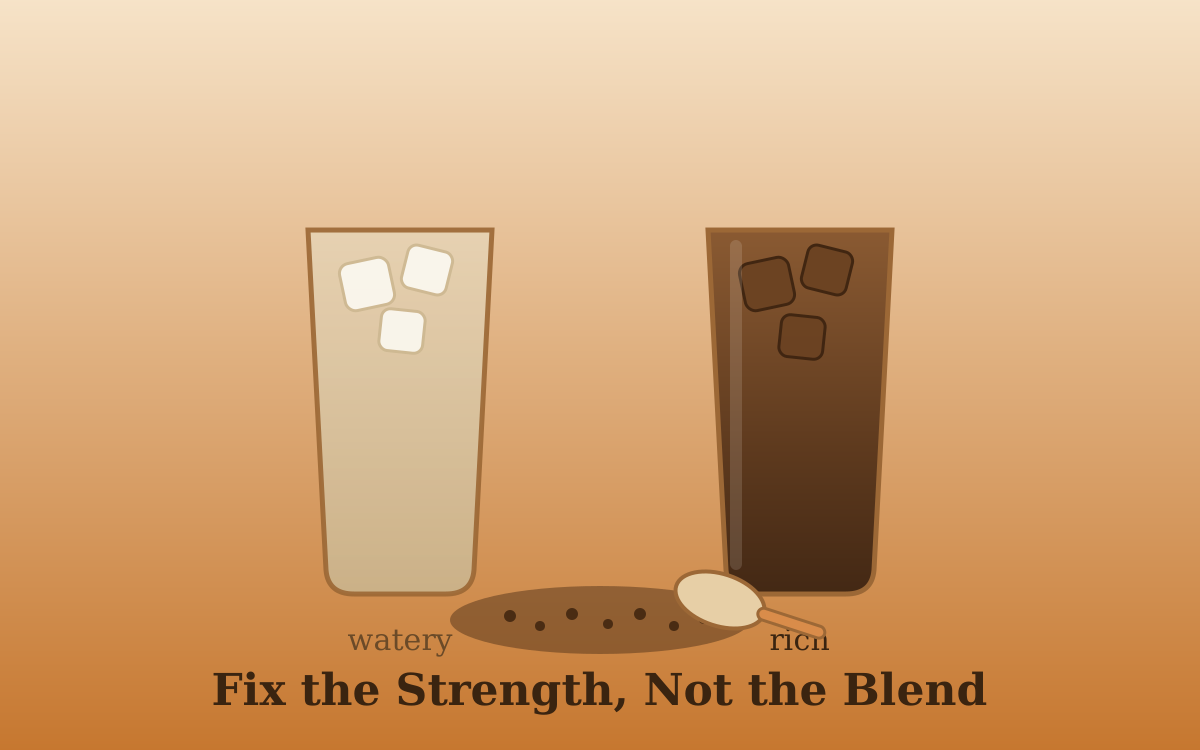
Every summer I get some version of the same disappointed message: “I switched to iced chicory coffee and it just tastes like brown water.” It’s one of the most common complaints readers send me, and it’s also one of the most fixable — because “watery” is almost never a flavor problem with the ingredient. It’s a strength problem, and strength is something you can engineer.
The good news is that a thin, pale iced herbal cup isn’t telling you chicory or roasted-grain “coffee” can’t hold up cold. It’s telling you the drink lost most of its flavor somewhere between the grounds and the glass. Find where, and you get a rich, roasted, genuinely satisfying iced drink instead of a sad tan puddle. There are really only two places the flavor goes, so let’s chase down both.
Watery isn’t a flavor problem — it’s a strength problem
When an iced drink tastes weak, one of two things happened — and usually both are conspiring at once:
- Dilution — the drink was fine, then melting ice thinned it out. This is the sneaky one, because the brew tasted right when you poured it.
- Under-extraction — the brew never had much flavor to begin with, because the grounds didn’t give enough of themselves to the water.
These have different fixes, and if you only address one you’ll still be frustrated. Brew a stronger cup and pour it over a mountain of plain ice and you’re back to watery. Use frozen brew cubes but keep brewing weak and you’ve concentrated a weak drink. You have to solve both. Once you see it this way, the whole thing stops being mysterious — it’s the same over-build-then-protect logic that runs through our best caffeine-free iced coffee alternatives guide, just examined under a magnifying glass.
Culprit one: ice-melt is quietly halving your drink
Here’s the part almost everyone underestimates. When you pour room-temperature or warm brew over a glass of ice, a large share of that ice melts on contact to chill the liquid down — and that meltwater becomes part of your drink. Depending on how much ice you use and how warm the brew was, you can lose a third to a half of your drink’s strength to meltwater before the glass is even sweating.
So the drink that tasted perfect in the measuring cup arrives at your lips diluted by dead water. That’s not a brewing failure — it’s physics doing exactly what it always does.
There are two ways to beat it, and I use both:
Brew at double strength. A cold drink needs to start over-concentrated so that after chilling and melting it lands at “just right.” As a rule of thumb, build your iced base at roughly twice the strength you’d want if you were sipping it hot. Weak brews vanish the instant ice enters the picture.
Use frozen brew cubes, not water ice. This is the single best trick in cold-drink-making, and it’s worth saying loudly: freeze a batch of your brewed chicory or herbal coffee into an ice-cube tray, and chill your drink with those instead of plain ice. As they melt — and they will — they release more of the same drink rather than plain water, so the cup gets stronger as it sits instead of weaker. It costs nothing but a night of planning, and it’s the frozen-brew method (opens in a new tab) that quietly separates a café-quality iced drink from a watery one. It’s the same principle that makes our caffeine-free blended frappés hold their body in a blender.
If you do nothing else in this whole article, do these two things. For a lot of readers, that’s the entire fix.
Culprit two: roasted roots and grains don’t give up flavor like coffee
Now the subtler culprit. Even with the dilution solved, some iced herbal cups still taste hollow — and that’s about extraction, the process of water pulling flavor compounds out of the grounds.
Coffee is unusually generous here: it’s ground fine, it’s full of soluble compounds, and it gives up a lot of flavor quickly. Roasted chicory root, dandelion root, roasted barley, carob, and the grain-and-root blends behave differently. They’re often ground coarser, their flavor sits in denser, more fibrous material, and — importantly for iced drinks — a quick or cool brew simply doesn’t draw out as much. Brew a herbal blend the same way and for the same short time you’d flash-brew a weak coffee, and you’ll extract even less. There was never much flavor in the cup to begin with.
The instinct is to fix this with heat and time — steep it hotter, leave it longer. Resist that instinct past a point, because it’s how you trade “watery” for “harsh.” Over-brewing pulls the astringent, dry, woody compounds out last, and those are exactly what make an over-steeped herbal brew taste like chewing on a twig.
The clean lever is more grounds, not more time. Increasing the dose raises strength while keeping the flavor smooth; pushing time and temperature raises strength and bitterness together. For iced herbal coffee I use roughly one and a half to two times the grounds I’d use for a hot cup, brew it properly, and stop. If you want to nail the warm version of that stronger base first, the method in our how to make a chicory latte piece is a good primer — you’re just brewing it concentrated and chilling it down.
The cold-steep fix: time and ratio for herbal coffee
If you want the smoothest possible iced herbal cup, skip hot brewing entirely and cold-steep it. Cold water extracts slowly and selectively — it pulls out the sweet, round, chocolatey notes and leaves more of the bitter, astringent ones behind. It’s why cold-brewed anything tastes mellower, and roasted roots and grains take to it beautifully.
The method is forgiving:
- Grind coarse. Coarser grounds cold-steep cleanly and strain more easily. Fine grounds turn to silt.
- Use a strong ratio. For a concentrate, go somewhere around one part grounds to four to eight parts cold water by volume. Toward the stronger end if you plan to dilute with milk and ice; weaker if you’ll drink it closer to straight. Standard cold-brew ratios and steep times (opens in a new tab) transfer directly to chicory and herbal blends.
- Steep 12 to 18 hours in the fridge. Herbal blends generally want the longer end because they extract more slowly than coffee. Taste at 12 hours and let it ride if it’s still thin.
- Strain well. A fine mesh followed by a paper filter or a nut-milk bag gets you a clean concentrate with no grit.
Now you’ve got a strong, smooth concentrate. Dilute to taste with water or milk, pour over frozen brew cubes, and you have an iced drink that tastes like something. This is the same logic behind our best cold-brew coffee alternative roundup, applied to the strength question specifically.
The overlooked variable: your water
Here’s one almost nobody checks. An iced drink is overwhelmingly water — and water quality shapes both how much flavor you extract and how the cup tastes.
Very soft, near-distilled water actually extracts poorly and can leave a brew tasting flat and hollow, because a modest amount of dissolved mineral content helps water grab onto flavor compounds. On the other end, very hard, heavily mineralized water can taste dull, chalky, or muted, and it’s rough on kettles too. The water-quality research (opens in a new tab) that specialty coffee people obsess over applies just as much to roasted roots and grains: water with a moderate mineral balance extracts more fully and tastes rounder.
You don’t need to test-strip your tap. Just know this: if a brew tastes strangely lifeless despite a strong ratio and frozen cubes, your water is the prime suspect. And there’s a simple tell — if your tap water tastes off on its own (heavily chlorinated, very hard, metallic), it will taste off in the cup. Filtered water is a cheap, easy upgrade that often does more for a dull brew than any change to the grounds.
A strength cheat sheet by method
Pulling it together, here’s where I’d start for each approach. These are starting points — taste and adjust, because grinds and blends vary.
- Hot-brew over ice (fastest): Brew at roughly double your normal hot-cup strength (about 1.5–2× the grounds), then pour over a glass of frozen brew cubes. Ready in minutes.
- Cold-steep concentrate (smoothest): 1 part coarse grounds to 4–8 parts cold water, steep 12–18 hours in the fridge, strain, then dilute and serve over frozen brew cubes. Make a batch; it keeps several days.
- Make-ahead iced base (most convenient): Brew a strong batch, chill it, and store it. Pour over frozen cubes and add milk to order all week.
Notice the constant in all three: over-build the strength, then protect it from dilution. Every good iced drink obeys that rule, which is why it threads through the whole iced coffee alternatives lineup.
Fixing every way it goes weak
A quick diagnostic for the next time a cup disappoints:
It tasted fine, then got weaker as I drank it. Classic dilution. Switch to frozen brew cubes and drink it a touch more promptly. Plain ice is the enemy.
It was thin from the first sip. Under-extraction or too little grounds. Increase the dose by half again, or cold-steep longer. Don’t just crank the heat.
It’s strong but harsh, dry, or bitter. You over-brewed — too hot or too long. Back off the time and temperature and add grounds instead to reach strength.
It’s strong but somehow flat and lifeless. Suspect the water. Try filtered or bottled spring water and see if the cup wakes up.
It’s gritty at the bottom. Grind coarser and strain better — a paper filter or nut-milk bag after the mesh. Fine silt is a straining problem, not a strength one.
If you’re starting from a blend
You don’t have to brew from raw roasted root to get this right. Any brewable chicory or roasted-herbal “coffee” works — the strength rules are identical. Brew it concentrated, chill it, and pour over frozen brew cubes, and a blend that tasted watery iced will come alive.
Among the ready-to-brew herbal blends, one caffeine-free brand worth knowing is Teeccino, whose chicory-and-herbal coffees (opens in a new tab) brew much like coffee and take well to a strong, chilled, cold-steeped treatment. It’s one option among several — Pero, Cafix, and plain roasted chicory all take the same approach — so if you already brew a blend you like, just brew it stronger and freeze some into cubes. One label note that matters iced as much as hot: barley-based blends contain gluten (opens in a new tab), while pure chicory, dandelion, and carob are naturally gluten-free.
Whichever base you reach for, the takeaway is the same: watery iced herbal coffee is a solved problem. Build it stronger than feels reasonable, extract it gently with more grounds rather than more heat, freeze your brew into the ice, and mind your water. Do that and the drink you’d almost written off becomes the one you look forward to on the worst afternoon of the summer. For the wider map of what to brew in the first place, our best caffeine-free coffee alternatives guide is the place to start.
Sources & further reading
- Water Quality and its effect on extraction and flavor (opens in a new tab) — Specialty Coffee Association
- How To Make Cold Brew Coffee — ratios and steep time (opens in a new tab) — The Kitchn
- Blended and iced coffee that won't water down — the frozen-brew method (opens in a new tab) — Coffee Slang
- Sources of Gluten — barley and rye are not gluten-free (opens in a new tab) — Celiac Disease Foundation
Reader conversation (5)
We read every response. Selected reader notes below.
I have been blaming the chicory for MONTHS. Bought three different brands convinced one of them would finally not taste like tan water over ice. It was never the chicory — I was brewing it normal strength and drowning it in a full glass of ice. Made a batch of brew cubes last night like you said and today’s glass actually tasted like a real iced coffee. I feel a little silly but mostly relieved.
Please don’t feel silly — this is genuinely the most common message I get, and the ice is such a quiet culprit because the brew tastes perfect right up until it hits the glass. The fact that three brands all “failed” the same way was the tell that it wasn’t the brands. Enjoy the cubes; they change everything.
The “more grounds, not more heat” line should be printed on every bag. I kept steeping my roasted dandelion longer and longer trying to get it stronger and just made it more bitter every time. Bumped the dose by half instead and cut the steep back and it’s smooth AND strong now. Extraction finally makes sense to me.
Exactly — time and temperature raise strength and bitterness together, so they always feel like a trap. Dose raises strength cleanly. Dandelion especially rewards the coarser-grind, more-grounds, shorter-brew approach because those roots turn astringent fast when you push them.
Cold-steeping my chicory at 1-to-6 for 16 hours was a revelation. So much rounder and sweeter than the hot-brewed-over-ice version, no bitterness at all. And thank you for the gluten note even in a recipe piece — I’m celiac and I appreciate that you never let it slide, even when the article is about strength and not safety.
Genuinely did not expect the water section. My tap here is hard as nails and my cold brew always tasted a bit dull no matter the ratio. Switched to filtered for one batch as a test and it was noticeably livelier. Wild that the thing I never thought about was the majority of the drink.
105 degrees here and this is exactly what I needed. Made the make-ahead strong base on Sunday, froze half into cubes, and I’ve been building an iced chicory with oat milk every afternoon in about thirty seconds. No more watery disappointment at 3pm. The frozen-brew-cube trick is the best thing I’ve learned all summer.
Have something to add? Email us and we may include it in a future update.