Caffeine-free tiramisu: the espresso-soaked dessert, rebuilt with chicory and herbal coffee
Tiramisu is defined by its espresso soak — which makes it the hardest classic dessert to hand someone who's off caffeine. Here's how to rebuild it with a strong chicory or herbal-coffee soak, including the strength rule that keeps the ladyfingers from tasting like plain sponge, a carob dusting for a fully stimulant-free version, and honest notes on eggs, gluten, and what you actually lose.

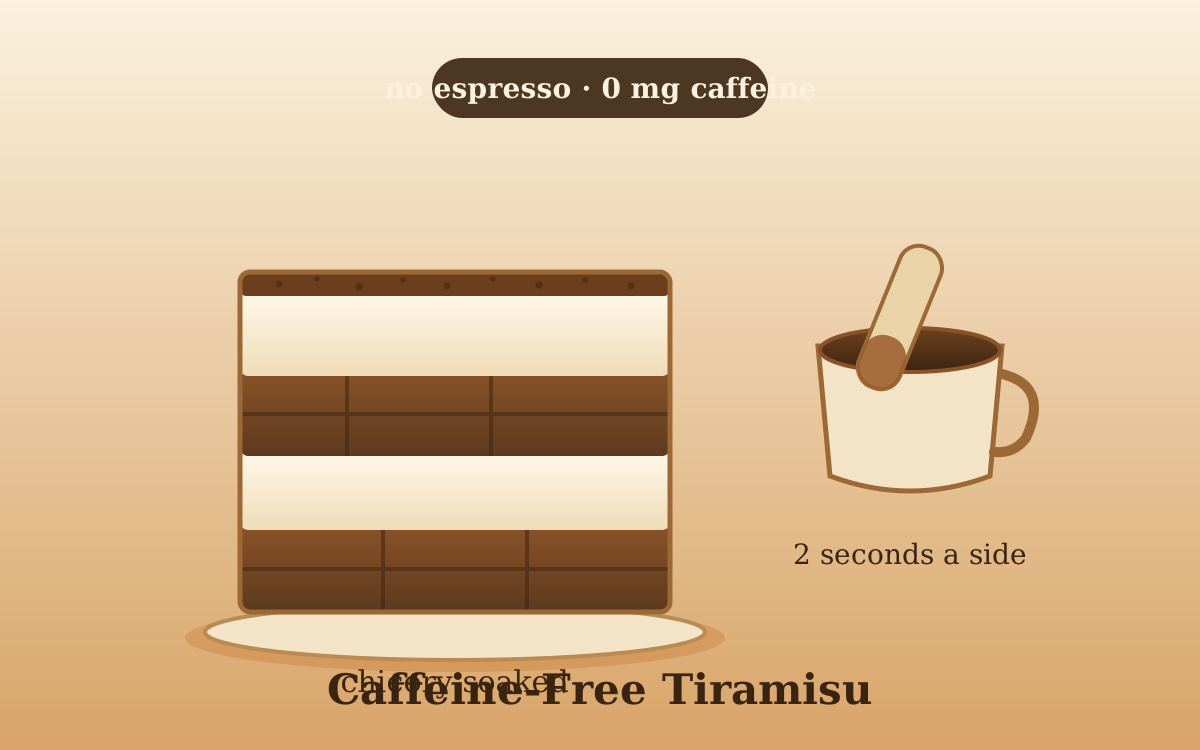
Tiramisu is the dessert I get asked about most, and it’s the one I resisted writing up the longest. Every other classic has an easy caffeine-free route — you can make a perfectly good chocolate cake, a lemon tart, a panna cotta without touching coffee, because coffee was never the point. Tiramisu is different. The espresso isn’t a flavor note in tiramisu, it’s the structure. It’s what the ladyfingers are made of, once they’ve had their two seconds in the cup. Take it out and you have sweet cream on dry sponge, which is not a dessert so much as an apology.
So this isn’t a “coffee-free tiramisu” in the sense of leaving something out. It’s a tiramisu where a strong roasted-chicory brew does the espresso’s job — and it turns out to do that job unusually well, because chicory and roasted grains are dark-roasted to the same bitter place coffee is. I’ve made this version for a pregnant sister-in-law, for a table with three kids at it, and for myself at nine o’clock at night more times than I’ll admit. Below is the recipe, the one rule that decides whether it works, and an honest account of what’s different.
Why tiramisu is the hard one
Ask what espresso contributes to tiramisu and most people say “coffee flavor.” That’s the smaller half. The espresso is really doing three things at once:
- Wetting the ladyfingers. Savoiardi are dry, crisp biscuits by design. The soak is what turns them into the soft, cakey layers you actually eat. No liquid, no tiramisu.
- Supplying bitterness. Mascarpone, cream, sugar, and cocoa are all rich and sweet in the same direction. Espresso is the only thing in the bowl pulling the other way, and it’s what keeps a slice from cloying halfway through.
- Carrying a roasted, slightly burnt aroma that reads as “grown-up dessert.”
That’s a demanding brief, and it rules out most obvious substitutes. Warm milk wets the biscuits but adds sweetness to a dessert that has plenty. Tea is thin and tannic in the wrong register. Decaf espresso is the closest match on flavor but isn’t actually caffeine-free — a shot still carries a real, if small, dose, which matters if the reason you’re making this is pregnancy, a caffeine-sensitive guest, or a child at the table.
Roasted chicory root, roasted barley, roasted dandelion root, and the blended herbal coffees built from them hit all three marks. They’re dark, they’re genuinely bitter, they brew to a deep opaque brown, and they contain no caffeine at all. The one thing they’re not is as concentrated as espresso, which brings us to the only rule in this piece that really matters.
The soak: brew it stronger than you’d drink it
If you’ve read my piece on why iced herbal coffee tastes watery, you already know this lesson in its drink form. Tiramisu is the same lesson in dessert form, and the dilution is even more aggressive: the soak gets absorbed into dry sponge, sandwiched with fat and sugar, and then left overnight to redistribute. Three separate muting steps.
Build the soak at roughly one and a half to two times your normal strength, cooled to room temperature before you dip. Concretely:
- Brewed in a drip machine or press: use one and a half to two times the grounds you’d use for the same volume of drinking brew. If your usual is two tablespoons per cup, go three to four.
- Instant or granular herbal coffee: double the label dose. Most instants are calibrated for a mild cup.
- Cold-steeped concentrate: a 1-to-4 ratio of coarse grounds to water, 12 to 18 hours in the fridge, strained well — the same base I use for frozen granita and popsicles, and it works beautifully here.
Taste it. It should be slightly unpleasant to sip straight — a little too dark, a little too intense. That’s the target. A soak that tastes lovely in the cup will taste like nothing by tomorrow.
Any brewable caffeine-free coffee works. Plain roasted chicory root is the cheapest way in and the most espresso-adjacent on bitterness. Dandy Blend and Pero dissolve instantly, which is convenient when you only need a cup and a half. Among the blended herbal roasts, Teeccino’s chicory-and-herbal coffees (opens in a new tab) brew concentrated in a normal drip basket and come in dark-roast profiles that suit this well — one option among several, so use whichever you already keep in the cupboard, just brewed stronger than usual. Two honest caveats that apply to the whole category: barley- and rye-based blends contain gluten (opens in a new tab), and chicory’s inulin fiber can cause gas or bloating in sensitive guts, so a heavily chicory-soaked dessert isn’t the right choice for someone managing chicory and IBS.
I also like adding a pinch of fine salt and about a teaspoon of instant chicory granules directly into the cream. It’s a small trick that restores some of the bitter edge espresso used to bring from the biscuit side, and it keeps the mascarpone layer from reading as plain sweetened whipped cream.
The recipe: caffeine-free tiramisu for a 9x9
Serves 8 to 9 · about 30 minutes of work · needs at least 6 hours, ideally overnight, in the fridge
For the soak
- 1½ cups strong caffeine-free herbal coffee (chicory, dandelion, barley, or a blend), brewed at 1.5–2× strength and fully cooled
- 1 tablespoon sugar
- Optional: 2 tablespoons Marsala, dark rum, or coffee liqueur — see the alcohol section
For the cream
- 16 oz (450 g) mascarpone, cold
- 1¼ cups (300 ml) heavy cream, cold
- ½ cup (100 g) sugar
- 4 egg yolks (see the egg options — pasteurized, cooked, or omitted)
- 1 teaspoon vanilla extract
- Pinch of fine salt
- Optional: 1 teaspoon instant chicory granules
To assemble
- About 24 to 30 ladyfingers (savoiardi), or gluten-free equivalents
- 2 to 3 tablespoons cocoa powder, carob powder, or a half-and-half blend, for dusting
1. Make the soak. Stir the sugar (and alcohol, if using) into the cooled brew until dissolved. Pour it into a shallow bowl wider than a ladyfinger — a pie dish is ideal. Warm soak turns biscuits to mush, so make sure it’s at room temperature or cooler.
2. Build the base. Whisk the yolks with the sugar over a bain-marie until pale, thick, and ribboning off the whisk — this is the cooked-custard route described below. Let it cool to room temperature. Then whisk in the mascarpone, vanilla, salt, and chicory granules until smooth. Work gently; mascarpone splits into a grainy mess if you beat it hard or if it’s warm.
3. Whip and fold. Whip the cold cream to soft-to-medium peaks — it should hold a shape but still look glossy, not stiff. Fold it into the mascarpone base in two or three additions with a spatula, stopping the moment it’s homogenous.
4. Dip fast. One ladyfinger at a time: one to two seconds per side, no more. They’re engineered to drink, and four seconds is the difference between a tender layer and a collapsed one. The center should still feel slightly firm when you set it down. Lay them tightly in a single layer across the bottom of a 9x9-inch dish, breaking a few to fill the gaps.
5. Layer. Spread half the cream over the biscuits and smooth the top. Dip and lay a second layer of ladyfingers, then the remaining cream. Level it with an offset spatula.
6. Chill, then dust. Cover and refrigerate at least 6 hours, ideally overnight — the biscuits need that time to finish softening and the layers to set enough to cut. Dust with cocoa or carob only just before serving, through a fine sieve. Dusted early, the powder absorbs moisture and goes from velvety to damp and patchy.
Cut with a thin knife wiped clean between slices. Keeps, covered, 3 to 4 days; it’s arguably best on day two.
The dusting: cocoa, carob, or both
Here’s a detail that gets missed even in careful caffeine-free baking: swapping the espresso doesn’t get you to zero if you finish with cocoa. Cocoa powder carries a small amount of caffeine and a much larger amount of theobromine, a related and milder stimulant — the same molecule that makes chocolate a gentler but real stimulant rather than a neutral one.
For most adults, the tablespoon or two spread across nine slices is trivial. Two situations where it isn’t:
- Kids. If you’re serving this to children — one of the reasons people make it — a carob dusting keeps the whole dessert free of both caffeine and theobromine, which is also the logic behind most of what I pour them in the family caffeine-free lineup.
- Late dessert. If you’re eating tiramisu at nine at night and you’re sensitive, “very nearly caffeine-free” is a strange place to land after going to the trouble of losing the espresso. Given how much of caffeine’s cost shows up in sleep you don’t perceive as disturbed, it’s a cheap swap to make.
Carob powder (opens in a new tab) contains neither compound. It’s also naturally sweeter and lighter in color than cocoa, so expect a paler top and slightly less bite — the same trade-offs I covered in the carob-versus-cocoa comparison. My preference, honestly, is a half-and-half blend when there’s no specific reason to go pure: carob’s sweetness rounds off cocoa’s dryness and the color still reads as tiramisu. When it’s for kids or a bedtime slice, straight carob.
The egg question, handled three ways
Traditional tiramisu is built on zabaglione — yolks whisked with sugar and Marsala over gentle heat. That gentle heat is real but usually falls short of pasteurizing, so many classic recipes are effectively raw-egg desserts. The U.S. FDA advises (opens in a new tab) using pasteurized shell eggs or pasteurized egg products in any dish where the eggs are raw or undercooked when served, and USDA guidance (opens in a new tab) says the same. That advice matters more for young children, older adults, pregnant people, and anyone immunocompromised.
Three workable routes, in the order I’d recommend them:
- Cooked custard (my default, and what step 2 above describes). Whisk yolks and sugar in a heatproof bowl over barely simmering water, whisking constantly, until thick, pale, and ribboning — a few minutes. If you own an instant-read thermometer, take it to 160°F / 71°C. Cool fully before it meets the mascarpone. You get the classic richness with the risk cooked out.
- Pasteurized eggs, uncooked. Sold in-shell in many supermarkets, or as liquid pasteurized yolks. Use them exactly as a traditional recipe directs. Easiest path if you want the authentic method.
- No eggs at all. Mascarpone plus whipped cream plus sugar makes a genuinely good tiramisu cream — a little lighter, a little less custardy, no yellow tint. If you go this way, increase the mascarpone slightly and whip the cream to medium rather than soft peaks so the layers hold their cut.
None of these change the soak or the assembly. Pick on comfort, not authenticity.
Ladyfingers, gluten, and the label check
Standard savoiardi are wheat-based: flour, sugar, eggs, raising agents. So a caffeine-free tiramisu is not automatically a gluten-free one, and the two get conflated constantly in this category.
Two things to check if gluten matters at your table:
- The biscuits. Gluten-free savoiardi exist from several Italian manufacturers, typically built on corn starch, rice flour, and potato starch. They’re a little more fragile and a little more absorbent than wheat versions, so cut the dip to about one second a side. Homemade gluten-free ladyfingers with a 1:1 blend also work well and hold up better than the packaged ones.
- The soak. This is the one people miss. Barley- and rye-based herbal coffees contain gluten, and plenty of the products shelved as coffee substitutes — Pero, Cafix, several roasted-grain blends — are barley-based. Pure chicory root, pure dandelion root, and carob are naturally gluten-free. If you need the dessert to be gluten-free, the soak needs auditing as carefully as the biscuits.
Marsala, rum, or nothing at all
The alcohol is optional, and I leave it out more often than not. Two tablespoons of Marsala or dark rum in the soak adds an aromatic lift that flatters the herbal brew — chicory and rum are genuinely good together. But if you’re making this specifically for pregnancy, for children, or for someone who doesn’t drink, skip it. Nothing structural depends on it.
If you want the aromatic complexity without the alcohol, a strip of orange peel or a split vanilla bean steeped in the warm brew before cooling does a surprising amount of the same work. A quarter teaspoon of almond extract is another route, though it moves the dessert somewhere slightly different.
Troubleshooting: soggy, bland, or soupy
The layers are mushy and won’t hold a cut. Over-dipping, nearly always. One to two seconds a side, and the biscuit should still have a firm core when you set it down; it finishes softening in the fridge. A warm soak also does this — cool it first.
It tastes like sweet cream on plain sponge. The soak was too weak. This is the single most common failure with a caffeine-free version, because herbal coffees are gentler than espresso and people brew them at drinking strength out of habit. Go one and a half to two times up, and add the salt-and-chicory-granules trick to the cream.
The cream is grainy or split. Mascarpone was too warm, or beaten too hard, or the custard was still warm when it went in. Keep everything cold, fold by hand, stop as soon as it’s smooth.
It’s soupy after chilling. Cream under-whipped, or the mascarpone loosened from overworking. Soft-to-medium peaks, and if you’ve skipped the eggs, lean toward medium.
The cocoa top is damp and patchy. Dusted too early. Do it in the last minute before it goes to the table.
What you actually lose
A little, and it’s worth naming rather than pretending otherwise. Espresso is more concentrated and sharper than anything you can brew from a root, so the finished dessert is rounder and slightly less bracing — the bitter edge is softer, and a real tiramisu obsessive will notice. What you don’t lose is the thing tiramisu is actually loved for: the contrast between cold, fatty, barely-sweet cream and dark bitter sponge. That survives completely intact.
What you gain is that you can serve it to anyone, at any hour. It’s the dessert version of the trade almost everyone in this category ends up making — a version that’s ninety-five percent as good and a hundred percent available. And if you’re building a whole caffeine-free dessert repertoire, the strong-brew base you make for this is the same base behind the chicory latte, the frozen treats, and most of what I write about here. Brew it once, brew it strong, use it three ways.
This article is general information about ingredients and food preparation, not medical or dietary advice. If you’re pregnant, breastfeeding, managing a food allergy or celiac disease, or feeding a young child, check specific ingredients with your own clinician.
Sources & further reading
- What You Need to Know About Egg Safety — pasteurized eggs in raw-egg dishes (opens in a new tab) — U.S. Food and Drug Administration
- Shell Eggs from Farm to Table (opens in a new tab) — USDA Food Safety and Inspection Service
- Sources of Gluten — barley and rye are not gluten-free (opens in a new tab) — Celiac Disease Foundation
- Carob powder: nutrition, and why it contains no caffeine or theobromine (opens in a new tab) — Healthline
Reader conversation (6)
We read every response. Selected reader notes below.
My nonna would have opinions but I am going to defend you. The point you make about espresso being the structure and not the flavour is the correct point, and it is why every “no coffee tiramisu” recipe I have tried before this one failed — they all replaced the espresso with milk or nothing and produced dry biscuits under cream. Roasted chicory is bitter in the same direction. I made it with a very dark barley blend for my sister who is pregnant and she cried a little, which I will take as a review.
The milk substitution is the one that really doesn’t work — you’re adding sweetness to a dessert that already has all it needs, and you lose the only ingredient pulling the other way. Barley is a lovely choice for the soak if gluten isn’t a concern at the table; it’s rounder than chicory and reads almost malty against the mascarpone. Please tell your sister we’re glad.
Made this twice. First attempt was exactly the failure mode you predicted — I brewed the chicory at normal drinking strength because it tasted good in the cup, and by the next day the layers were basically sweet sponge. Second attempt at double strength was a completely different dessert. I’d suggest putting the strength rule in bold above the ingredient list, because I read past it the first time assuming it was optional flavour advice rather than the actual load-bearing instruction.
That’s fair criticism and I’ve taken it — the strength section now sits above the recipe rather than reading as a footnote to it. Your two-attempt experience is the single most useful thing in these comments, because “it tasted good in the cup” is precisely the trap. If it doesn’t taste slightly too strong to sip, it isn’t strong enough to survive a night in the fridge.
Thank you for the cocoa footnote. I have made caffeine-free desserts for my son for three years and it genuinely had never occurred to me that the dusting had anything in it — I was auditing the soak and then sifting cocoa over the top without a thought. Went half carob half cocoa and he could not tell, which honestly says more about the carob than about a nine-year-old’s palate.
The gluten-free savoiardi note about one second instead of two is not in any recipe I have found and it is completely correct. The corn-starch ones drink much faster than wheat. My first gluten-free attempt turned into a trifle. Second one, one second a side, held a clean slice. Also worth saying for anyone else with celiac: I nearly ruined it anyway by reaching for a barley coffee substitute for the soak, exactly as you warned.
The soak is the trap for celiac readers and it catches people constantly, because these products sit on the shelf labelled as coffee and nobody expects a coffee to contain barley. Pure chicory or dandelion root is the safe default. And yes — gluten-free biscuits are thirstier and more fragile at once, so the dip has to shorten.
Went the no-egg route because I was making it for a mixed table including my mother-in-law who’s had a transplant, and I didn’t want to think about it. It was excellent. Slightly lighter and less custardy exactly as you said, and nobody who wasn’t told noticed anything missing. Whipping the cream to medium rather than soft was the tip that made it cut properly.
Small addition from a household that doesn’t drink: a strip of orange peel steeped in the hot chicory before cooling does far more than I expected in place of the Marsala. It gives you that “there’s something else in here” quality without anything alcoholic. Vanilla bean was good too but the orange was the one people asked about.
Have something to add? Email us and we may include it in a future update.