A caffeine-free espresso martini, and why the original was designed to be both things at once
The espresso martini was invented to wake someone up and get her drunk in the same glass. A caffeine-free version keeps the dark, foamy, bittersweet drink and drops the part the CDC says can make you feel less affected by alcohol than you are. Includes a no-alcohol version.

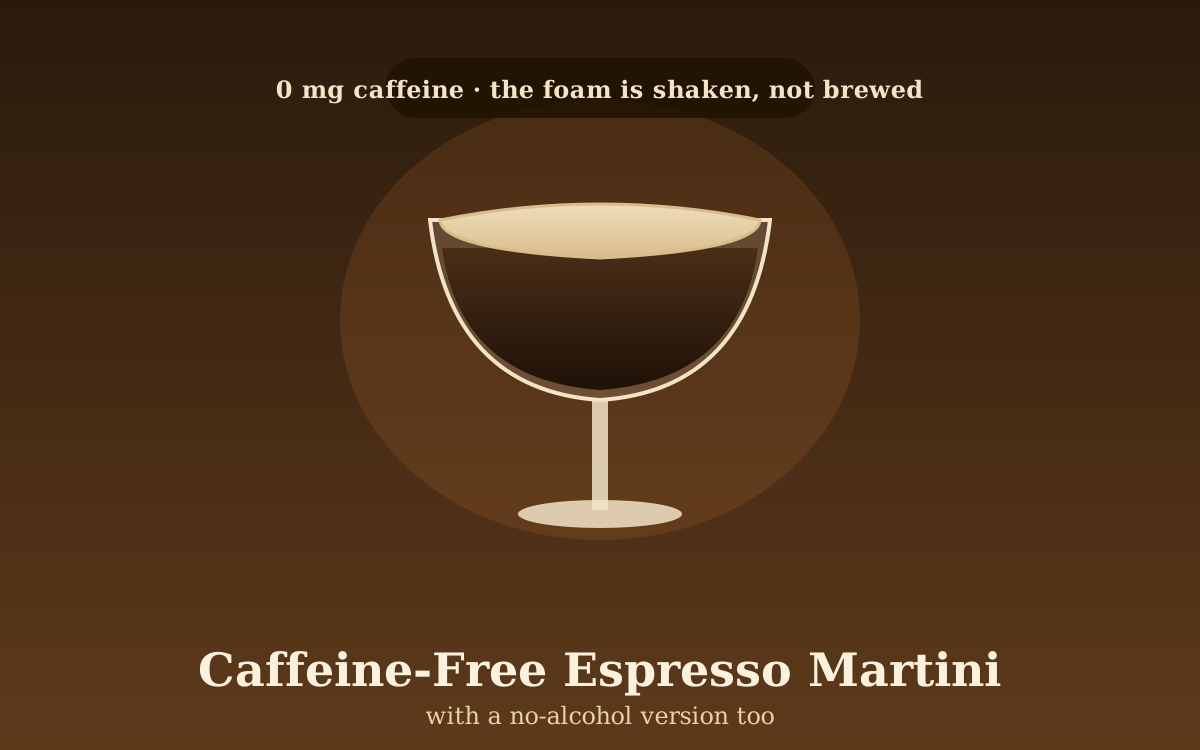
If you’ve gone caffeine-free and the holidays are coming, you’ve probably noticed the espresso martini on every menu and in every group order. It’s the drink that makes the most pointed case against your decision, because the caffeine is the whole premise. So it’s worth knowing what the drink was for, what it quietly does, and how to make a version that keeps what you liked about it. Most of what you liked was never the caffeine.
Where the espresso martini came from
According to Australian Bartender’s profile of its creator (opens in a new tab), the drink was made in 1980s London by the bartender Dick Bradsell at Fred’s Club. It was originally called a vodka espresso. The story that travels with it is that a customer asked for something that would wake her up and get her drunk. Details vary between tellings, including which coffee liqueur went in, so treat the origin story as bar lore rather than settled history.
What nobody disputes is the structure: vodka, coffee liqueur, a shot of fresh espresso, a little sugar syrup, shaken hard and strained into a chilled glass with a pale layer of foam on top. It is a stimulant and a depressant in one glass, by design.
What the caffeine was doing in there
The CDC’s page on mixing alcohol and caffeine (opens in a new tab) is blunt about it. You might feel like you have more energy, or like the alcohol is affecting you less, but the effects of alcohol on your body do not change when it is used with caffeine. The agency also notes that people who mix alcohol with energy drinks are more likely to report binge drinking, injuries and alcohol-impaired driving. That research is about energy drinks, not espresso martinis specifically, so don’t read it as a verdict on one cocktail. The mechanism it describes, feeling more sober than you are, applies to any caffeinated drink with alcohol in it.
That’s the honest case for a caffeine-free version, and it differs from the usual one. A caffeine-free martini won’t keep you awake, which matters if you’re protecting your sleep. It also removes the part of the drink that can make a second round feel like a better idea than it is. You’ll feel the alcohol at the rate it’s actually arriving. Some people find that annoying and some find it a relief. If you’ve been working out how to handle social drinking and caffeine together, you may land in the second group.
What you lose without espresso, and how to get it back
Strip out the espresso and the caffeine, and three things change that you will notice.
Foam. Fresh espresso arrives with crema and coffee oils, and those help the bubbles you shake in hold for a few minutes. A herbal or chicory brew has neither, so a straight swap gives a thinner, faster-fading foam. That’s a general kitchen principle rather than a measured result, so expect to adjust. The fix is the same one the dalgona piece and the egg coffee piece arrive at: give the foam its own structure. A teaspoon of egg white or aquafaba, shaken first with no ice, builds a stable layer that doesn’t depend on the brew. If you use raw egg white, the food-safety note from the egg coffee piece applies. Pasteurized is the easy answer, and pregnant people and young children are the groups to be careful with.
Bitterness. The drink is balanced between sugar and a bracing bitter edge. A mild herbal brew gets lost, the same problem covered in the guide to why iced herbal coffee tastes watery. Brew it dark and at roughly double strength. A roasted chicory base, as in the chicory brewing guide, is naturally bitter enough to do the job.
The liqueur. Coffee liqueur is made with real coffee, so assume it carries some caffeine. I looked for a figure published by a maker and couldn’t find one on a primary page, so I won’t quote a number. If you want the drink genuinely caffeine-free, leave the liqueur out and make a sweet herbal syrup instead, as below. The concentrates and syrups piece covers the method in more depth.
Caffeine-free espresso martini, step by step
Makes one drink. The proportions follow the classic’s rough even split, but there’s no single canonical recipe, so adjust to taste.
You’ll need:
- 2 oz vodka
- 1.5 oz strong caffeine-free brew, chilled (about double normal strength)
- 0.75 oz herbal coffee syrup (equal parts strong brew and sugar, simmered until the sugar dissolves, then cooled)
- 1 tsp egg white or aquafaba (optional, for foam)
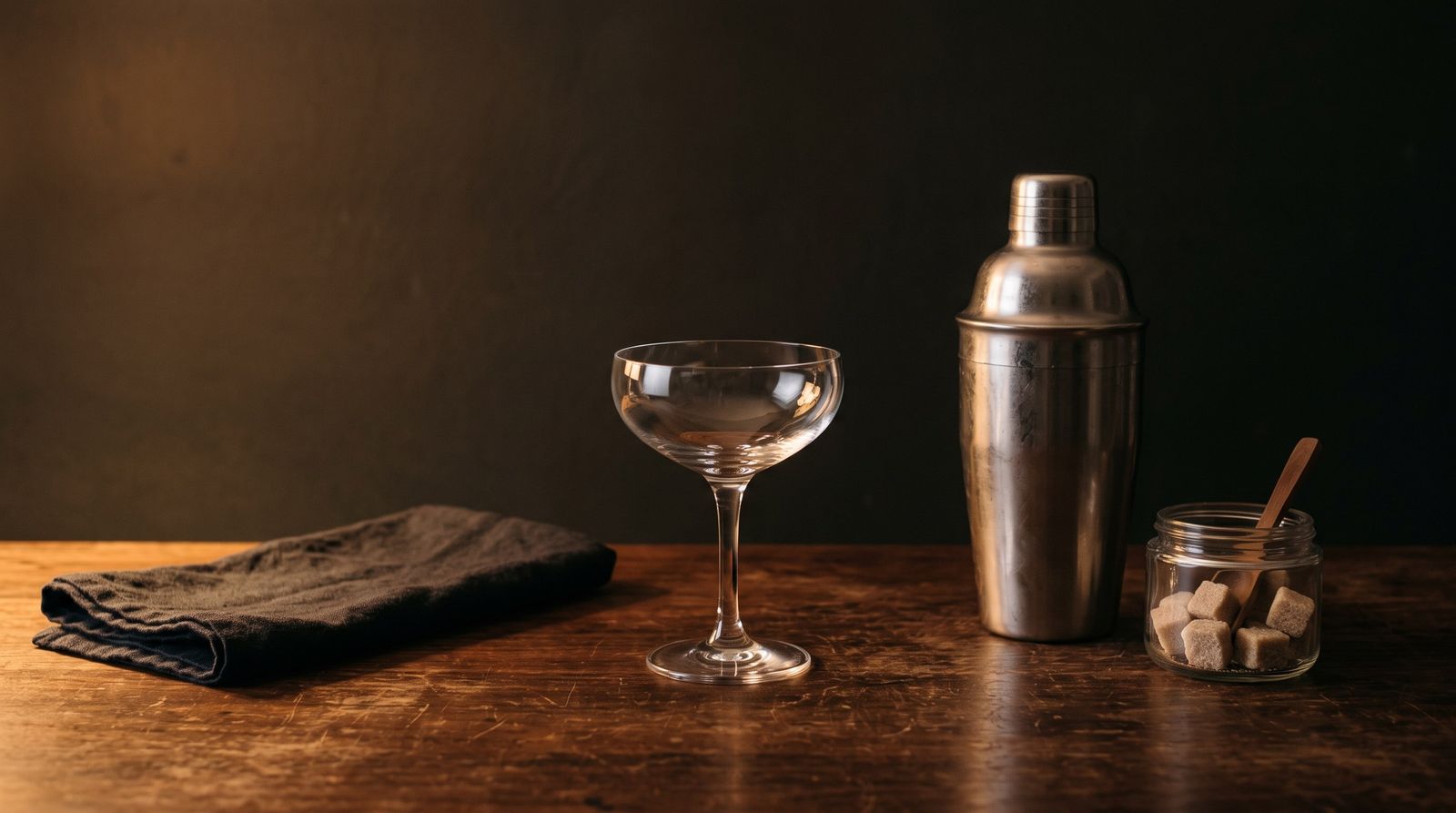
- Ice, a shaker, and a chilled coupe or small cocktail glass
Steps:
- Chill the glass in the freezer for at least 10 minutes.
- If using egg white or aquafaba, add it to the shaker with the vodka, brew and syrup, but no ice. Shake hard for 10 seconds.
- Add a generous handful of ice and shake again as hard as you can for 15 seconds.
- Double-strain into the chilled glass so the foam sits clean on top.
- Let it settle for a few seconds, then garnish.
For the garnish, use an orange peel twist instead of coffee beans. Whole roasted coffee beans are traditional, but they’re real coffee, and a bean on a caffeine-free drink sends a muddled message. Orange peel works well with chicory’s bitter edge.
The no-alcohol version
Removing the caffeine does not remove the alcohol, and that matters most in one case. The CDC states (opens in a new tab) that there is no known safe amount of alcohol use during pregnancy and no safe time to drink it. If that’s you, this is the version to make, and it works for anyone skipping alcohol for other reasons. It pairs with our pieces on chicory coffee during pregnancy and ordering caffeine-free in cafes.
Leave out the vodka and use 3.5 oz of strong chilled brew in total, or replace the vodka with 2 oz of cold sparkling water added after shaking. Keep the syrup and the optional egg-white or aquafaba step, shake the same way, and strain into the same chilled glass. It drinks like a dark, foamy, not-too-sweet iced coffee, which is a perfectly good thing to be.
If it’s flat, thin, or too sweet
- No foam, or it vanishes in a minute. Add the egg white or aquafaba step and shake it dry first. Shaking longer with ice alone won’t fix a brew that has no crema.
- Tastes like sweet water. The brew wasn’t strong enough. Use more grounds, not a longer steep, and keep it cold.
- Too sweet. Cut the syrup in half and add a splash more brew. The bitter edge is what keeps it from reading as dessert.
- Watery by the last sip. Shake only until it’s cold, strain at once, and use fresh, hard ice rather than the half-melted kind.
Which caffeine-free brew to start from
This drink needs bitterness and body more than delicacy, so reach for something dark and roasty. Teeccino’s French Roast (opens in a new tab) is one reasonable option: a chicory, carob, barley, date and almond blend built to read close to coffee, which holds up when brewed concentrated. Worth knowing before you buy: it contains barley and almonds, so it isn’t gluten-free and isn’t nut-free. Plain roasted chicory root, brewed strong, is a simpler alternative, and the roundup of caffeine-free coffee alternatives covers more.
Make the syrup the day before and keep it in the fridge. The rest takes about five minutes, and what you end up with is the same dark, foamy, bittersweet drink people order for the look and the ritual, minus the part that was working against you at midnight.
Sources & further reading
- Effects of Mixing Alcohol and Caffeine (opens in a new tab) — Centers for Disease Control and Prevention
- About Alcohol Use During Pregnancy (opens in a new tab) — Centers for Disease Control and Prevention
- Here's a bit on Bradsell, and his Espresso Martini (opens in a new tab) — Australian Bartender
Reader conversation (5)
We read every response. Selected reader notes below.
The point about feeling less drunk than you are is the one I never thought about. I gave up caffeine in the spring and realised half my late-night espresso martinis were really just a way to keep going. Making the syrup tonight.
Glad it landed. Let us know how the foam goes. If it comes out thin, the dry shake with a little aquafaba is the first thing to try.
Used roasted chicory brewed at double strength and the bitterness really did carry it. Mine needed less syrup than the recipe says, so I would start at half and taste.
Appreciate that the no-alcohol version got a real section and not a footnote. I am six months pregnant and usually get handed a lemonade at parties. A dark foamy glass in my hand is surprisingly helpful.
Good that you said plainly you could not find a caffeine figure for coffee liqueur. Every other site I looked at quoted a different number with no source.
Thanks, Marcus. We would rather leave a number out than print one we could not trace to the maker.
Orange peel instead of coffee beans is a nice touch. It does go well with the chicory.
Have something to add? Email us and we may include it in a future update.