Vietnamese egg coffee doesn't need coffee — it needs a brew bitter enough to cut the sugar
Cà phê trứng's whipped egg-yolk foam is an egg-and-sugar reaction, not a coffee one, so a caffeine-free version whips exactly the same way. What actually changes is balance: a mild herbal brew gets buried under all that sweetness. Here's the fix, plus the honest answer on the raw-egg question.

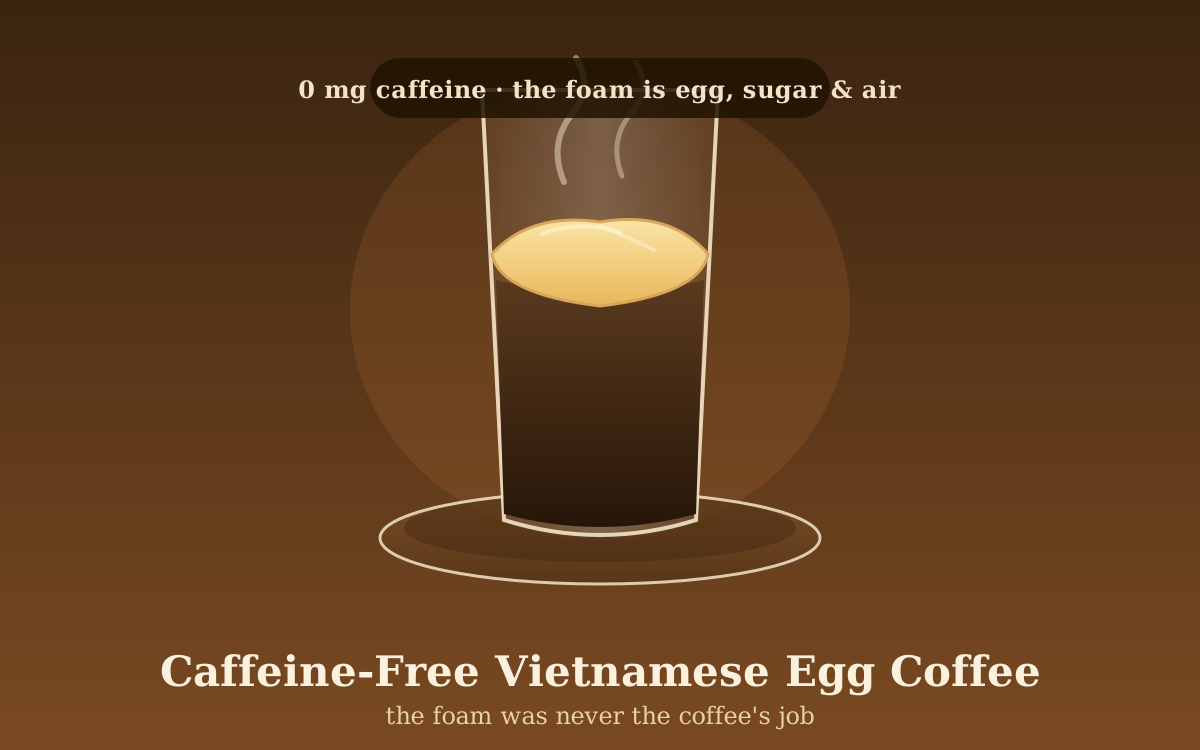
A reader who’d already worked through the dalgona piece wrote in asking about a different whipped coffee entirely — the Vietnamese one, with the egg. It’s a fair drink to be nervous about swapping: cà phê trứng looks like the kind of thing that only works because of something specific and irreplaceable happening between the coffee and the egg. It isn’t. The two components barely interact before they meet in the glass, which turns out to be good news for anyone trying to build this without caffeine — and it means the actual risk in this recipe isn’t caffeine at all. It’s raw egg, and that’s worth talking about honestly before the recipe.
What Vietnamese egg coffee actually is, and where it came from
The drink was invented in Hanoi in 1946 by Nguyen Van Giang, a bartender at what’s now the Sofitel Legend Metropole Hotel. According to Vietcetera’s account of the invention (opens in a new tab), the First Indochina War had created a serious dairy shortage, and Giang needed a way to give coffee the rich, creamy quality milk usually provided without any milk on hand. His fix was whisking egg yolks with sugar and condensed milk — which was tinned, shelf-stable, and still available — into something thick enough to sit on top of strong coffee like a warm custard. It worked well enough that he eventually left the hotel to open his own place; his son still runs Café Giảng in Hanoi’s Old Quarter today, serving what’s essentially the same drink.
The modern version layers hot, strong robusta coffee (usually brewed through a small metal phin filter) with that whipped egg-and-condensed-milk foam on top, and the whole cup often sits in a shallow bowl of hot water to keep it warm while the foam slowly softens into the coffee below. It’s eaten as much as drunk — most people go in with a spoon before they ever tip the glass.
The foam is egg chemistry, not coffee chemistry
Here’s the part that makes a caffeine-free version straightforward: the foam is built entirely in the bowl, before the coffee is involved. Egg yolk contains lecithin, a natural emulsifier, which lets fat (from the yolk and the condensed milk) and water-based liquid mix and hold together instead of separating. Whisk that mixture — by hand or with a mixer — for several minutes, and you’re doing the same thing a pastry cook does building a sabayon or the base of a buttercream: physically beating air into a fat-and-sugar emulsion until it triples in volume, turns pale, and thickens into something that holds its shape in a spoon. Sugar’s job is sweetness, but it also stabilizes the foam’s structure once air is worked in, the same way sugar stabilizes a whipped meringue.
None of that references coffee. It’s the same lesson the dalgona piece landed on for a completely different whipped drink, and the caffeine-free Irish coffee piece landed on for a completely different mechanism again (density, not aeration) — a coffee drink’s signature trick usually turns out to live somewhere caffeine was never involved. Whisk egg yolk and condensed milk over a caffeine-free brew, and the foam whips exactly the way it does over robusta, because the foam has no idea what’s underneath it yet.
What actually changes when you take the caffeine out
So if the foam isn’t the risk, what is? Balance. Traditional egg coffee uses robusta specifically because it’s markedly more bitter and caffeinated than arabica — robusta runs roughly 2.2–2.7% caffeine by dry weight against arabica’s 1.2–1.5% (opens in a new tab), and it brews with a rougher, more astringent edge. That bitterness isn’t incidental. It’s the one thing standing between this drink and dessert, because the foam on top is, structurally, a warm custard made of sugar and fat. Pour that foam over a pale, mild herbal brew and the whole cup tips sweet — flat caramel with a spoonable topping, no counterweight.
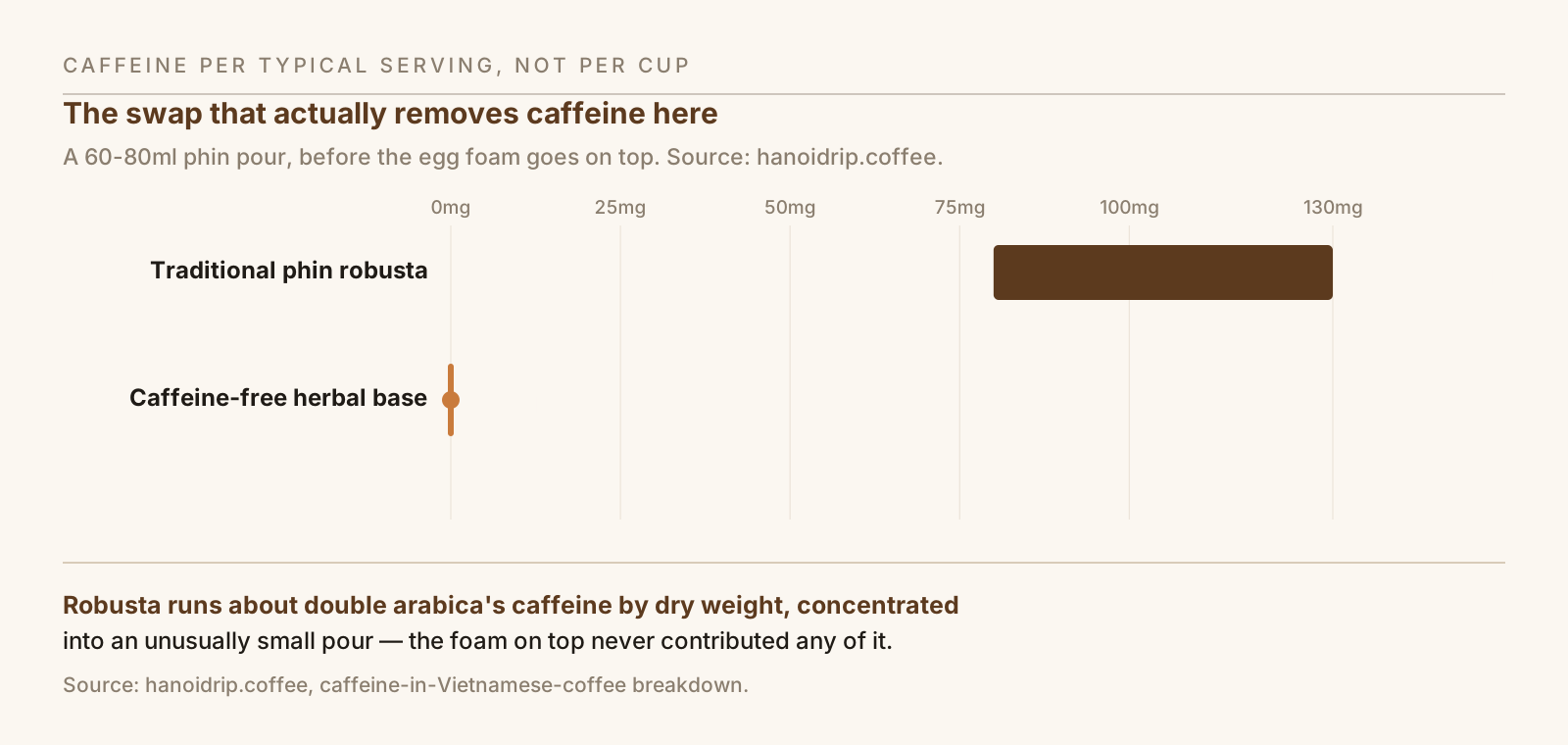
The fix is the same one this site keeps landing on for herbal coffee under pressure: brew stronger, not just darker. Use a genuinely dark, chicory-forward caffeine-free base — not a delicate or floral one — and build it at something closer to a concentrate than a casual mug, the same double-strength standard the Irish coffee piece and the guide to iced herbal coffee’s watery-tasting problem both arrive at independently. A herbal base brewed at normal mug strength disappears under all that sugar and fat. Brewed strong and bitter, it does the same job robusta was doing — it just does it without the caffeine.
The raw-egg question, answered honestly
This is the section that actually matters more than the caffeine swap, and it deserves the same directness this site uses for anything drug- or health-adjacent: the classic recipe uses raw egg yolk, whisked but never cooked, and raw eggs carry a real food-safety risk. The FDA is plain about it (opens in a new tab) — fresh eggs can carry Salmonella even with a clean, uncracked shell, and the agency names four groups at higher risk for serious illness: young children, older adults, pregnant people, and anyone with a weakened immune system. If you’re pregnant and weighing this alongside caffeine, it’s worth reading this section together with our piece on chicory coffee during pregnancy — the caffeine swap solves one risk in this drink, not the other one.
The FDA’s own recommendation for any dish using raw or lightly cooked eggs is to use pasteurized shell eggs or pasteurized egg products, which are treated to kill Salmonella without cooking the egg — a straightforward swap that changes nothing about the recipe below except the carton you start from.
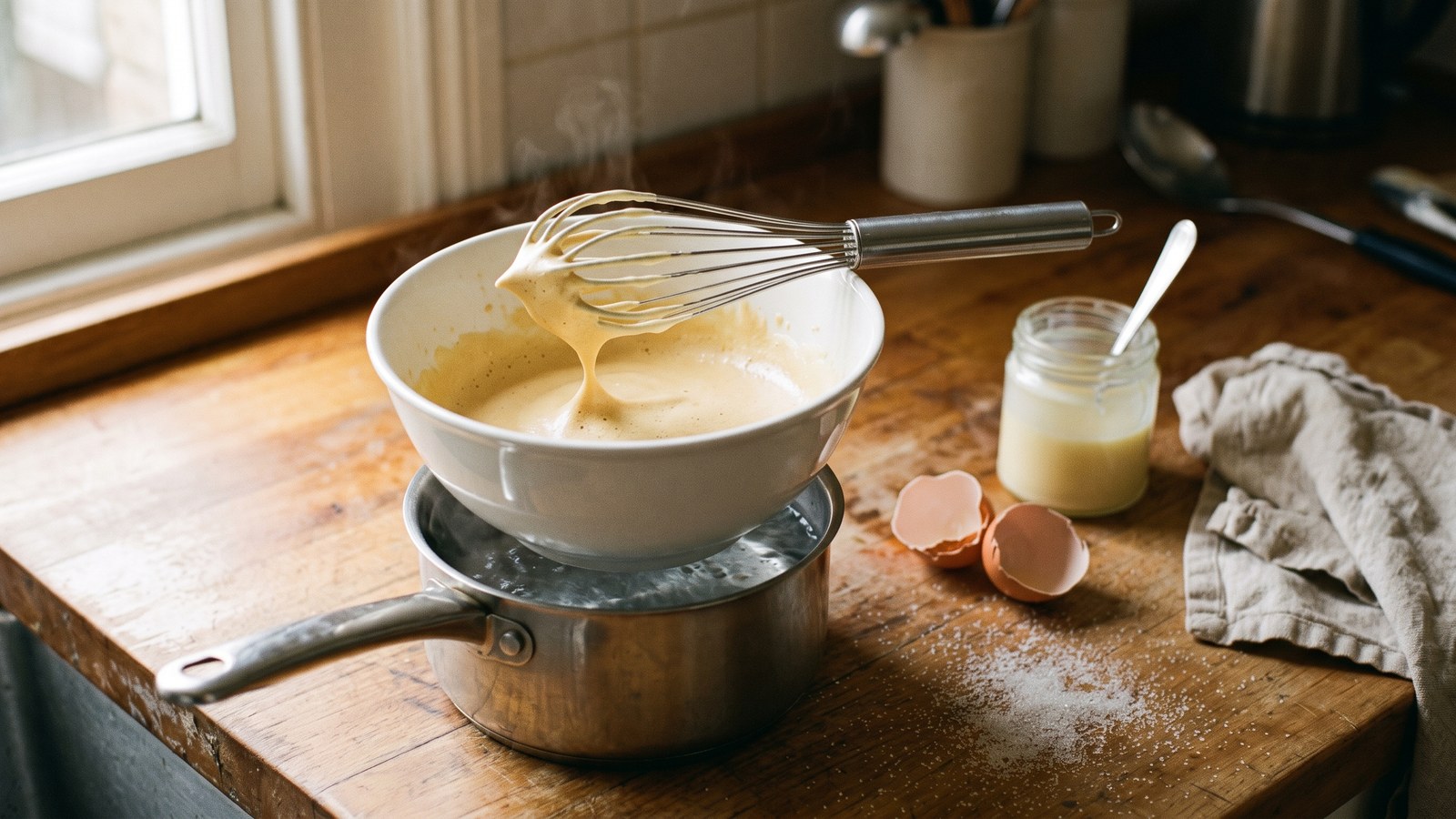
If pasteurized eggs aren’t available where you shop, there’s a second option that gets most of the way there: whisk the egg yolk, sugar, and condensed milk in a heatproof bowl set over a pot of gently simmering water (a bain-marie), keeping the bowl clear of the water itself, and whisk continuously until the mixture reaches about 160°F (71°C) — the temperature UConn Extension’s food safety guidance names (opens in a new tab) as the target for sauces, custards, and other dishes built on eggs. A kitchen thermometer removes the guesswork; without one, you’re relying on feel, which is exactly the situation pasteurized eggs are designed to avoid. Either path — pasteurized eggs, or the bain-marie method — gets you a foam that whips the same way and tastes the same, with the risk actually addressed instead of just not mentioned.
Caffeine-free egg coffee, step by step
Makes one drink; multiply for a group. Read the safety section above before you start if you haven’t already.
You’ll need:
- 1 tall glass mug or heatproof glass
- 1 egg yolk, pasteurized if you can get it (see above)
- 2 tbsp sweetened condensed milk
- 1 tsp granulated sugar
- 3–4 oz caffeine-free coffee-style brew, built dark and at roughly double normal strength — see the buying section below
Steps:
- If using unpasteurized eggs, set a heatproof bowl over a pot of gently simmering water (bowl not touching the water). Combine the egg yolk, condensed milk, and sugar in the bowl.
- Whisk continuously and vigorously — by hand for 8–10 minutes, or 3–4 minutes with a hand mixer — until the mixture at least doubles in volume, turns pale gold, and holds a ribbon shape briefly when you lift the whisk. If using the bain-marie method, keep whisking until a thermometer reads about 160°F (71°C), then pull it off the heat immediately.
- Brew your caffeine-free base dark and strong — think stovetop concentrate, not a quick pass through a drip machine. Pour it hot into your glass, filling it about two-thirds full.
- Spoon the whipped foam on top of the brew. Don’t stir it in — it’s meant to sit as its own layer, the way the cream does in Irish coffee.
- Optional but traditional: set the finished glass into a wider bowl of hot (not boiling) water at the table to keep it warm while you eat your way down through the foam.
- Eat the foam with a small spoon first, then drink the coffee underneath, or stir the two together partway through — both are normal ways to finish the drink.
If the foam won’t hold, or the drink tastes like frosting
- The foam stays thin and won’t thicken. You likely stopped whisking too early — this takes longer than most people expect, especially by hand. Keep going; the mixture goes through a loose, bubbly stage before it tightens into a stable foam. A hand or stand mixer shortens this considerably if your arm gives out first.
- The foam looks scrambled or grainy. If you used the bain-marie method, the water was too hot or the bowl touched it directly. Start over with a fresh yolk over a gentler simmer, whisking without pause.
- The drink tastes like sweetened frosting with no coffee underneath. Your base wasn’t strong or bitter enough. Go back to a genuinely dark, chicory-forward brew at double strength — more grounds in the same water, not a longer steep, which mostly adds bitterness without adding body.
- The foam deflates fast once it’s on the coffee. Some settling is normal and traditional — the foam is meant to soften as you eat down through it. If it collapses to nothing within a minute, the whisking likely didn’t incorporate enough air; a mixer usually fixes this on the next attempt.
An eggless version, for real
If you’d rather skip raw or lightly cooked eggs altogether rather than manage the risk, there’s a genuine substitute worth trying: whipped aquafaba, the starchy liquid drained from a can of chickpeas. Whisk about 3 tablespoons of aquafaba with 1–2 tablespoons of sugar for several minutes, the same way you’d whip egg whites, until it holds soft peaks, then fold in a tablespoon of condensed milk (dairy or a sweetened plant-based version) for richness. It’s a documented substitution — some Vietnamese cafes already serve a version built this way — and the whisking-in-air mechanism is genuinely the same one doing the work. What you get is lighter and more meringue-like than the dense, custardy egg-yolk foam, not an identical texture, but a real foam sitting on a real caffeine-free brew, with no raw egg in the glass at all.
Which caffeine-free brew to start from
This drink needs bitterness and body more than delicacy, so reach for something dark and roasty rather than a lighter or more floral blend — the same instinct that works for caffeine-free Irish coffee.
Teeccino’s French Roast (opens in a new tab) is a reasonable starting point — a chicory, carob, barley, date, and almond blend built to read close to coffee, with enough roastiness to hold up under all that sweetness when brewed concentrated. Worth knowing before you buy: it contains barley and almonds, so it isn’t gluten-free and isn’t nut-free. Plain roasted chicory root, brewed as a stovetop concentrate the way the chicory brewing guide covers, is another solid option if you want something simpler. Whichever base you land on, the broader roundup of caffeine-free coffee alternatives is worth a look if none of these are already in your cupboard.
Once you’ve got a brew dark and strong enough to hold its own, the rest of this drink is really just patience with a whisk. The part that felt like it should be fragile and coffee-specific — the foam — never was. The part worth taking seriously is the one nobody asks about.
Sources & further reading
- The History Of Egg Coffee (opens in a new tab) — Vietcetera
- What You Need to Know About Egg Safety (opens in a new tab) — U.S. Food and Drug Administration
- Eggs and Egg Products (opens in a new tab) — UConn Extension
- How Much Caffeine Is in Vietnamese Coffee? (opens in a new tab) — Hanoi Drip
Reader conversation (5)
We read every response. Selected reader notes below.
Grew up on the real thing at my grandmother’s kitchen table in Hanoi and was fully prepared to be annoyed by a caffeine-free version. The foam is genuinely the same — she always said the coffee itself barely mattered as long as it was strong and bitter, which is exactly what this piece is arguing.
That’s basically the whole article distilled into one sentence — thank you for the vote of confidence from someone who grew up with the real thing.
Appreciate that the raw egg risk actually got a real section instead of a one-line disclaimer buried in the recipe card. I’m pregnant right now and was about to try this from a different site that didn’t mention it at all.
Tried the bain-marie method with a thermometer clipped to the bowl and it worked exactly as described — took closer to twelve minutes of whisking than I expected, but the foam held its shape perfectly once it got there.
Made the aquafaba version because I didn’t want to deal with the egg question at all and it genuinely held up as its own drink. Lighter than I remember the egg version being when I had it years ago, but not in a bad way.
Went in skeptical after the Irish coffee piece already used up my one allotment of “the trick was never the coffee” for the month, but the egg foam explanation is a completely different mechanism and it’s just as convincing.
Have something to add? Email us and we may include it in a future update.