What is hojicha? The roasted green tea that tastes like a toasted cup of coffee, with a caffeine catch
Hojicha is Japanese green tea roasted until it turns reddish-brown and toasty. It is lower in bitterness and often lower in caffeine than green tea, but it is not caffeine-free. Here's what we could verify.

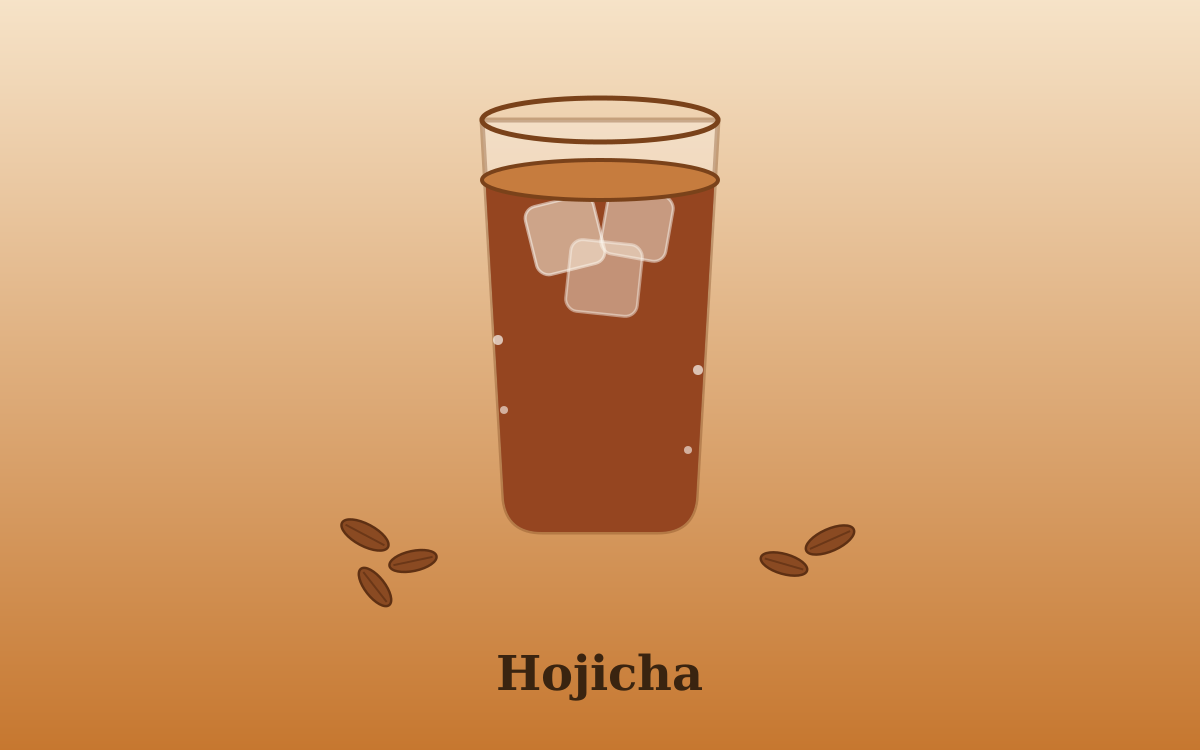
If you like the smell of something roasting more than the taste of coffee itself, hojicha deserves a look. It is a Japanese tea, and it is the nearest thing in the tea aisle to a toasted, rounded cup of coffee. It also comes with a catch you should know about before you swap it in: it still has caffeine.
The short answer
Hojicha (HOH-jee-chah) is green tea that has been roasted. The roasting turns the leaves from green to reddish-brown, replaces the grassy flavor with something nutty and toasty, and, according to the sources we read, takes some of the caffeine and bitterness with it.
“Some” is the important word. Hojicha comes from the tea plant, so it is a lower-caffeine drink, not a caffeine-free one. If your goal is zero caffeine, keep reading for the alternatives. If your goal is less, it can be a gentle step down.
How green tea becomes hojicha
Wikipedia’s entry on hōjicha says the process was discovered by accident in 1920, when a Kyoto merchant with unsold bancha, an everyday lower-grade Japanese green tea, roasted it and found he had made something new. That is the commonly repeated origin story, and we haven’t traced it to an older primary source, so read it as tea-shop history rather than settled record.
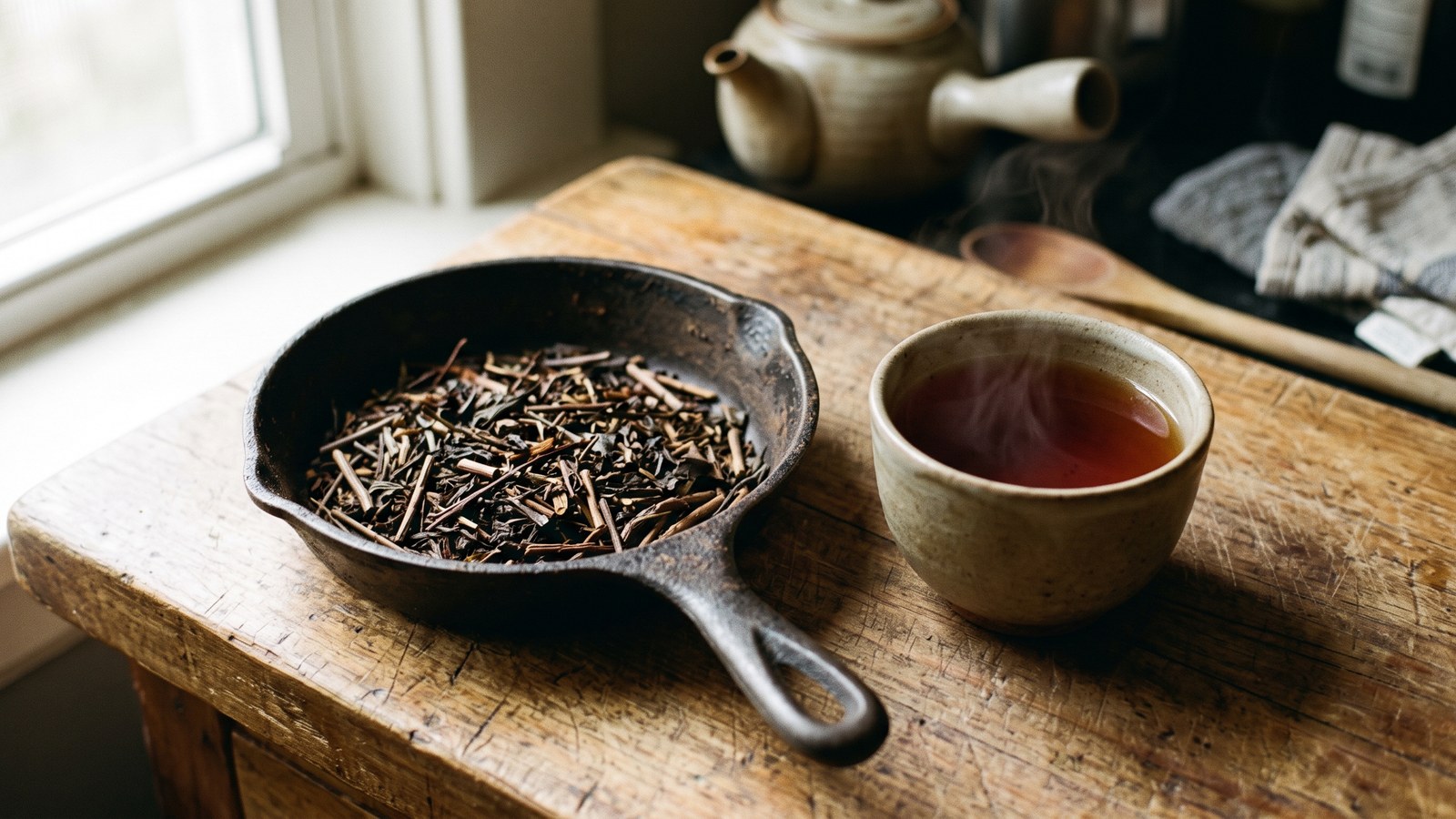
The method, as described there, is simple. Leaves, and sometimes stems or twigs (the twig version is called kukicha), are roasted in a porcelain pot over charcoal at around 150°C (302°F). The roast stops the leaves oxidizing further and gives the dry tea its color. Hojicha is typically made from second-harvest leaves or later, which is partly why it was an economical tea to begin with.
The caffeine question
This is where the internet is least reliable, so here is what we found and how much weight it deserves.
- Roasting lowers caffeine. Wikipedia states that the roasting process lowers the amount of caffeine in the tea. That is a general statement without a figure.
- The numbers disagree. One tea retailer’s blog gives 7 to 15 milligrams per 8-ounce cup for hojicha, against 35 for green tea, 70 for matcha and 95 for coffee. The same page says it relies on “some sources” and does not name a study. Other tea sellers describe hojicha as roughly in line with ordinary sencha. We couldn’t find a lab analysis to settle it, so we won’t give you a single number.
- Your cup varies. The leaf grade, how much you use, the water temperature and the steep time all change what ends up in the cup. Bancha-based hojicha starts with leaves that tend to be lower in caffeine than spring-picked tea, which may account for some of the gap.
The practical reading: a cup of hojicha is likely to carry noticeably less caffeine than a cup of coffee, and may carry somewhat less than green tea, but you can’t count on it being tiny. If you are tapering, treat it as a rung on the ladder. Our caffeine-half-life piece explains why even a small afternoon dose can linger into the evening, and the decaf breakdown is a useful comparison, since decaf isn’t zero either.
For context on the high end, the FDA has cited 400 milligrams a day as an amount not generally associated with negative effects for most adults, and notes there is wide variation in how sensitive people are to caffeine and how quickly they clear it. Whatever the label says, your own response is the better guide.
What it tastes like
Descriptions of hojicha are consistent: a nutty, toasty, slightly caramel-like flavor with little to no bitterness, and a clear red-brown cup. The roasting also cuts the catechins, the compounds that give green tea its astringent edge, which is why it drinks smoother.
We haven’t done a side-by-side tasting for this piece, so we won’t claim it tastes like coffee. What can be said fairly is that it shares the roasted, warm-toast register people miss when they leave coffee, without coffee’s sharp acidity. If you are coming from a dark roast, it is likely to taste lighter and sweeter. Our roasted barley tea explainer covers a caffeine-free relative with a similar toasted feel.
Brewing it as a coffee stand-in
There is no single standard method, so treat these as starting points rather than rules.
- Use a heaping teaspoon or so of leaves per cup and adjust from there.
- Pour in hot, just-boiled water. Roasted teas are forgiving, because the bitter compounds were largely roasted away.
- Steep for a few minutes, taste, and strain.
- Drink it plain, or with a splash of milk or oat milk if you want it closer to a latte. For a cold version, steep strong and pour over ice.
If you are weaning off coffee, a useful trick is to replace one cup at a time and keep the ritual the same: same mug, same time of day. Our guide to waking up without coffee goes through the rest of the routine, and matcha versus coffee covers the other well-known Japanese tea people try.
Who should look elsewhere
- Anyone who needs zero caffeine, for example during pregnancy when your clinician has advised cutting it out, or if caffeine triggers palpitations or panic. Hojicha has less than coffee but not none. Rooibos and roasted grain or chicory blends are genuinely caffeine-free options.
- Anyone whose clinician has told them to limit tea or caffeine for any medical reason. Check with them before making hojicha a daily habit.
- People who want a strong coffee flavor. Hojicha is gentler than coffee. You may find it too mild to feel like a replacement.
Also check the packaging. Some hojicha products are blended or flavored, and we haven’t reviewed any specific brand here.
The bottom line
Hojicha is a roasted Japanese green tea with a toasty, low-bitterness profile that suits people who miss the warmth of coffee more than the jolt. Roasting lowers its caffeine, but published figures vary and it is not caffeine-free. Use it as a stepping stone if you are cutting back, and choose a caffeine-free herbal or grain option if you need none.
This article is educational, not medical advice. If you are pregnant, managing a health condition or taking medication, ask your clinician how much caffeine is right for you.
Sources & further reading
- Hōjicha (opens in a new tab) — Wikipedia
- Hojicha and Caffeine: How Much Energy Does It Pack? (opens in a new tab) — Genuine Tea
- Spilling the Beans: How Much Caffeine Is Too Much? (opens in a new tab) — U.S. Food and Drug Administration
Reader conversation (4)
We read every response. Selected reader notes below.
My family drinks hojicha after dinner and nobody has trouble sleeping, but I’m sure that’s down to the person. Nice to see the caffeine point treated honestly instead of “basically caffeine-free.”
Thanks, Yuki. Individual response really does vary, which is why we stuck to “lower, not zero” rather than a single number.
I switched my 3pm coffee to hojicha a few weeks ago. It scratches the roasted-flavor itch, which green tea never did for me.
Can you do a piece comparing hojicha lattes with the barley tea you mentioned? I’d love to know which one is closer to a dark roast.
Good idea. We haven’t tasted them side by side yet, so we didn’t want to guess in this piece. Noted for a future one.
I’m in my second trimester and was told to keep caffeine low. Appreciated the section about who should skip it. I’ll be asking my midwife before I add it back in.
Have something to add? Email us and we may include it in a future update.