Caffeine and antidepressants: one real drug interaction, and a lot of worry that isn't
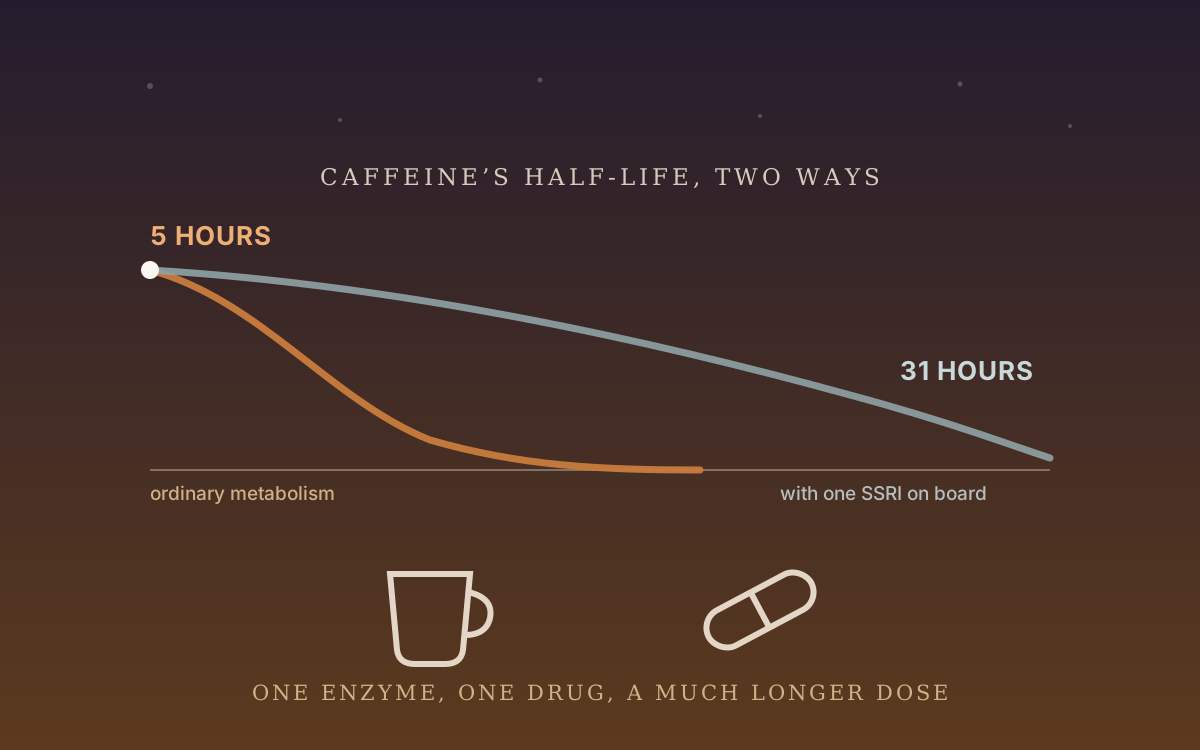
One SSRI, fluvoxamine, makes the liver enzyme that clears caffeine work far more slowly — pushing its half-life from about 5 hours to about 31 in a real pharmacokinetic study. Most other antidepressants don't share that mechanism. Here's which ones actually do, and what the evidence says about each.

A reader emailed after her psychiatrist mentioned, almost as an aside, that her new prescription might make her “feel her coffee more than usual.” She asked me a version of the question I get more than almost any other about medication: is this a real thing, or is it the kind of caution doctors give reflexively about anything you put in your body?
I went looking for the actual pharmacology, expecting a single tidy answer that would apply across “antidepressants” as a category. That’s not what I found. The honest answer splits hard by which specific drug someone is taking — one has a large, measured, genuinely surprising effect, several have essentially none, and one has a documented case of things going seriously wrong for an entirely different reason.
The short answer
“Antidepressants” is not one drug, and caffeine’s interaction with them is not one story. Fluvoxamine, an SSRI usually prescribed under the brand name Luvox, is a potent inhibitor of the liver enzyme that clears caffeine from your body — a real crossover study found it stretches caffeine’s half-life by roughly six times. Most other SSRIs and SNRIs (sertraline, escitalopram, fluoxetine, venlafaxine, duloxetine) don’t share that specific mechanism in any meaningful way; their caution is the more generic kind, about stacking a stimulant on top of anxiety or sleep problems the medication is also treating. Bupropion and MAOIs each raise a different, narrower concern of their own.
So the useful question was never “does caffeine interact with antidepressants.” It’s “which one am I actually taking,” and the rest of this piece answers that one drug at a time.
Why one SSRI is genuinely different
Caffeine leaves your body mainly through one liver enzyme, CYP1A2, which breaks it down into paraxanthine and a handful of other metabolites. Fluvoxamine happens to be one of the most potent inhibitors of that exact enzyme of any drug in common use — not a mild slowdown, a dramatic one.
The clearest evidence comes from a small but tightly designed crossover study: eight healthy volunteers were given 200 mg of caffeine (roughly two cups of coffee) once on its own, and once again after eight days on fluvoxamine. The difference was large. Median caffeine clearance dropped from about 107 mL/min to about 21 mL/min — an 80% reduction — and median half-life rose from about 5 hours to about 31 hours.
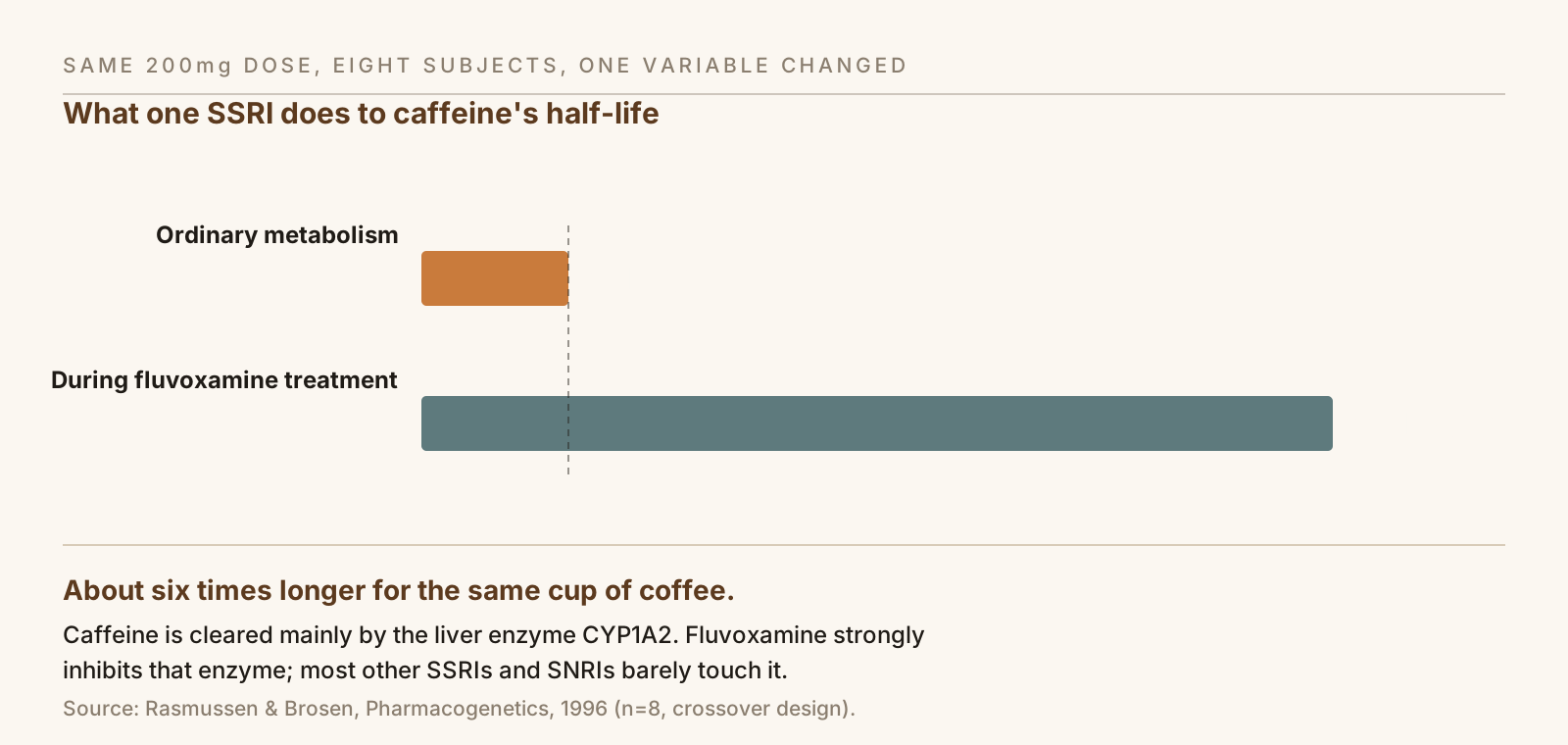
Sit with what that number actually means in practice: a half-life of 31 hours means a cup of coffee at breakfast is still roughly half-present in your system at breakfast the next day. Drink coffee daily on that schedule and the caffeine doesn’t fully clear between doses — it accumulates in a way it simply doesn’t for someone without that enzyme blocked. The researchers behind the study noted the clinical implication plainly: caffeine intake during fluvoxamine treatment can plausibly build toward something that looks like caffeine intoxication — jitteriness, insomnia, a racing heart — at a dose that would never have caused those symptoms before starting the medication.
This isn’t a rare, exotic drug interaction dug out of a footnote. It’s one of the most-cited examples in pharmacology teaching of what a strong CYP1A2 inhibitor does to a CYP1A2 substrate, precisely because caffeine is such a common, unmonitored daily exposure and the effect size is so large and so reproducible.
The other SSRIs and SNRIs: a much smaller effect
This is the part that surprised me most, because so much online advice treats “SSRI” as if it’s one substance with one caffeine rule. It isn’t.
Sertraline (Zoloft), escitalopram (Lexapro), citalopram (Celexa), and fluoxetine (Prozac) don’t rely on CYP1A2 the way fluvoxamine does, so the sharp metabolic interaction fluvoxamine has with caffeine largely doesn’t apply to them. SingleCare’s review of sertraline specifically puts it plainly: there’s no established direct chemical interaction between Zoloft and caffeine. Venlafaxine and duloxetine, the two most commonly prescribed SNRIs, are in a similar position — no dominant shared-enzyme story with caffeine the way fluvoxamine has.
What’s left for this larger group isn’t a metabolic interaction at all — it’s a pharmacodynamic one, and it’s the same caution that applies to plenty of things that aren’t medication. Caffeine is a stimulant. A number of these drugs are prescribed specifically for anxiety, and anxiety and disrupted sleep are also common antidepressant side effects, especially in the first few weeks of a new prescription or after a dose increase. Layering a stimulant on top of that isn’t dangerous in the way the fluvoxamine interaction is — it’s just adding to a symptom load that’s already elevated for an unrelated reason. LifeStance’s clinical summary frames the general advice sensibly: watch total daily intake, notice whether sleep or anxiety symptoms track with your coffee habit, and don’t assume a stimulant and a medication meant to calm your nervous system are working in the same direction.
There’s a genuine, non-obvious silver lining buried in this, too: SingleCare notes that for the subset of people whose depression shows up as lethargy and oversleeping rather than anxiety, a moderate amount of caffeine may actually help rather than hurt — a reminder that “is caffeine bad with my antidepressant” isn’t answerable without knowing which symptoms the medication is treating in the first place.
Bupropion and the seizure-threshold question
Bupropion (Wellbutrin) sits in its own category, structurally different from SSRIs and SNRIs, and it comes with a seizure risk that’s dose-related and documented on its own label — roughly 0.4% at standard doses, rising meaningfully at higher ones.
Caffeine, at very high doses, can also lower seizure threshold in susceptible people, which is where the theoretical overlap comes from. Interaction-checker databases flag bupropion and caffeine together, and some characterize it as a minor interaction; the caution tends to focus on concentrated or excessive caffeine sources specifically — energy drinks and high-dose supplements rather than an ordinary cup of coffee — layered on top of bupropion, particularly at higher prescribed doses.
I want to be precise about what the evidence does and doesn’t support here: I did not find a documented case report of ordinary coffee-level caffeine triggering a seizure in someone taking bupropion at a standard dose. What exists is a plausible shared mechanism and a general caution from drug-interaction databases, not a confirmed clinical event at typical exposure levels. That’s worth mentioning to a prescriber, especially if bupropion dosing is on the higher end or increasing, and it’s a different, much more measured claim than “bupropion and coffee is dangerous.”
MAOIs: the one with an actual case report
Monoamine oxidase inhibitors (MAOIs) are an older, less commonly prescribed class of antidepressant, largely because of a well-known dietary restriction: foods high in tyramine (aged cheese, cured meats, certain fermented products) can trigger a dangerous spike in blood pressure in someone taking one. Caffeine’s connection to MAOIs is a related but separate mechanism, and there’s a real published case behind it.
A 2014 case report in Annals of Internal Medicine described a patient on tranylcypromine, a nonselective MAOI, who developed a hypertensive crisis — blood pressure measured above 220/119 mmHg — after a daily habit of 10 to 12 cups of caffeinated coffee. The authors’ proposed mechanism: coffee itself has some mild MAO-inhibiting activity independent of caffeine, so a heavy coffee habit stacked on top of an actual MAOI drug may produce a larger-than-expected rise in norepinephrine, and blood pressure with it.
One case report describing a genuinely heavy coffee habit (10 to 12 cups daily) isn’t proof that an ordinary single cup poses the same risk for every MAOI patient — case reports document what happened once, not what happens on average. But it’s a real, documented, named event, published in a major medical journal, which puts it in a different category of evidence than the general “SSRIs might make you jittery” caution. If an MAOI is part of someone’s treatment, caffeine intake is worth a specific, direct conversation with the prescriber — not folded into the same generic advice as every other antidepressant class.
What this means if you’re starting or adjusting a dose
The first few weeks on a new antidepressant, or after any dose change, is when side effects are most likely to show up and be hardest to untangle from each other. That’s exactly the window where an unaccounted-for caffeine effect is most likely to get blamed on the medication, or the medication blamed on the coffee, when the real answer is more specific than either.
A short, practical checklist:
- Know which drug you’re actually on. “SSRI” isn’t specific enough to answer this question. Fluvoxamine’s caffeine interaction is real and measured; most other SSRIs don’t share it.
- If it’s fluvoxamine, this is worth raising before you start, not after a week of unexplained jitteriness and insomnia that doesn’t match anything you changed about your coffee habit.
- If it’s an MAOI, caffeine is a separate conversation from the tyramine-food list you’ll already be given — don’t assume the food restrictions cover it.
- For everything else, track the ordinary things: sleep, anxiety, heart rate, and whether they move with your usual caffeine intake, the same way you’d track any other new variable during a medication change.
- A pharmacist is an underused resource here. They can check a specific drug-caffeine interaction in a formal database in about the time it takes to ask, and don’t require a full appointment the way flagging it to a prescriber might.
Does switching to a caffeine-free herbal coffee change anything?
For the fluvoxamine case specifically, yes — genuinely and directly, not as a marginal hedge. If the entire concern is caffeine accumulating because one particular enzyme is inhibited, removing caffeine from the equation removes the input the interaction depends on. A truly caffeine-free herbal coffee — roasted chicory, carob, barley, or dandelion root, the base of most herbal coffee blends — has 0 mg of caffeine to begin with, which is a real, checkable difference from decaf (decaf still carries a small residual amount per cup). Among the herbal roasts I’ve tried, Teeccino’s French Roast (opens in a new tab) is a reasonable coffee-adjacent option for someone who wants to keep the ritual, alongside comparable blends like Pero or Dandy Blend.
For everyone else on this list, the calculation is less dramatic. If your concern is the more generic pharmacodynamic one — caffeine’s stimulant effect stacking on anxiety or sleep problems — a caffeine-free swap addresses that specific input honestly, but it’s not correcting a measured drug interaction the way it is for fluvoxamine. It’s a reasonable thing to try if you’ve noticed a real pattern, not a fix for a problem every antidepressant shares equally.
What a beverage swap never does, for any of these drugs, is answer whether the medication itself is dosed correctly. If new anxiety or sleep trouble shows up after starting or adjusting an antidepressant, that’s a question for whoever prescribed it, not something a change in what’s in the mug resolves on its own.
What I actually tell people
When this question comes up, the list is short and depends entirely on which drug is involved:
- On fluvoxamine: this is worth a direct, specific conversation with your prescriber before you start, not something to discover through a bad week of unexplained jitteriness.
- On an MAOI: ask specifically about caffeine, separately from the tyramine-food list you’ll already be handed. It’s a different mechanism and it isn’t automatically covered by the same warning.
- On bupropion, especially at a higher dose: mention your caffeine intake, particularly if it includes energy drinks or concentrated supplements rather than ordinary coffee.
- On any other SSRI or SNRI: there’s no strong evidence of a specific chemical interaction, but the first few weeks of a new prescription are a reasonable time to simply pay attention to whether your usual caffeine habit and your symptoms are moving together.
- In every case: a pharmacist can check the specific interaction for your specific drug faster than most other paths to an answer.
The bottom line
“Caffeine and antidepressants” sounds like it should have one answer. It doesn’t, and treating it like it does is how a real, measured, sixfold change in caffeine’s half-life on one specific drug gets flattened into the same vague caution as a class of medications where the actual evidence for a chemical interaction is thin. Fluvoxamine is the one place the pharmacology is dramatic and well-documented. MAOIs are the one place a real case report exists, for a different reason entirely. Bupropion sits in a theoretical middle. Most other SSRIs and SNRIs carry the same generic stimulant caution that applies to caffeine and anxiety in general, medication or not.
The honest starting point is knowing which drug you’re actually asking about — and from there, the answer is specific enough to actually act on, rather than a shrug dressed up as caution.
We’ve looked at how caffeine interacts with other prescriptions from a few different angles — the ADHD-medication overlap that isn’t on either drug’s FDA label, how coffee affects thyroid medication absorption specifically, caffeine and hormonal birth control, and the plain math behind caffeine’s half-life — if any of those are the next question on your mind.
This article is educational and is not medical advice. Questions about your own antidepressant, dosing, or caffeine intake belong with the prescriber or pharmacist managing your treatment, not a beverage swap.
Sources & further reading
- A fluvoxamine-caffeine interaction study (opens in a new tab) — Rasmussen BB, Brøsen K, et al., Pharmacogenetics, 1996
- Severe hypertension related to caffeinated coffee and tranylcypromine: a case report (opens in a new tab) — van der Hoeven N, et al., Annals of Internal Medicine, 2014
- Caffeine and Antidepressants: What a Psychiatrist Wants You To Know (opens in a new tab) — LifeStance Health
- Can you take Zoloft with your morning cup of joe? (opens in a new tab) — SingleCare
- Bupropion and Caffeine: Can You Take Them Together? (opens in a new tab) — Drugs.com
Reader conversation (5)
We read every response. Selected reader notes below.
Been on Luvox for OCD for about a year and no one ever explained WHY I feel one cup of coffee like it’s three. Just assumed I’d gotten more caffeine-sensitive with age. Sending this straight to my psychiatrist’s portal.
That reaction lines up exactly with what the pharmacokinetic study found — glad the “why” landed. Worth mentioning the timing specifically at your next appointment, not just the sensitivity.
The MAOI case report stopped me cold. My grandfather was on one of those older antidepressants decades ago and the family lore was always “no cheese, no wine” — caffeine was never part of that conversation at all.
Appreciate that you didn’t just lump sertraline in with fluvoxamine the way most articles I’ve found do. I’ve been on Zoloft for three years, coffee every morning, never noticed a pattern — now I know why there wasn’t one to find.
Started Wellbutrin two months ago and cut way back on caffeine out of pure anxiety after reading forum horror stories. Sounds like ordinary coffee was probably never the real risk there, energy drinks were.
That’s a fair read of the evidence as it stands — the seizure-threshold caution in the databases leans hardest on concentrated sources, not a regular cup. Still worth flagging your normal intake to your prescriber, especially if your dose changes.
The half-life chart is what finally made this click for me. “Six times longer” is an abstract number, but “still half there at breakfast the next day” is the kind of thing that actually changes what I do with my own cup.
Have something to add? Email us and we may include it in a future update.