What is sassafras coffee? The banned ingredient behind an old American drink
Sassafras root was a real coffee substitute long before it became a federally restricted food ingredient and, separately, a regulated drug precursor. Here's the actual history, the actual rules, and why the two are easy to confuse.

Most of the coffee substitutes we cover on this site are still sitting on a grocery shelf somewhere — chicory, roasted barley, dandelion root. Sassafras is the one that isn’t, and the reason why turns out to be a genuinely interesting regulatory story rather than a simple “it’s dangerous, don’t” answer. It’s also one of the oldest coffee substitutes in American history, which makes the gap between its past and its present worth actually explaining.
The short answer
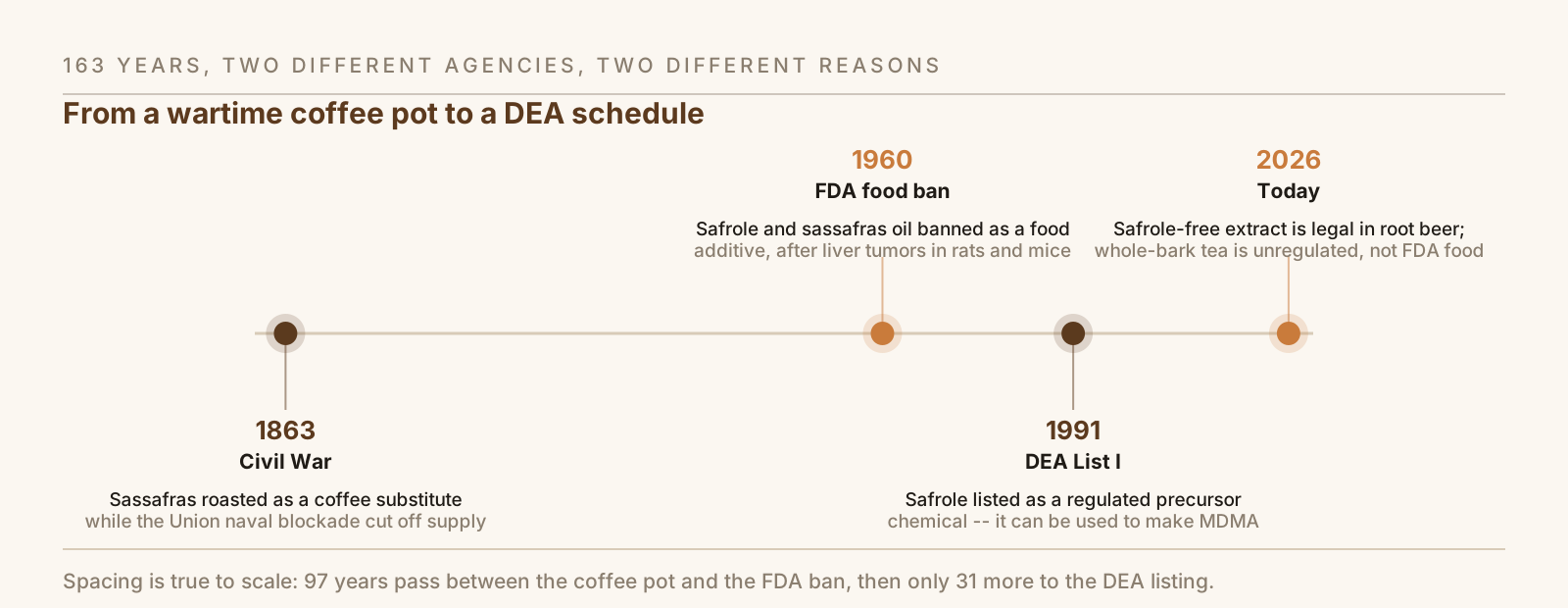
Sassafras coffee is a hot drink brewed from the roasted or steeped root bark of Sassafras albidum, a tree native to eastern North America, historically used as a folk tonic, a root beer flavoring, and — especially during wartime coffee shortages — a coffee substitute in its own right. It contains no caffeine. It does contain safrole, a compound the FDA banned as a food additive in 1960 after animal studies linked it to liver tumors. Whole sassafras bark and oil are not a legal food ingredient in the US today, though unregulated products are still sold online, and a safrole-free version of the extract remains legal in commercial root beer flavoring.
From a folk tonic to a wartime coffee pot
Sassafras was already deeply woven into American folk life before anyone framed it as a coffee substitute. Cherokee communities and early Appalachian settlers used the root bark as a spring tonic, brewed as a tea each year when the weather turned — one 1976 oral history captures the habit plainly: “every spring we had to have sassafras along with our poke salad.” Traditional users generally limited themselves to short courses of it, a week or so at a time, long before anyone had a chemical explanation for why that might have been a reasonable instinct.
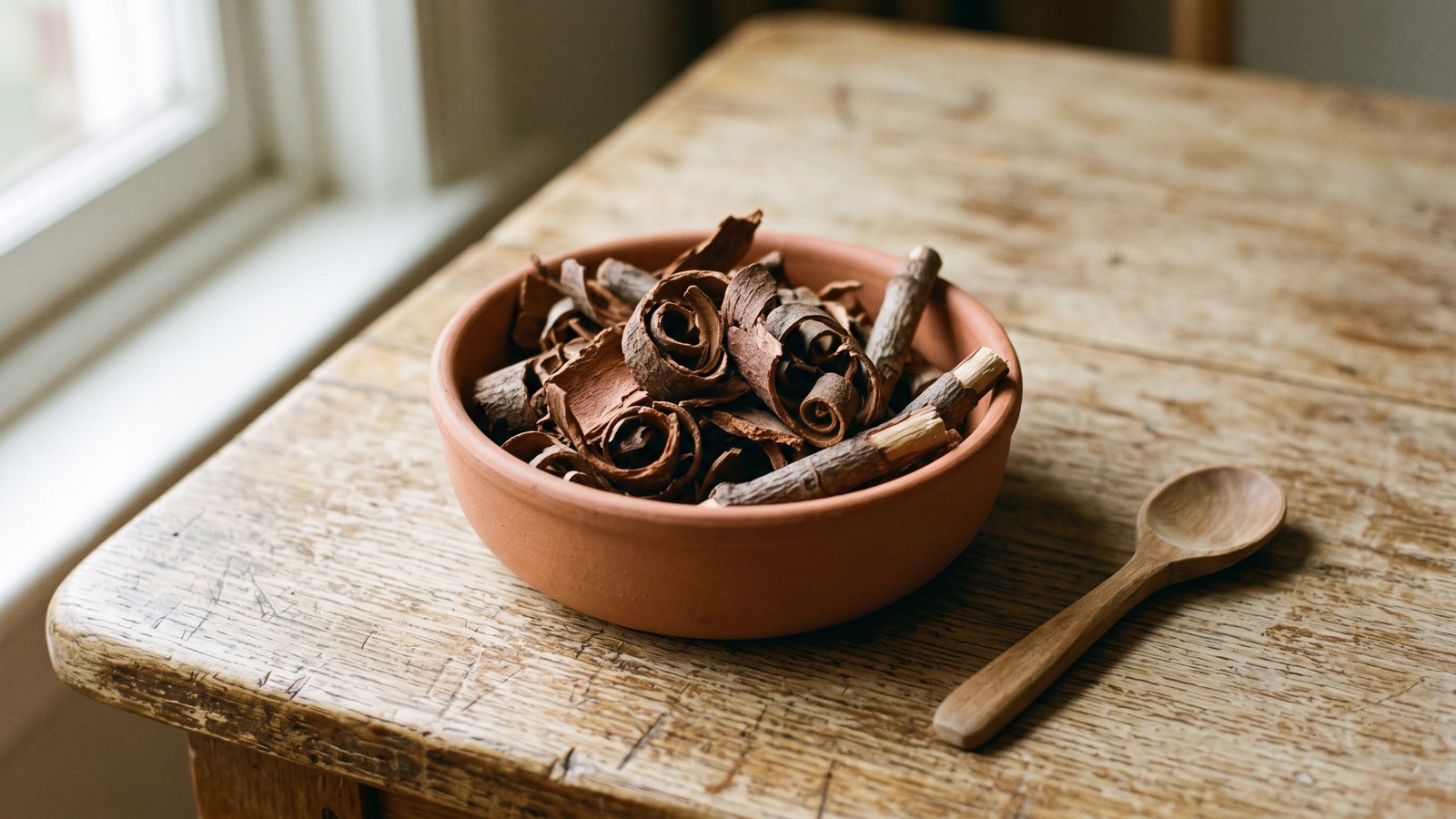
Its use specifically as a coffee substitute has a sharper historical hook: wartime scarcity. During the Civil War, the Union naval blockade of Southern ports cut off coffee supply almost entirely, and households on both sides improvised. A firsthand account from the period lists sassafras plainly among the substitutes families reached for: “We used sassafras and other native herb teas both daily and at parties when the herb teas were in season,” alongside parched wheat, roasted okra seed, and sweet potato chips. It sat in the same category as chicory, dandelion root, and roasted acorns — not a preferred flavor match for coffee, but a hot, home-brewable drink when the real thing wasn’t available at any price.
Root beer is the other half of sassafras’s story, and it’s the reason most people have tasted something related to it even if they’ve never seen the raw bark. Sassafras and sarsaparilla were both traditional root beer flavorings well before the format most of us know today; a batch made with real sassafras root has a sweet, woody, faintly medicinal quality that modern commercial root beer still echoes, even after the ingredient itself changed.
Why the FDA banned it
The compound doing all the work here is safrole, a volatile oil that makes up somewhere in the range of 60 to 90 percent of sassafras root bark’s essential oil content — accounts differ on the exact figure, but every source agrees it’s the dominant component, not a trace one. In the 1950s and 60s, researchers fed safrole and sassafras oil to rats and mice in controlled studies and found it reliably produced liver tumors. That evidence is why the FDA banned safrole and sassafras oil as a food additive in 1960, and it’s a strong enough finding that safrole remains classified today as reasonably anticipated to be a human carcinogen — a designation based on solid animal evidence, even though direct human cancer data is much harder to come by for an ingredient nobody has been allowed to sell in bulk for over sixty years.
Risk here is explicitly dose- and duration-dependent, not a one-cup-and-you’re-doomed scenario — the same pattern shows up across a lot of the ingredient-safety stories on this site, where the honest answer is “more matters, and so does how often” rather than a flat yes-or-no. That’s worth sitting with rather than rushing past, because it cuts against the instinct to treat any FDA food ban as evidence of an acute, immediate danger.
It’s also worth naming a real tension we found while researching this piece: some critics of the ban point out that other legal, everyday foods — nutmeg among them — also contain small amounts of safrole, and that later research hasn’t replicated the rat-study liver effects directly in humans. That’s a real, citable perspective, not something we’re inventing to seem balanced. But it doesn’t override the FDA’s standing food-additive ban or the National Toxicology Program’s carcinogen classification, both of which remain the operative rules today. We’re flagging the debate honestly rather than picking a side neither of us is qualified to adjudicate.
Is it actually legal to buy?
Here’s where the two separate regulatory stories genuinely do get confused with each other, so it’s worth pulling them apart cleanly.
The FDA’s rule, dating to 1960, bars safrole and sassafras oil from being added to food, drinks, or dietary supplements. That makes whole sassafras root bark — the part historically brewed as tea or roasted as a coffee substitute — not a legal food ingredient in the US. In practice, that hasn’t made it unavailable: unregulated sassafras bark and loose tea products are still sold online, outside FDA food oversight, which means nobody is verifying their actual safrole content or requiring a warning label.
Separately, the DEA has listed safrole itself as a “List I” regulated chemical since 1991, specifically because it’s a precursor that can be used to manufacture MDMA. That’s a drug-control measure aimed at bulk chemical diversion, not a statement about a cup of tea, and it’s a completely different agency acting for a completely different reason three decades after the FDA’s food ban.
What’s unambiguously fine today is safrole-free sassafras extract, which is what gives modern commercial root beer its traditional flavor note without the compound the original ban targeted. If you’ve had root beer recently, you’ve tasted the legal, regulated descendant of this ingredient’s flavor — just not the whole-bark version that started the story.
Who should skip it entirely
Given all of the above, a few groups have a clearly stronger reason to avoid sassafras products altogether, regardless of where they’re sourced:
- Anyone who is pregnant or breastfeeding — the effects on pregnancy and on breast milk are both described as unknown rather than studied and cleared.
- Anyone with a personal or family history of cancer.
- Anyone with liver or kidney conditions, who should talk to a clinician before using any unregulated herbal product.
- Anyone relying on an online seller’s word for what’s actually in the package — because these products sit outside FDA food oversight, there’s no guarantee the safrole content, or even the plant identity, matches the label.
What it tastes like
Sweet, woody, and distinctly reminiscent of old-fashioned root beer is the closest most descriptions get, which tracks with its actual history as a root beer flavoring. It isn’t a coffee flavor match in the way chicory or roasted barley are — nobody reached for sassafras during the Civil War because it tasted like coffee, they reached for it because it was a hot, home-brewable drink and real coffee wasn’t reliably on the shelf. That’s a useful distinction if you’re coming to this piece hoping for a flavor recommendation: sassafras earns its “coffee substitute” label from historical circumstance, not from flavor similarity.
If you want the same idea, minus the risk
If what actually draws you to sassafras coffee is the idea — a caffeine-free, plant-based, home-brewable hot drink with a real history behind it — that’s a need plenty of ingredients on this site meet without the safrole question attached. Chicory root and dandelion root both carry the same wartime-substitute pedigree, are still legally and widely sold, and don’t come with a federal food-additive ban attached to their main compound.
Among the herbal-coffee blends built on those roots, Teeccino (opens in a new tab)’s French Roast pairs roasted chicory with carob, barley, dates, and almonds for a fuller, more coffee-like cup — worth flagging that recipe contains both barley (not gluten-free) and almonds (a tree-nut allergen), so it isn’t a fit for everyone. Its Dandelion Dark Roast is gluten-free and leans on dandelion root instead. Dandy Blend and Pero are the other names you’ll commonly see in the same caffeine-free, roasted-root category; none of them is the only reasonable choice, and the right one comes down to which roots and allergens work for you, not which brand markets itself loudest. We rounded up the wider field in our herbal coffee comparison.
The bottom line
Sassafras earned its place in American coffee-substitute history honestly — it was a real wartime and folk-tradition drink, not a novelty. What changed is that the science caught up with the compound doing most of the flavor work, safrole, and two separate federal agencies have restricted it since, for two separate reasons that are easy to blur into one vague “it’s banned” impression. The more accurate version: it’s a restricted food ingredient with a regulated chemical inside it, still findable online if you go looking, and not a swap most people need to make when chicory and dandelion root do the same historical job without either restriction attached.
This article is educational, not medical advice. If you’re pregnant, breastfeeding, managing a personal or family cancer history, or have a liver or kidney condition, talk to your own clinician before trying any unregulated herbal product.
Sources & further reading
- Sassafras (opens in a new tab) — WebMD
- Sassafras — Herbs (opens in a new tab) — Memorial Sloan Kettering Cancer Center
- The root in root beer is sassafras (opens in a new tab) — McGill Office for Science and Society
- Sassafras tea — the spring tonic (opens in a new tab) — Appalachian History
- Notice: Safrole and Sassafras Oil are used in the Illicit Manufacture of MDMA (opens in a new tab) — DEA Diversion Control Division
- Civil War-Era Blockade Coffee (opens in a new tab) — World Turn'd Upside Down
Reader conversation (5)
We read every response. Selected reader notes below.
My grandmother made sassafras tea every spring without fail and I genuinely thought it was just a regional Appalachian thing nobody outside these mountains had heard of. Had no idea it had a whole separate life as a wartime coffee substitute too.
The part that actually surprised me was that the FDA ban and the DEA precursor listing are completely separate rules for completely separate reasons. I’d absorbed “sassafras is banned” as one vague fact and never once wondered why, or whether it was even still one rule.
That mix-up is basically why this article exists. Even I assumed it was a single tidy ban until I actually pulled the timeline apart and found two different agencies acting three decades apart for two unrelated reasons.
Homebrewed a batch of real sassafras root beer years ago before I knew any of this and it tasted incredible, honestly better than anything from a can. Wouldn’t do it again knowing what’s in the paper now, but I understand why people miss the real thing.
Appreciated that you didn’t just flatten this into “banned = scary, avoid.” The dose-and-duration framing is a much more honest way to talk about a lot of these older herbal ingredients than the all-or-nothing headlines usually allow.
Genuinely didn’t know root beer’s classic flavor traces back to an ingredient with a food-safety ban attached. Makes me want to go read the label on the bottle in my fridge right now.
You’ll find “artificial flavor” or “sassafras extract” rather than actual bark on almost every modern label — that’s the safrole-free version doing the work these days, not the original ingredient.
Have something to add? Email us and we may include it in a future update.