How dark is your roast, really? Coffee has a number for it. Coffee alternatives don't.
Coffee has an Agtron scale, first crack, and second crack. Malt brewing has its own numeric color scale too. Coffee alternatives have neither — just a word on the front of the bag. Here's what roast degree actually changes in the cup, and why almost nobody in this category measures it.

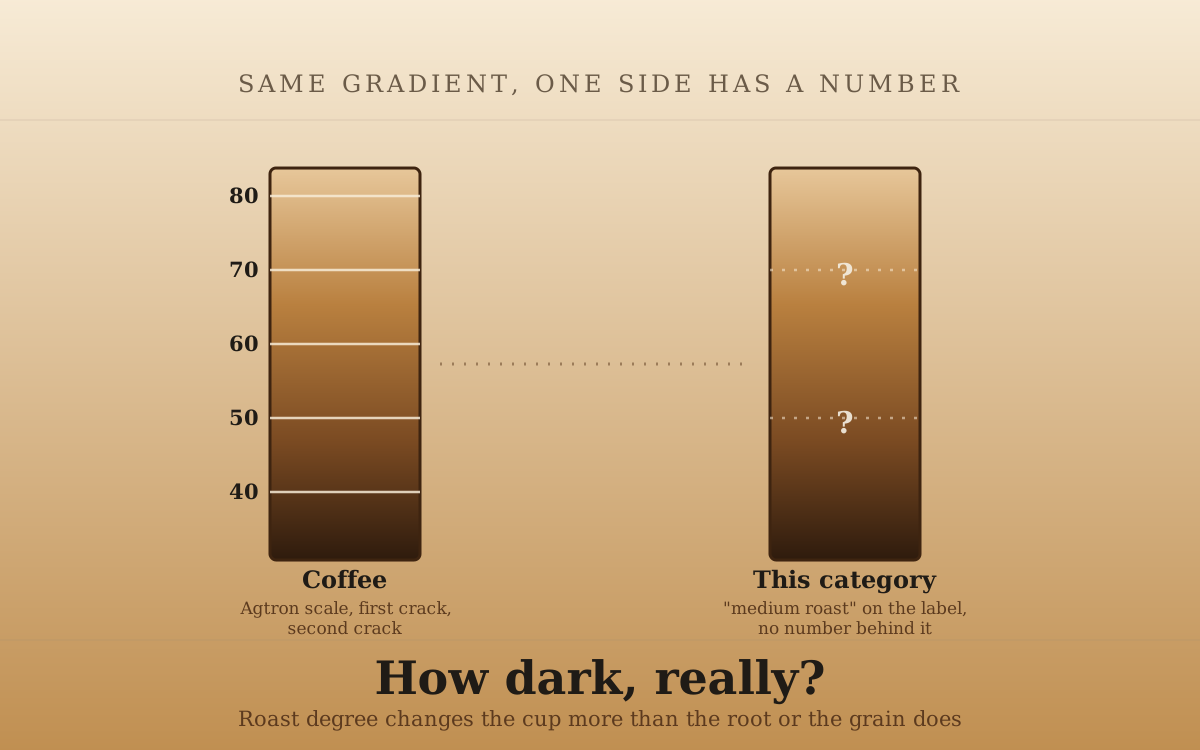
Ask a barista what roast a bag of beans is and they can hand you a number: an Agtron reading, a temperature curve, a crack time. Ask what roast degree a bag of chicory or a malt-coffee blend is, and the honest answer is that almost nobody involved in making it wrote one down.
That gap is more consequential than it sounds, because roast degree is arguably the single biggest lever on how a caffeine-free cup tastes — bigger, in a lot of cases, than which root or grain you started with. And it is a lever this entire category is turning blind.
The biggest lever nobody names
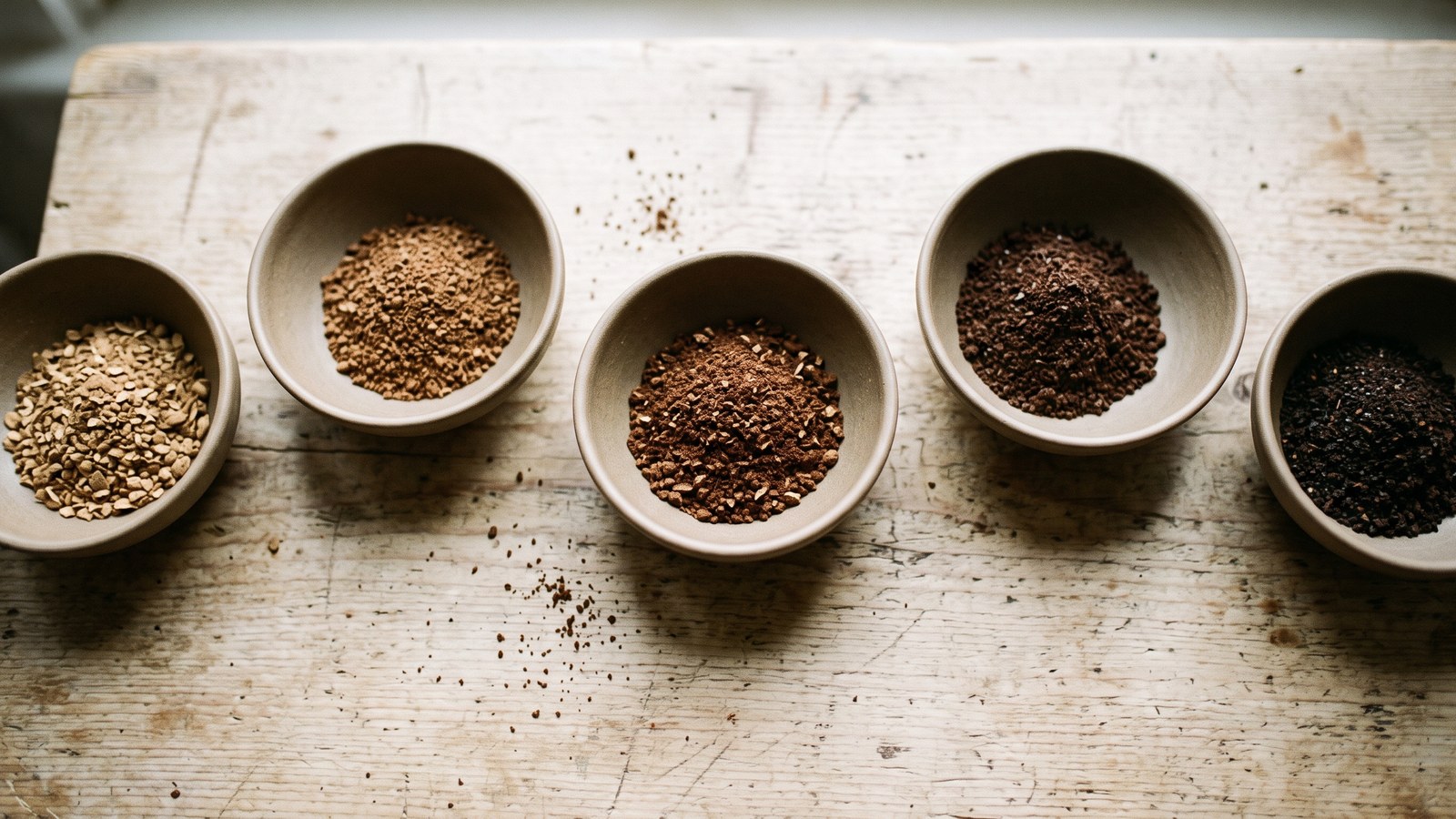
Here’s the claim, stated plainly so it can be checked against your own cupboard: a light-roast chicory and a dark-roast chicory, made from the same root, can taste further apart than a dark-roast chicory sitting next to a dark-roast barley blend. Roasting is not a finishing step that adds a little color. It’s where most of the flavor gets built, and how far you carry it changes the compound mix more than which plant you started roasting.
This isn’t a new observation about coffee — it’s the entire premise of specialty coffee’s obsession with roast curves. What’s less discussed is that the same chemistry runs through everything else that gets roasted before it goes in a mug: chicory, dandelion root, barley, rye, carob, dates. Two previous pieces here looked at what roasting does to safety-relevant by-products — acrylamide’s inverted-U curve and how HMF dwarfs acrylamide in raw scale. This one is about what roasting does to flavor, and about a strange asymmetry: one adjacent industry measures this rigorously, and the category we write about mostly doesn’t measure it at all.
Coffee has a number for this
Coffee’s roast community didn’t leave “how dark” to adjectives. Roasters track two audible events — first crack, when internal steam pressure splits the bean, and a further, quieter second crack later in the roast — as physical checkpoints. On top of that, they measure roast color with a reflectance meter against the Agtron scale, and the specialty-coffee press has standardized what the numbers mean: an Agtron reading above 80 is a Light roast, 70–80 is Medium-Light, 60–70 is Medium, 50–60 is Medium-Dark, 40–50 is Dark, and readings below 40 run through Very Dark into Extreme-Dark.
That’s not trivia. It means a roaster in Seattle and a roaster in Naples can tell each other, in one number, roughly how far a batch was carried — and a buyer can compare bags from two different companies without tasting either one. The number does the job a word like “medium” can’t, because “medium” means something different on every bag.
So did malt, for the same reason
Coffee isn’t even the only roasted-food industry that solved this. Brewing built its own version decades ago, because a brewer specifying a beer recipe has exactly the same problem a coffee buyer does: “kilned darker” isn’t a specification you can reorder against.
Malt is graded on the EBC (European Brewery Convention) or degrees Lovibond color scale — a measured, published number, not a marketing word. A standard Pilsner malt runs a pale few EBC; Munich malt, kilned longer and hotter for more color and toasted flavor, runs a documented range of roughly 12 to 52 EBC depending on how far it’s taken, and maltsters sell it by the exact number — Weyermann, for instance, offers Munich malts rated at specific Lovibond degrees rather than “light Munich” and “dark Munich.” A brewer building a recipe reads that number off a spec sheet the way a roaster reads Agtron off a coffee bag.
We’ve written about malting before — germination, not roasting, is what makes malt coffee taste sweeter than plain roasted barley — but the kilning step that follows germination is graded on exactly this kind of numeric scale in the brewing world it was built for. Two separate industries, coffee and malt, independently arrived at the same solution: put a number on roast color, because words don’t hold still.
What the shelf actually publishes
So what does the coffee-alternatives shelf actually tell you? I checked three brands’ own product pages and packaging copy rather than assume.
Teeccino names a roast style in the product itself — its French Roast (opens in a new tab) is marketed as a “Dark Roast,” and its Dandelion blend is sold as “Dandelion Dark Roast.” That’s more than most competitors offer. But the product page doesn’t state a roasting temperature, a duration, or a roast date, and there’s nothing that functions like an Agtron number — no way to compare “Teeccino’s dark” against another brand’s “dark” except by taste.
Pero and Dandy Blend, checked the same way, don’t go even that far: both describe their barley, rye, chicory and dandelion components as “roasted,” with no roast-level word attached at all — light, medium or dark isn’t specified anywhere in their public ingredient or product copy.
None of this is a knock on any single brand; it’s a category-wide absence, and it’s worth stating as a finding rather than an oversight, because it isn’t obviously anyone’s fault. Coffee’s Agtron convention exists because an entire specialty industry built shared infrastructure — spectrophotometers, an association, agreed color-tile references — around one narrow, high-value product. Chicory, dandelion, barley and rye blends were never that product; they were mostly grocery-shelf commodities, made in facilities that also do other things, sold on price and flavor name rather than a specification sheet. Nobody built the meter because nobody needed to sell across that comparison the way coffee roasters needed to.
The result for a reader is genuinely inconvenient: you can walk into this knowing that roast degree matters enormously, and still have no label-reading skill that tells you where any given bag sits on that scale. “Dark Roast” on a front label is closer to a flavor name — like “French Roast,” which historically described a style rather than a specific endpoint even in coffee — than to a measurement.
What roasting does: acid gives way to bitter
Here’s the mechanism, at least the coffee-specific half of it, where the research is most complete. Green coffee beans carry a family of compounds called chlorogenic acids, which read in the cup as brightness and sourness. Roasting breaks them down, fast, and the breakdown products — quinic and caffeic acid fragments — are themselves bitter.
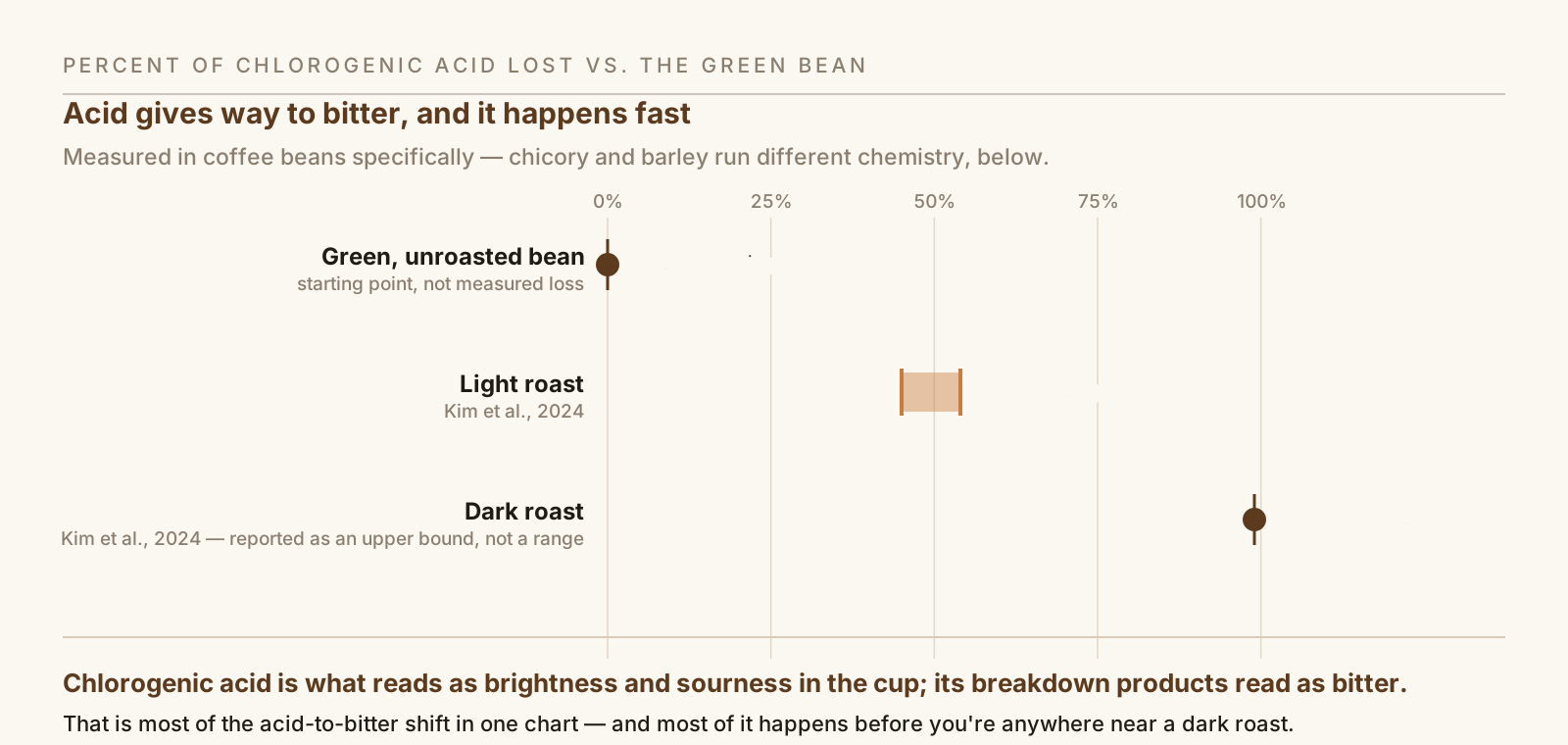
The shape of that curve is the useful part even if you never touch a coffee bean: most of the acid-to-bitter shift happens early. A light roast has already lost roughly half its chlorogenic acid; by the time a roast reads as genuinely dark, there’s not much left to lose. That’s a large part of why a light-roast coffee tastes bright and a dark one tastes rounder and more bitter — the acid that would have carried the brightness is mostly gone.
I’d flag plainly that this specific figure is coffee-bean chemistry — I could not get past a login wall to read the 2024 paper’s full methods directly, so the number here is cross-checked against an independent trade summary of the same study rather than the primary text itself, and it describes Coffea arabica and robusta, not chicory or barley. The direction of the effect — acid declining, bitterness compounds accumulating, as roast deepens — is a general feature of Maillard-heavy roasting chemistry. The exact percentages are not something I’d port over to a root or a grain without new data, and I haven’t found any.
Chicory’s bitterness isn’t coffee’s bitterness
Which matters, because chicory doesn’t get bitter the way coffee does. Chicory root carries its own bitter compounds before it ever sees a roaster: sesquiterpene lactones, chiefly lactucin, lactucopicrin and 8-deoxylactucin — the same family responsible for the bitter edge in raw chicory greens and escarole. That bitterness is baked into the plant, not manufactured by heat.
What roasting adds on top is the caramelization of chicory’s other major component: inulin, a long-chain fructose polymer that makes up much of the root’s dry weight. Heat breaks inulin down toward simpler sugars and caramelizes them, which is where chicory’s sweetness and body come from — the same Maillard-family browning that produces melanoidins, the compounds behind color and a rounder mouthfeel in every dark-roasted thing from bread crust to stout.
So a chicory roast isn’t tracking one curve, the way coffee mostly is. It’s the interplay of two separate things moving at different rates: existing bitter compounds that don’t change much with heat, and caramelizing sugars that build sweetness and depth the longer the roast runs. That’s a plausible reason a chicory blend can read as pleasantly bittersweet at a roast degree where a straight coffee-bitterness model would predict harshness — the sweetness from inulin caramelization is doing real work to balance the lactones, not just window dressing on top of them.
Darker isn’t just “more processed”
The instinct a lot of people bring to this is that darker roasting equals more processing equals more of whatever you’re trying to avoid. Our acrylamide piece found the opposite for that specific compound: acrylamide rises with roasting and then falls with continued heat, an inverted U, so a dark roast in the same product line can carry less than a medium one. Reaching for the palest roast on a hunch that gentler treatment means fewer by-products gets that particular compound backwards.
Flavor doesn’t move on the same track as safety-relevant chemistry, and neither of them moves in a straight line just because “roast degree” sounds like one dial. Acid-to-bitter tracks roughly monotonically with darkness, at least in coffee. Acrylamide doesn’t. Sweetness from caramelization builds with heat up to a point and then risks tipping into flat-out burnt. Three different curves, one knob, and no single word — “dark” — captures which curve you’re actually asking about.
How to shop this, with no number to read
Given that no bag is going to hand you an Agtron reading, here’s what’s actually useful:
Treat “light,” “medium” and “dark” on a coffee-alternative bag as directional, not comparable across brands. One company’s medium may sit closer to another’s dark. There’s no shared reference, so don’t shop by the word alone — shop by the word plus your own taste memory of that specific brand.
If you want less bitterness, look for lighter roast language and root-forward rather than heavily roasted blends — bearing in mind chicory brings its own bitterness regardless of roast, so a “light roast” chicory will still taste more assertive than a light coffee. Dandelion tends to run gentler than chicory at a comparable roast, for what it’s worth.
If what you’re chasing is body and sweetness rather than brightness, a darker roast or a grain-forward blend gets you there — that’s the caramelization working in your favor, and it’s a large part of why malt coffee reads as sweet and bready rather than sharp.
Taste across a brand’s own line before assuming the words mean what they say. The comparison that actually tells you something is medium-versus-dark within one company’s products, not “dark” on one bag against “dark” on a different one.
Don’t use roast darkness as a health shortcut in either direction. It isn’t a proxy for less processing, and — per the acrylamide piece — it isn’t reliably a proxy for more of any specific heat-formed compound either. Shop it for taste; there isn’t a safety signal hiding in the word.
The bottom line
Coffee built a shared number for roast degree because an entire industry needed to compare bags across roasters, and it built the infrastructure to do it. Malt built its own version for the same reason, on a different scale. Coffee alternatives never had that industry-wide moment, and the result is a category where the single biggest lever on flavor is described, when it’s described at all, with a marketing adjective instead of a measurement.
That’s not a reason to distrust any of these products — it’s a reason to trust your own palate over the word on the front of the bag, and to expect some real variation between “dark roast” on one shelf and “dark roast” on the next. If this category ever gets its own version of Agtron, that would be a genuine, unglamorous improvement — the kind that never makes a marketing headline and would still make every bag easier to buy correctly.
This article is about flavor chemistry and what roasting changes in the cup, not about any health effect of roasting. Nothing here is medical advice, and no roast degree has been shown to make any coffee alternative healthier or less healthy than another.
Sources & further reading
- Alterations in pH of Coffee Bean Extract and Properties of Chlorogenic Acid Based on the Roasting Degree (opens in a new tab) — Kim, Lim, Kim & Kim, Foods, 2024
- Chlorogenic acids: How do they affect coffee flavour? (opens in a new tab) — MTPak Coffee
- Understanding roast definitions for coffee (opens in a new tab) — Coffee Review
- Sesquiterpene lactones and inulin from chicory roots: extraction, identification, enzymatic release and sensory analysis (opens in a new tab) — Leclercq, E., Landbouwuniversiteit Wageningen, 1992
- Munich Malts Explained (opens in a new tab) — Brew Your Own
- Acrylamide elution from roasted barley grains into mugicha and its formation during roasting (opens in a new tab) — Mizukami, Yoshida & Ono, Food Additives & Contaminants Part A, 2016
- Roasted Rye as a Coffee Substitute: Methods for Reducing Acrylamide (opens in a new tab) — Pitsch, Höglinger & Weghuber, Foods, 2020
Reader conversation (5)
We read every response. Selected reader notes below.
Small commercial roaster here, coffee only, and the Agtron comparison is exactly right — I’d add that a lot of us also log drum temperature and time-to-first-crack in a roast log for every batch, precisely because “medium” means something different at every roastery. It never occurred to me that the substitutes aisle doesn’t have any equivalent of that logbook at all. That’s a genuinely strange gap once you say it out loud.
That’s the piece of the coffee side I didn’t have room for — the roast log as a batch-to-batch consistency tool, not just a marketing spec. It makes the absence on the other side more pointed, honestly: it’s not just that consumers can’t compare brands, it’s that these companies may not even be measuring it internally the same way batch to batch.
Homebrewer for twelve years and I actually laughed at the Weyermann example — I have three bags of their Munich malt in my garage right now with the exact Lovibond degree printed on the label, sitting about four feet from a bag of roasted chicory that says “dark roast” and nothing else. Never made that comparison before but it’s a perfect illustration.
The “taste across one brand’s own line before comparing across brands” advice is the single most useful line in this piece for me practically. I’ve been trying to decide between two Teeccino roasts for weeks by reading descriptions online instead of just brewing both side by side, which in hindsight is obviously the actual answer.
Does roast date matter for staleness the way it does for specialty coffee beans, where two weeks post-roast is considered the sweet spot? Or is a shelf-stable instant powder a different situation entirely because it’s already been extracted and dried?
Honest answer: I don’t know, and I don’t think anyone’s published on it for this category specifically. Whole roasted chicory or grain sold as a coarse grind is probably closer to whole-bean coffee’s staleness curve than an instant powder is — once something’s been extracted, dried and often packed in a sealed tin or foil pouch, the oxidation pathways that stale fresh-ground coffee mostly aren’t in play the same way. That’s reasoning from the physical differences, not a measurement, so treat it as a plausible guess rather than something I’d bet on.
The sesquiterpene lactone detail explains something I could never articulate — I grow chicory greens for salads and always found the bitterness sits differently on the tongue than coffee bitterness does, more lingering. Good to know that’s not just in my head; it’s a genuinely different compound family doing it.
Have something to add? Email us and we may include it in a future update.