Acrylamide in coffee alternatives: chicory's official ceiling is eight times barley's, and it isn't a health ranking
European regulators allow eight times more acrylamide in a chicory-based coffee substitute than a grain-based one — the highest benchmark for any food in the annex. Here is what that number actually measures, what has been found in real products, how much reaches your cup, and the two things that move it that no label tells you.

There is a number in European food law that looks, at first glance, like an accusation against the ingredient this site writes about more than any other.
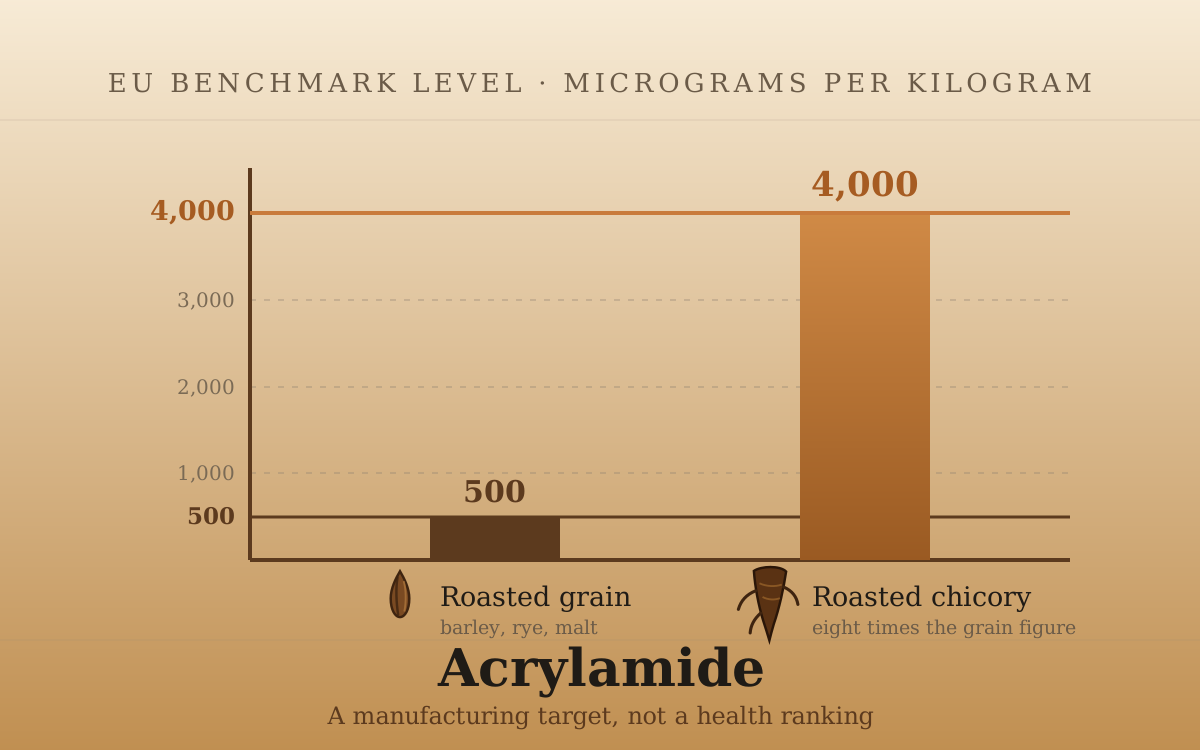
Commission Regulation (EU) 2017/2158 sets acrylamide benchmark levels for dozens of food categories. For a coffee substitute made exclusively from cereals, the figure is 500 micrograms per kilogram. For a coffee substitute made exclusively from chicory, it is 4,000 — eight times higher, and the single highest number anywhere in the annex. Higher than potato crisps. Higher than gingerbread. Ten times the figure for roast coffee.
I have read a fair amount of consumer writing about coffee alternatives and I have never once seen this mentioned. It deserves to be, partly because it is genuinely interesting and partly because a number like that is going to surface eventually, and it is better surfaced with its context attached than discovered on a forum without it.
So here is the context, and it changes the meaning almost completely: a benchmark level is not a safety limit, and the gap between 500 and 4,000 is not a ranking of harm. It is a manufacturing target, and what it actually encodes is how hard each ingredient is to get low.
What acrylamide is, and why roasting makes it
Acrylamide is a small molecule that forms when starchy plant material is heated dry above roughly 120°C. It is not added to anything. It is a by-product of the Maillard reaction — the same browning chemistry that turns bread into crust, that makes a dark roast smell like a dark roast, and that every roasted coffee substitute on earth depends on for its flavour.
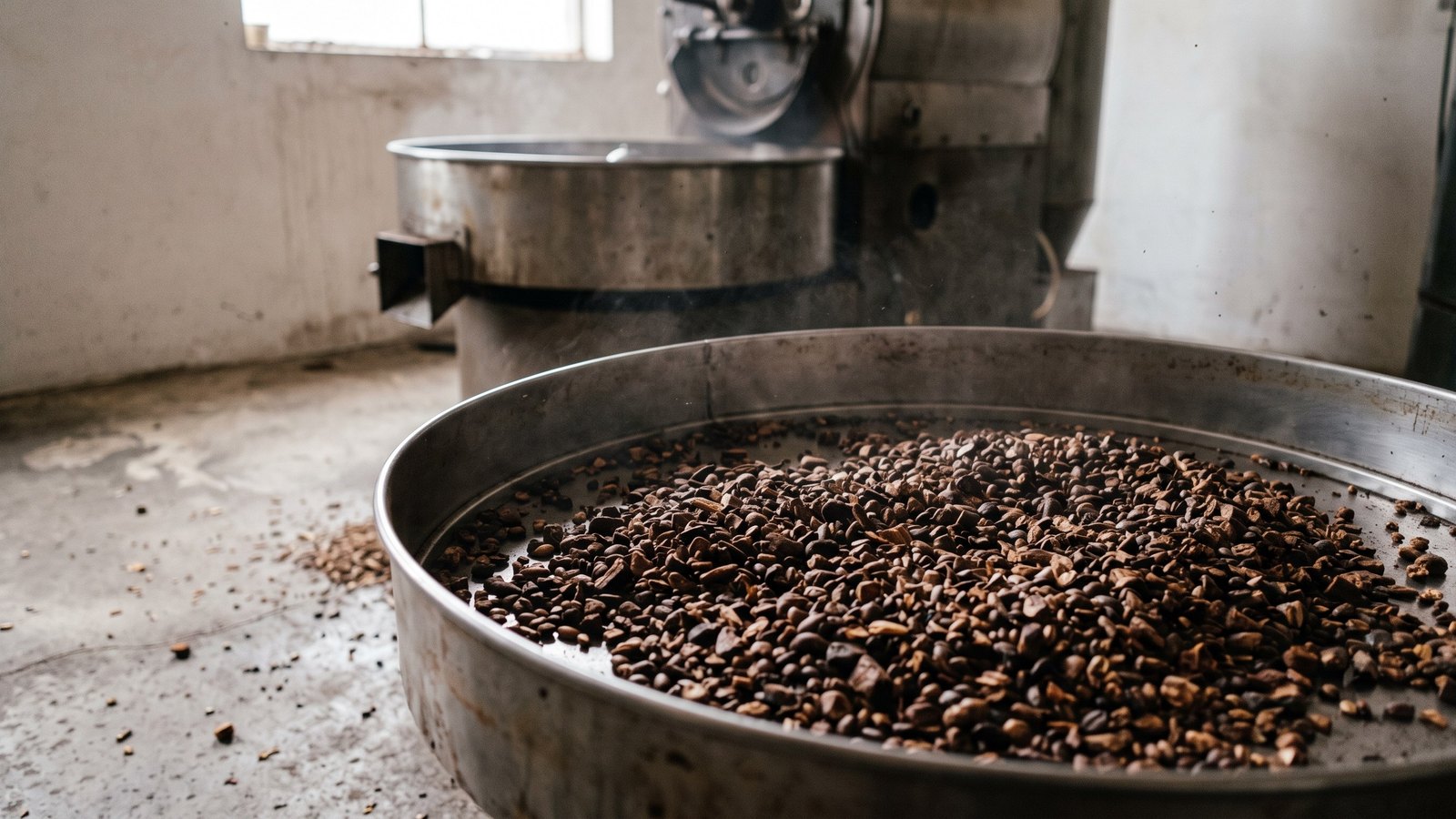
The precursors are ordinary: a reducing sugar and a particular free amino acid, asparagine. Where both are abundant in the raw material and the heat is high enough for long enough, you get acrylamide. This is why the list of foods that carry it reads like a list of foods people like: fries, crisps, toast, biscuits, breakfast cereal, roast potatoes, coffee, and every roasted grain or root in the coffee-alternatives aisle.
EFSA is blunt that you cannot escape it. Its position is that it is “practically impossible to eliminate acrylamide entirely from the diet,” and that for adults the most important dietary sources are fried potato products and coffee and coffee substitutes together — note together, which is the first hint that switching from one to the other is not the lever people assume.
On the hazard side, the honest summary is the hedged one. Animal studies show tumours at high doses; IARC classifies acrylamide as probably carcinogenic to humans, a Group 2A rating resting mainly on that animal data. EFSA’s own characterisation of the human evidence is that studies “have provided limited and inconsistent evidence of increased risk of developing cancer.” No safe intake level has been established, which is why regulators reach for achievability targets instead of limits.
The eightfold gap — and what a benchmark actually is
Here is the full annex, sorted, so the chicory figure sits in company rather than alone.
| Food category | Benchmark level (µg/kg) |
|---|---|
| Baby foods, processed cereal-based (excluding biscuits and rusks) | 40 |
| Soft bread, wheat-based | 50 |
| Soft bread, other than wheat-based | 100 |
| Breakfast cereals: maize, oat, spelt, barley, rice based | 150 |
| Biscuits and rusks for infants and young children | 150 |
| Breakfast cereals: bran, wholegrain, gun-puffed | 300 |
| Breakfast cereals: wheat and rye based | 300 |
| Biscuits and wafers | 350 |
| Crispbread | 350 |
| Roast coffee | 400 |
| Crackers other than potato-based | 400 |
| French fries, ready to eat | 500 |
| Coffee substitutes, exclusively from cereals | 500 |
| Potato crisps, potato-based crackers, other potato-dough products | 750 |
| Gingerbread | 800 |
| Instant (soluble) coffee | 850 |
| Coffee substitutes, exclusively from chicory | 4,000 |
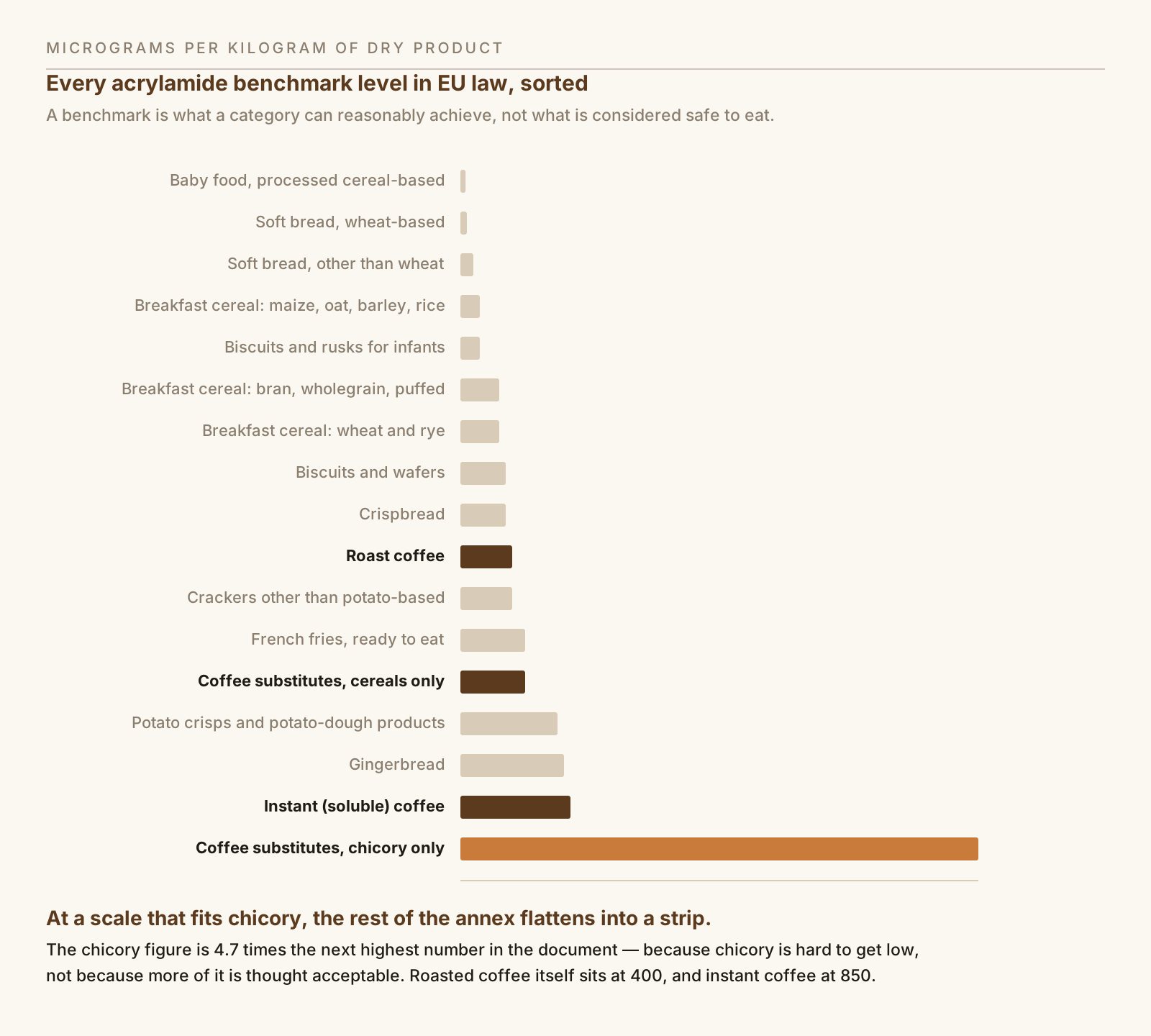
For a product blending both, the regulation sets no separate figure; the applicable benchmark “takes into account the relative proportion of these ingredients in the final product,” which in practice means a pro-rata line somewhere between 500 and 4,000.
Now the definition, from the regulation itself. Benchmark levels are “performance indicators used to verify the effectiveness of the mitigation measures,” and they are set at levels “as low as reasonably achievable with the application of all relevant mitigation measures.” That is a completely different kind of object from a maximum residue limit. A manufacturer whose product exceeds a benchmark is not selling an illegal food; they are being told their process needs looking at.
Which means the gap runs the opposite way from how it reads. Chicory’s benchmark is high because chicory is stubborn — because even a producer doing everything the regulation asks cannot reliably get a pure chicory roast down where a barley roast lands. Setting it at 500 would not have made chicory safer. It would have made the target unmeetable and the indicator useless.
The regulation makes this explicit in a way I found genuinely persuasive: it prescribes different mitigation measures for the two. A maker of a mostly-chicory substitute must “purchase only cultivars low in asparagine” and “ensure that no late and excessive nitrogen application has taken place during the growth of chicory.” A maker of a mostly-cereal one gets a different list — balanced soil sulphur, correct nitrogen, considering maize and rice in new recipes, controlling added reducing sugars. These are agronomy instructions, written years before the crop is roasted. Nobody writes farming rules for a hazard they think is trivial, and nobody writes different farming rules unless the two crops genuinely behave differently.
Why chicory is the high one: asparagine
The mechanism is specific and it comes back to the same molecule the inulin story turns on.
Chicory root is a storage organ. It arrives at the roaster loaded with inulin and sucrose, and during roasting those break down into reducing sugars and reactive dicarbonyl compounds. Meet those with free asparagine — which chicory also carries generously — and you have both halves of the acrylamide reaction present in quantity, in a dry matrix, at temperature. Grain brings less of both to the same roaster.
That asparagine load is not fixed, which is the whole reason the regulation bothers with cultivar choice and nitrogen timing. Push nitrogen late into a chicory crop and you push free amino acids up with it. Research on chicory varieties and agronomy has tracked free asparagine against acrylamide formed in the subsequent roast and found them to move together, and found that drying the roots before roasting lowers asparagine too.
The industry has chased this hard. A Nestec patent application from before the EU rules came in describes soaking chicory in calcium or magnesium chloride before roasting and reports cutting acrylamide from 2,049 µg/kg to 68 in one example — a 97% reduction — while noting that untreated roasted chicory typically ran 2,000 to 6,600 µg/kg. Read that last figure carefully: it is a description of the old baseline, from a company arguing that the baseline was a problem worth solving.
What has actually been measured
Benchmarks describe what regulators think is achievable. They do not tell you what is in the bag. For that you need occurrence data, and there is less of it than you would hope.
What exists, with each figure attached to the study that produced it:
| What was measured | Result | Source |
|---|---|---|
| Roasted coffee, 28 samples | mean 179 µg/kg | Mojska & Gielecińska, 2013 |
| Instant coffee, 11 samples | mean 358 µg/kg | Mojska & Gielecińska, 2013 |
| Coffee substitutes, 3 samples | mean 818 µg/kg | Mojska & Gielecińska, 2013 |
| Roasted barley grain, 45 commercial samples | mean 240 µg/kg (SD 80) | Mizukami et al., 2014 |
| Roasted rye, roasted 120–170°C | 640–1,700 µg/kg depending on temperature | Pitsch et al., 2020 |
| Untreated roasted chicory (industry description) | typically 2,000–6,600 µg/kg | Nestec patent application, c. 2008 |
| Instant coffee vs coffee substitutes, retail | medians 589 vs 671 µg/kg, no significant difference | Delgado-Andrade et al., 2024 |
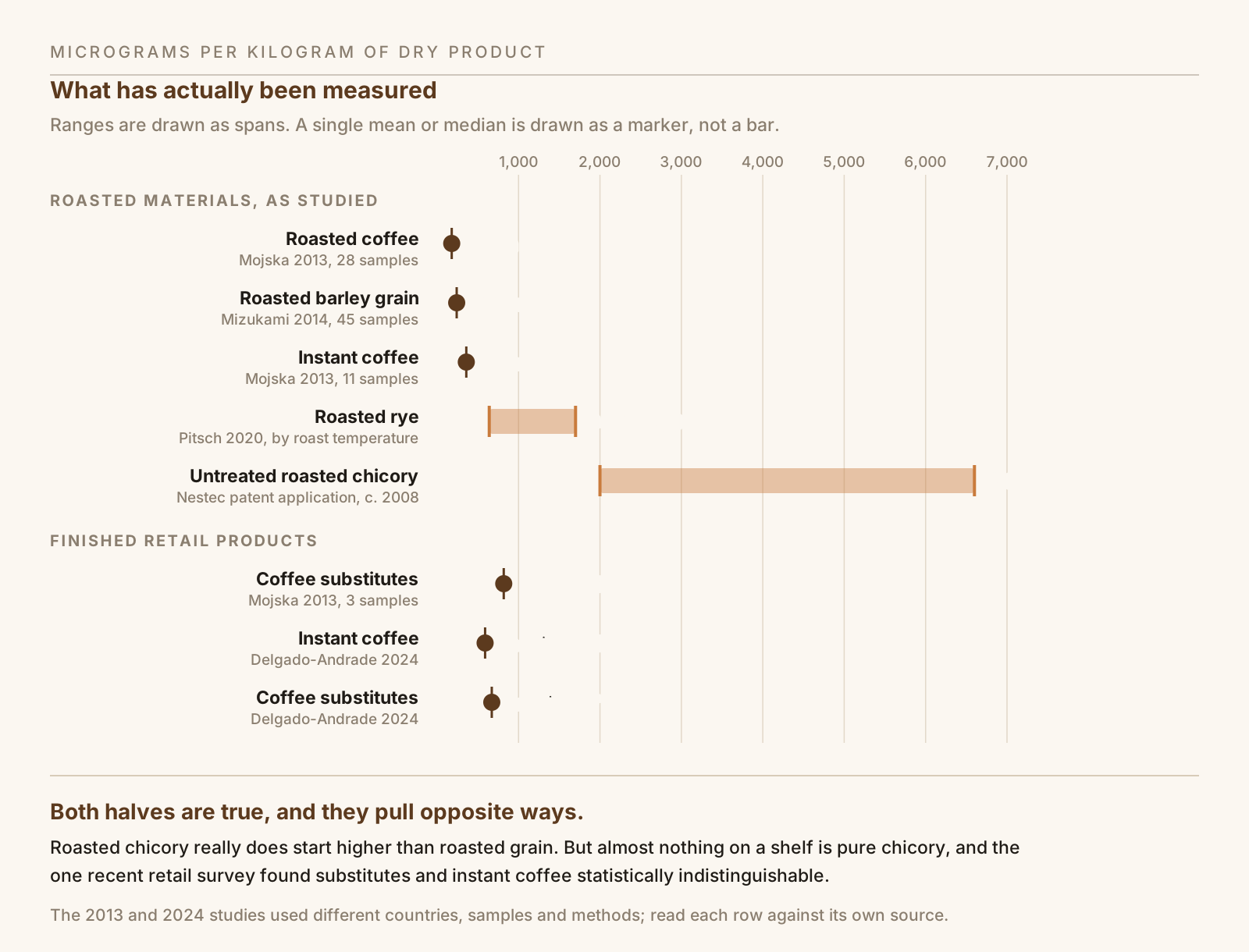
Two things fall out of that table, and they pull in opposite directions.
The raw-material gap is real. Roasted barley grain at a mean of 240 µg/kg and roasted chicory described in the low thousands are not the same animal. The regulation’s eightfold split is not arbitrary.
The finished shelf is far tighter than the raw materials imply. The most recent survey — a 2024 Spanish analysis of retail instant coffees and coffee substitutes — found no statistically significant difference between the two groups, medians of 589 and 671 µg/kg, everything under its own benchmark. The authors note that the substitutes were more variable than the coffees, and explain why: they were composed of “roasted cereals, nuts, honey, dehydrated fruits, and/or chicory.”
That last clause is the reconciliation. Almost nothing on a supermarket shelf is exclusively chicory. The blends that dominate the category — the ones combining chicory with roasted barley, rye, carob, dates, figs or nuts, sold by Teeccino, Pero, Cafix, Dandy Blend and others — are, in acrylamide terms, chicory diluted with lower-acrylamide material. The 4,000 benchmark describes the corner case. Most people are not drinking the corner case.
A correction to something we published
On 4 August, in our piece on malt coffee, I wrote that a 2024 analysis had found mean acrylamide of roughly 510 µg/kg in cereal-based coffee substitutes against about 2,940 in chicory-based ones.
Researching this article, I went to that 2024 study to cite it properly and found it does not say that. Delgado-Andrade, Morales and Mesías report medians of 589 for instant coffee and 671 for coffee substitutes, no significant difference between the groups, and no separate breakdown of cereal-based versus chicory-based products at all. I have not been able to trace the 510/2,940 pair to any primary source, and I am no longer confident it describes anything real. It has been removed from that article and replaced with figures I can attach to a document.
The regulatory gap stands — 500 against 4,000 is printed in the annex and anyone can check it. The claim that measured retail products track that gap eightfold is the part I could not support, and the most recent measurement points the other way.
I would rather publish this than quietly edit it. A site that tells you what roasted chicory carries should also tell you when it got a number wrong about roasted chicory.
The bag is not the cup
Every figure above is a concentration in dry material, per kilogram. You do not drink a kilogram of anything.
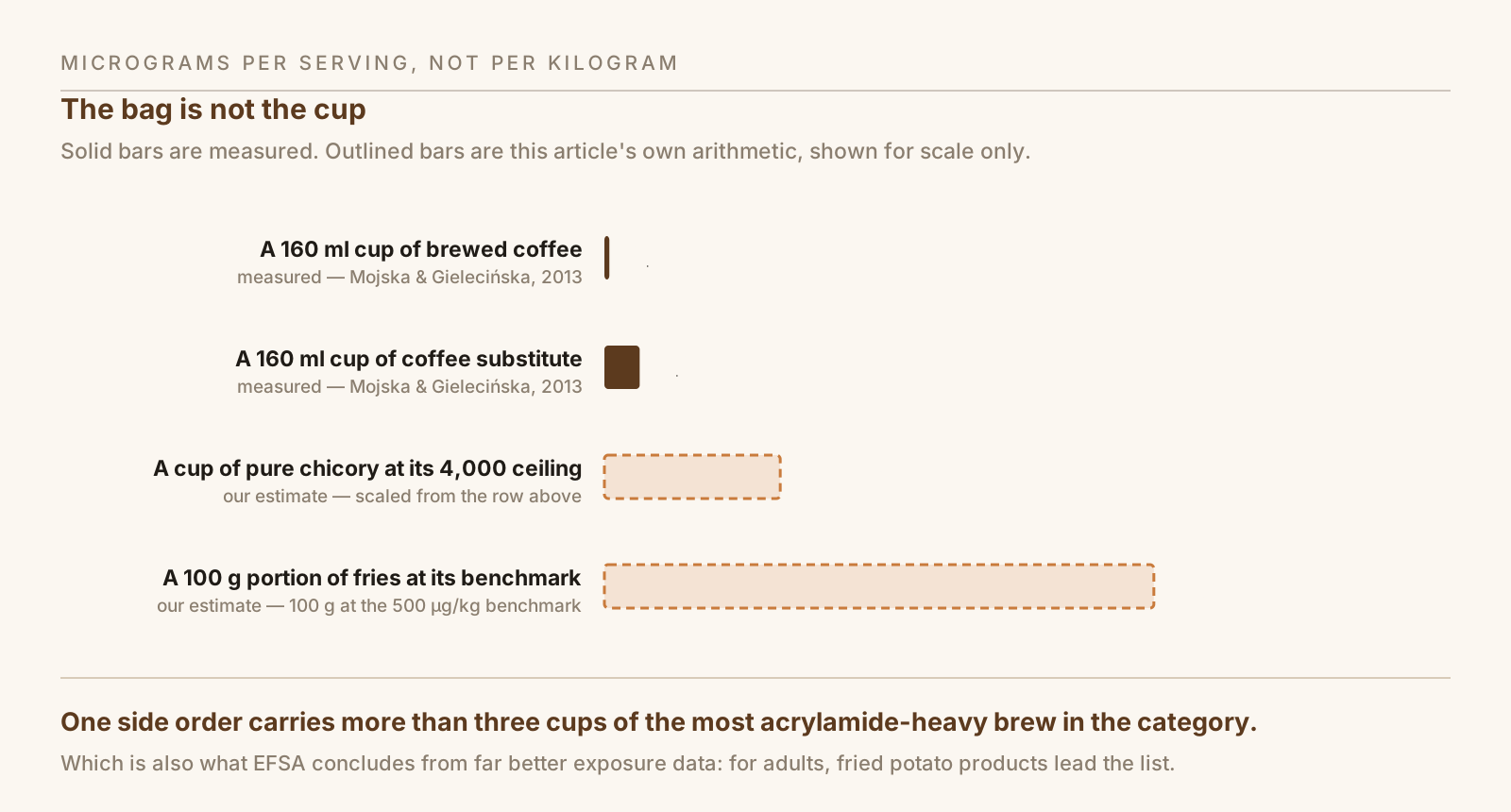
Mojska and Gielecińska did the step almost nobody does and reported per-cup exposure. Against their substitute mean of 818 µg/kg, a 160 ml cup carried about 3.2 micrograms. A cup of brewed coffee carried about 0.45 micrograms.
Scale that to the worst realistic case. Take a product sitting right at the pure-chicory benchmark of 4,000 µg/kg — roughly five times the mean those authors measured — and assume the same serving size and the same proportion carried into the brew. That is about 16 micrograms a cup. (That last figure is our arithmetic from their ratio, not a measurement; treat it as an order-of-magnitude estimate, and note it assumes a product almost nobody actually sells.)
Now put it beside something familiar, using the regulator’s own benchmarks as the yardstick. French fries have a benchmark of 500 µg/kg. A 100-gram portion at that level carries about 50 micrograms — three or more cups’ worth of the worst-case chicory brew, in one side order. And EFSA, working from far better exposure data than a paragraph of arithmetic, reaches the same conclusion independently: fried potato products are the largest single dietary source for adults.
One caveat that cuts the other way, and it belongs here rather than buried. Acrylamide is highly water-soluble. Work on mugicha found it “easily extracted” from milled roasted barley in teabags, and rising with longer simmering and steeping from loose grain. So for a soluble or instant product, essentially all of what is in the powder ends up in the cup — there is no filter step saving you. That is exactly why the per-cup numbers matter more than the per-kilogram ones, and why they are still small: the dose is a few grams.
Two things that move the number, and no label tells you either
This is the part I did not expect, and it is the most useful thing in the article.
Roast darkness is not a straight line. The intuition is that darker means more, because darker means more browning. The measurements say otherwise. Tracking acrylamide through a drum roast of barley, researchers found concentration rising with grain surface temperature to a maximum around 180–240°C and then falling with continued roasting — an inverted U. Acrylamide is not only formed by heat, it is destroyed by it. Their colour data agreed: darker grains, with lower L* values, contained less. The 2014 barley survey found the same relationship across 45 commercial products.
The rye work shows the same shape at different numbers — 640 µg/kg at 120°C climbing to a peak of 1,700 around 150°C — and adds an awkward practical footnote: rye roasted cool enough to stay low didn’t taste like anything anyone wanted. The two studies aren’t measuring identical things (grain surface temperature in a drum versus oven setpoint, different grains), so don’t read across the temperatures. Read across the shape.
The consumer implication is genuinely counterintuitive: within the same product line, a light or medium roast may well carry more acrylamide than the dark one. Anyone reaching for the pale roast on a hunch that gentler processing means less by-product has it backwards.
Time on the shelf lowers it. Acrylamide degrades in storage, and not trivially. Roasted barley grains lost about 40% over 309 days, milled grain in teabags about 36%. The rye study measured a fresh sample at 1,400 µg/kg and the same material at 490 after six months at room temperature — a two-thirds reduction, at p < 0.0001.
I want to be careful about what that is worth. It is not advice. You cannot tell a roast date from most packaging, buying deliberately old stock is a terrible idea for flavour, and the difference is a fraction of a microgram in an actual cup. It is here because it says something about the compound: acrylamide is not a stable contaminant sitting inertly in the bag. It is a reactive intermediate that keeps reacting. Which is also, quietly, why the whole question is smaller than it sounds.
The US picture: a coffee exemption with a hole in it
Everything above is European. The US has no equivalent benchmark levels — FDA publishes guidance for industry on reducing acrylamide, not category figures.
What the US does have is California’s Proposition 65, and a story worth knowing. Acrylamide is on the Prop 65 list, which produced years of litigation over whether coffee needed a cancer warning. In 2018 FDA weighed in publicly, saying a warning on coffee would be more likely to mislead consumers than to inform them. California’s OEHHA then adopted section 25704 — “Exposures to Listed Chemicals in Coffee Posing No Significant Risk” — effective 1 October 2019, which exempts chemicals “created by and inherent in the processes of roasting coffee beans or brewing coffee.”
Read that wording again with a bag of roasted chicory in your hand.
The exemption is written about coffee. It is scoped to roasting coffee beans and brewing coffee, and it does not address roasted non-coffee substitutes, which is unsurprising — they were not what anyone was arguing about. So the plausible result, in one state, is that identical chemistry produced by identical browning gets treated differently depending on whether the roasted thing was a coffee bean or a chicory root.
We are not lawyers and this is not legal advice; we have not surveyed what warnings any particular brand carries, and we would rather say that than guess. But if you are a California shopper who has ever wondered why a warning label turned up on a caffeine-free roasted product and not on the coffee beside it, that regulatory asymmetry is the likeliest explanation, and it is about drafting scope rather than about anything measured in the two bags.
So does this change what you drink?
Honestly: for most people, no. Here is what I would actually do with it.
If you drink one or two cups a day, stop here. The per-cup arithmetic is a rounding error against a diet that contains bread, cereal or anything fried, and EFSA’s exposure work says the same thing with better data than mine.
If you drink four or five mugs a day of a pure chicory product, it is a fair tiebreaker. Not a reason to quit — a reason that, if a grain blend tastes just as good to you, you may as well have the grain blend. That is the honest weight of it: a thumb on the scale in an already close decision, not a finding that should move anybody who is happy.
Read the ingredient list rather than the front of the pack, which is good advice for other reasons anyway. “Chicory” on the front frequently means chicory blended with roasted barley or rye; that dilution is real, and it is also why some blends are not gluten-free — a much more consequential label question than this one for anyone with celiac disease.
Don’t switch to a lighter roast to avoid it. You would probably be moving the wrong way.
And don’t let this become a reason to go back to coffee. Coffee’s benchmark is 400 and instant coffee’s is 850. Whatever else is true, “the substitute has acrylamide” is not an argument for the original — they are on the same list, in the same clause of the same EFSA sentence.
The bottom line
Roasted chicory carries more acrylamide than roasted grain. That is real, it is documented in EU law, and it is the first thing this site has found that argues against chicory on anything other than taste or price.
It is also, on the numbers, small. The eightfold gap is between two manufacturing targets, not two levels of risk. It exists because chicory is harder to get low, not because more of it is considered acceptable. Most products are blends rather than the pure chicory the 4,000 figure describes, the most recent retail survey found substitutes and instant coffee indistinguishable, and the amount reaching an actual cup is measured in single-digit micrograms against a portion of fries carrying fifty.
The genuinely useful takeaways are the ones nobody prints on a bag: the darkest roast in a line is often the lowest, not the highest, and the compound degrades on the shelf rather than accumulating.
If you want a reason to choose between roasted root and roasted grain, taste is still the better one. This is a tiebreaker, and I would rather hand it to you with its context attached than leave you to meet the number cold.
This article is about what roasting produces, not about what any drink does to a body. Nothing here is medical advice, and no coffee alternative has been shown to improve or harm any health outcome on this basis. If you have a specific concern about your diet, that is a conversation for a clinician, not a website.
Sources & further reading
- Commission Regulation (EU) 2017/2158 establishing mitigation measures and benchmark levels for the reduction of the presence of acrylamide in food (opens in a new tab) — EUR-Lex
- Acrylamide (opens in a new tab) — European Food Safety Authority
- Studies of acrylamide level in coffee and coffee substitutes: influence of raw material and manufacturing conditions (opens in a new tab) — Mojska & Gielecińska, Rocz Panstw Zakl Hig, 2013
- Acrylamide and HMF occurrence and bioaccessibility in instant coffee and coffee substitutes (opens in a new tab) — Delgado-Andrade, Morales & Mesías, Food Research International, 2024
- Acrylamide in roasted barley grains: presence, correlation with colour and decrease during storage (opens in a new tab) — Mizukami et al., Food Additives & Contaminants Part A, 2014
- Acrylamide elution from roasted barley grains into mugicha and its formation during roasting (opens in a new tab) — Mizukami, Yoshida & Ono, Food Additives & Contaminants Part A, 2016
- Roasted Rye as a Coffee Substitute: Methods for Reducing Acrylamide (opens in a new tab) — Pitsch, Höglinger & Weghuber, Foods, 2020
- Reduction of acrylamide in roasted chicory (patent application EP2160948A1) (opens in a new tab) — Nestec S.A. / Google Patents
- Coffee and Proposition 65: Frequently Asked Questions (opens in a new tab) — California OEHHA
- Statement from FDA Commissioner Scott Gottlieb on California's action on coffee labelling (opens in a new tab) — FoodNavigator-USA
Reader conversation (5)
We read every response. Selected reader notes below.
I’m the one who asked on the malt piece whether I should be switching to a grain blend, so thank you for actually answering it instead of leaving it in a comment thread. And thank you more for the correction paragraph. I had screenshotted that 2,940 figure and sent it to two people. I’ve now sent them this instead, which is a strange thing to feel good about, but I do.
That screenshot is exactly why we ran the correction as its own section rather than a quiet edit — a number gets out of an article faster than a fix does. For what it’s worth, your original question is what sent me to the primary source in the first place, so the correction is partly your doing. The answer to it is “a tiebreaker, not a switch.”
Food technologist here, though not in this category. The point about benchmark levels being achievability targets is one I spend a genuinely tiresome amount of time explaining to people, and I’ve never seen it put in front of consumers this cleanly. The tell is exactly what you identified: the regulation prescribes different agronomy for chicory than for cereals. You don’t write cultivar requirements for a category you’re indifferent about, and you don’t write different ones unless the crops differ.
That was the paragraph that turned the piece for me. I went in thinking the benchmark numbers were the story and came out thinking the mitigation annex was — it’s the part that shows the regulator reasoning about achievability rather than about risk. Glad it reads right to someone who works with these documents.
Four mugs a day of pure chicory here, so I’m the exact person this article is about, and I want to say that the honest version was more persuasive than a reassuring one would have been. If you’d told me it was nothing I’d have gone looking for the counter-argument. Instead I did the arithmetic myself, got about the same number you did, and decided I’m fine. The fries comparison did most of the work.
The roast finding is the one nobody will believe. I have spent years buying the lighter roast of everything on the general theory that less cooking must mean fewer nasty by-products, and it turns out that for this particular compound I’ve been choosing the wrong end of the shelf the whole time. Not changing my habits over it, but I’d never have guessed the curve went up and then back down.
It caught me too, and I want to be careful not to oversell it: it’s an inverted U, so “darker is lower” only holds once you’re past the peak, and the two studies put the peak in different places because they’re measuring different things. The honest takeaway is narrower than a rule — it’s that “lighter must be gentler” is an assumption, not a finding.
Reading this from the country where chicory is a grocery staple rather than a wellness product, and it’s a bit disorienting. Nobody here has ever mentioned acrylamide to me about chicorée, and it sits next to the coffee at a fifth of what your readers seem to pay. Two very different conversations about the same root.
Have something to add? Email us and we may include it in a future update.