Extract, mycelium or fruiting body? What a mushroom coffee label is actually selling you
Two mushroom coffees can both say '2,000 mg mushroom blend' and mean almost nothing alike. We checked how five major brands actually declare their mushrooms — mycelium, fruiting body, or extract — and found the honesty gap is bigger than the caffeine gap.

“2,000 mg proprietary mushroom blend.” “Full-spectrum mushroom extract.” “Real mushrooms, not mycelium.” Three products can carry some version of that language and be worth wildly different amounts of the thing you’re actually buying — because the two words that would tell you which are the words most labels leave out.
We went back to the same five brands we checked for caffeine content and asked a different question this time: not “how much caffeine,” but “how much mushroom, and which part of it.” The caffeine question turned out to have a clean, checkable answer on most labels. This one doesn’t, and the reason why is worth understanding before you buy your next bag.
The short answer
A mushroom can be sold two structurally different ways, and both are legally allowed to say “mushroom” on the front of the pack:
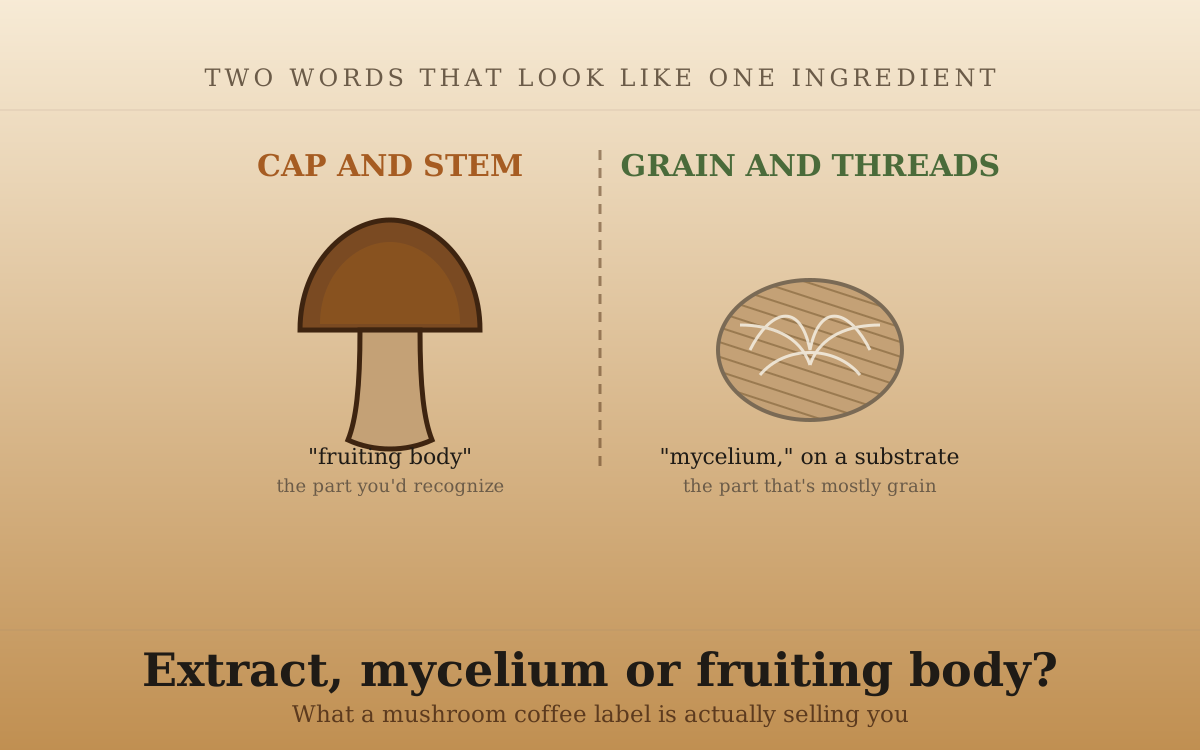
- Fruiting body — the cap and stem, the part you’d recognize if you found it in a forest. This is where the compounds the category is sold on (beta-glucans, mainly) actually concentrate.
- Mycelium grown on grain — the root-like network a mushroom grows before it ever forms a cap, cultivated on rice, oats or sorghum and then dried and ground with the grain still in it, because the two can’t be separated afterward.
Neither word is required on a label. Neither is an extraction ratio. Of the five brands we checked directly on their own pages, one states its sourcing in plain language, one discloses the opposite in plain language, one uses both words for two different mushrooms in the same product, one uses neither word anywhere on its current site, and one names its mushrooms as “extract” without saying what kind. That spread — on five mainstream products, sitting on the same kind of shelf — is the actual finding.
Why two words on an ingredient list matter this much
The whole category leans on the idea that mushrooms carry compounds worth seeking out — beta-glucans most prominently, plus a handful of other polysaccharides and triterpenoids studied for various effects. We’re not evaluating that research here; we’ve covered what it does and doesn’t support elsewhere. What matters for a label-reading purpose is narrower: those compounds are not evenly distributed across a mushroom’s life cycle.
A fruiting body — the mushroom you’d actually recognize — is where they concentrate. Mycelium, the thread-like network a fungus grows through its substrate before it ever forms a cap, contains much less of them, and it comes bundled with whatever it was grown on. Cultivators grow mycelium on rice, oats or sorghum because that’s fast and cheap, and once it’s grown there is no practical way to separate the fungal threads from the grain around them. Whatever gets dried and milled is fungus and cereal together, and it’s sold as “mushroom.”
So a product’s front-of-pack promise — energy, focus, immune support, whatever the marketing claims of the day happen to be — rests on an ingredient decision that the label usually doesn’t specify. That’s the gap this article is about.
Mycelium and fruiting body are not two names for one thing
Composition is where the difference stops being semantic. Grow-supply and mycology-testing sources report a consistent pattern:
- Fruiting body: roughly 30 to 40% beta-glucan by dry weight, and effectively no starch — mushrooms store energy as glycogen, not starch, so a true fruiting-body product shouldn’t contain any.
- Mycelium grown on grain: roughly 5 to 7% beta-glucan (sometimes measured close to zero), and 35 to 40% starch — because the grain it was cultivated on makes up a large share of the finished powder by weight.
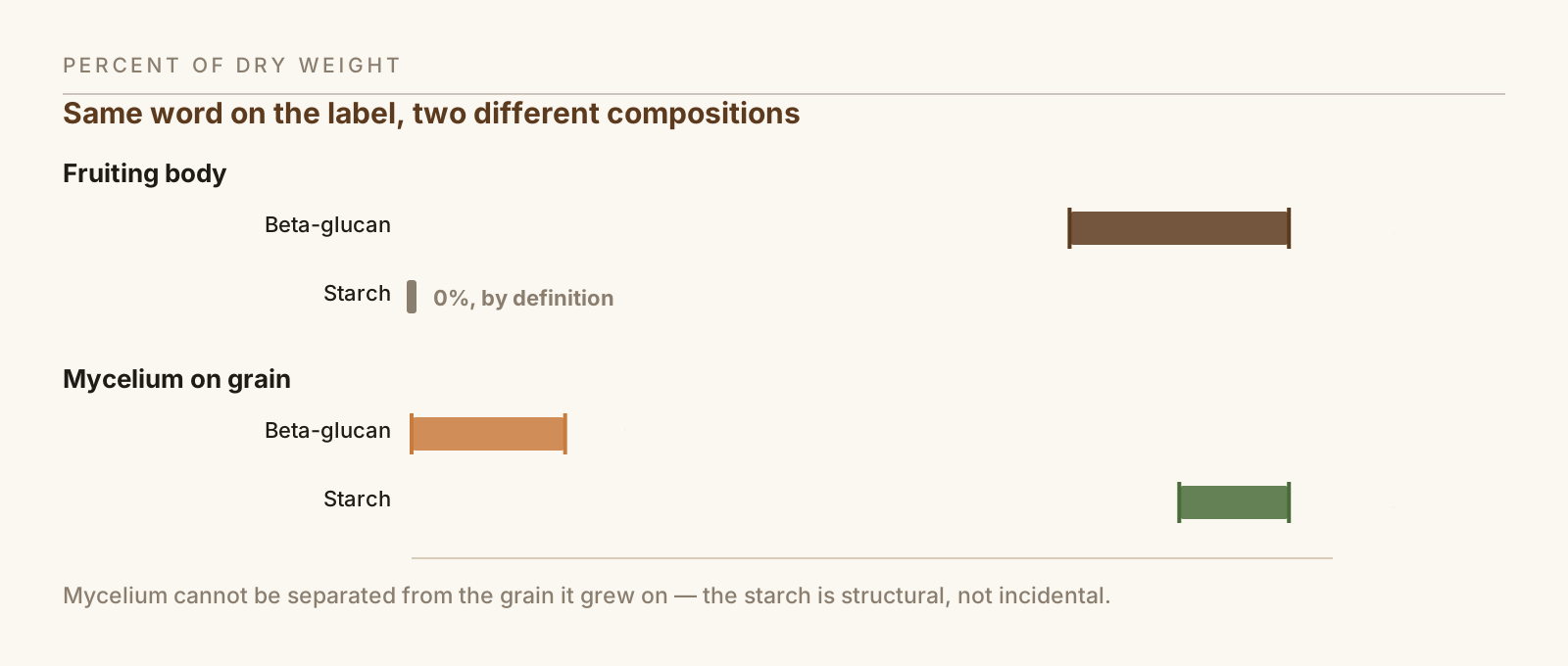
That starch figure is the practical tell. Independent testing lab ConsumerLab has gone looking for it directly, reporting that “products listing ‘mycelial biomass’ as their first or only ingredient may simply contain large amounts of alpha-glucan, a common polysaccharide in grains” — alpha-glucan being the starch signature, not the beta-glucan the category is sold on. ConsumerLab’s own published testing methodology states plainly: “products claiming to contain mycelium must contain a detectable amount of alpha-glucan to avoid the potential to mislead consumers,” and a product blending both must contain more beta-glucan than alpha-glucan to pass. That a testing lab needed to build a rule around it tells you the mislabeling risk is real enough to test for, not a hypothetical.
None of this means mycelium products are unsafe or that fruiting body is a magic word — a genuinely tiny amount of high-quality fruiting body extract can still be a small dose, and we cover dosing pitfalls in the next section. It means the two words describe materially different things, and a label that avoids both words is avoiding the one distinction most likely to change what you think you’re buying.
The extraction ratio trap: what is “10:1” actually measuring?
Assume a brand clears the first hurdle and states “fruiting body.” The next number you’ll often see is an extraction ratio — “8:1,” “10:1,” sometimes higher — and it has its own way of sounding more impressive than it is.
An extraction ratio states how much raw material went in to produce the finished product: a 10:1 ratio means roughly ten units of starting material were reduced to one unit of finished powder. The trap is in what “reduced” means. Fresh mushrooms are about 90 to 95% water. Take 10 kilograms of fresh fruiting body, dry it, and mill it into a stable powder, and you’re left with somewhere around 1 kilogram — a 10:1 reduction from water loss alone, before anyone has concentrated a single active compound.
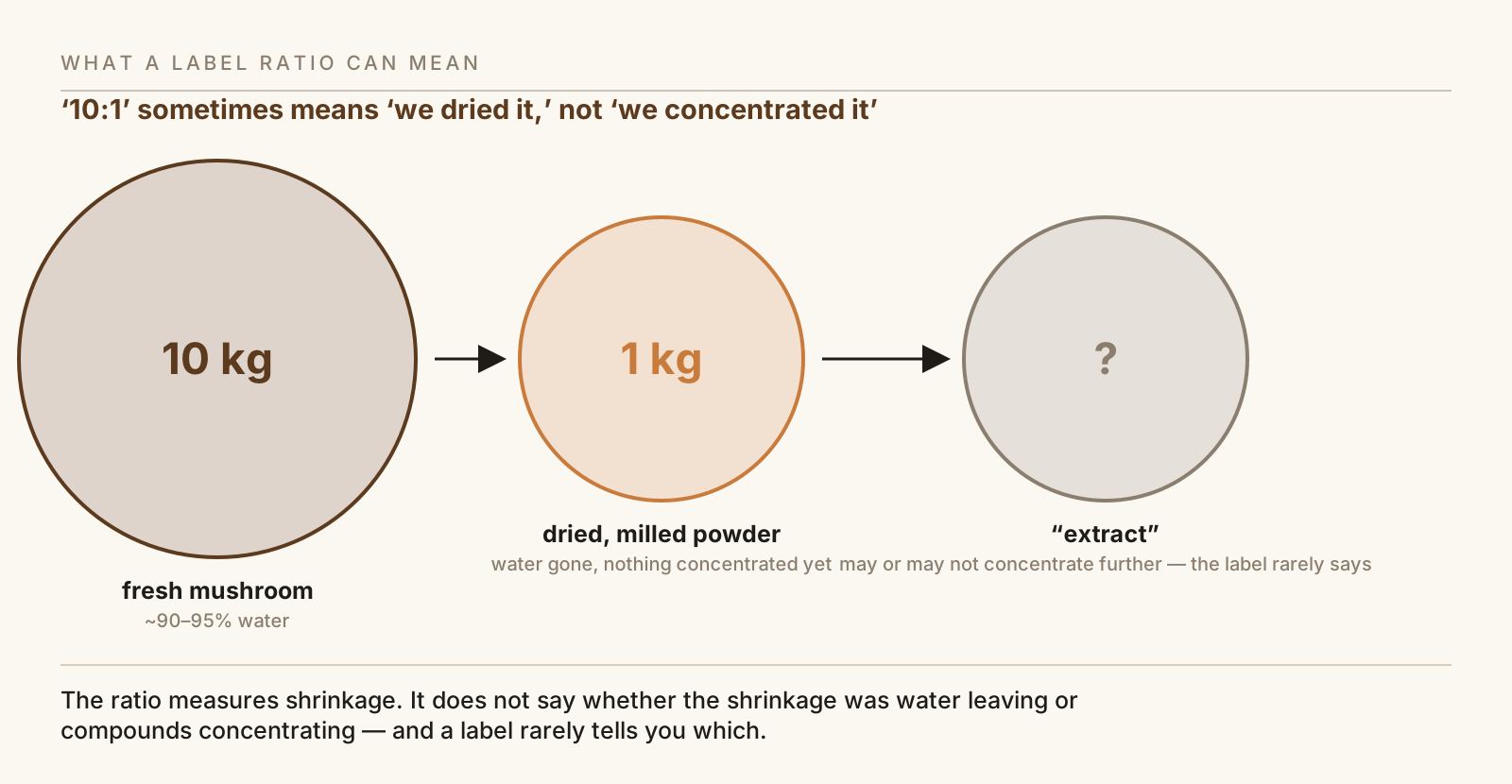
A genuine extract goes a step further than drying — using water or alcohol to pull soluble compounds out of that dried powder and concentrate them, which is where an extraction ratio is supposed to earn its keep. But the number on a label doesn’t distinguish “we dried it” from “we concentrated it,” and industry sources on extraction methodology note that ratios much above 8:1 for some mushrooms become physically unstable as a pure extract and necessarily include a starch filler to stay in powder form — the same starch signature that shows up in mycelium-on-grain products, arrived at by a different route. A high ratio is not proof of a stronger product. It’s a number that needs the same skepticism as “fruiting body” gets on its own — real, but incomplete without knowing what it’s measuring.
What five major brands actually declare
We went to each brand’s own current pages — not a retailer listing, not a review aggregator — and recorded exactly what’s stated about mycelium, fruiting body, and extraction, in August 2026. Blank means we found no statement either way.
| Brand / product | What it says about sourcing | Extraction ratio stated? | Format |
|---|---|---|---|
| Four Sigmatic Focus Ground Coffee | “We only use the fruiting body extracts, no cheap mycelium” (badge: “No Filler Mycelium”) | No ratio published | Text |
| MUD\WTR Original | “We use both the mycelial biomass and fruiting bodies of mushrooms” — ingredients list “…Mycelium cultured on Organic Oats and/or Organic Sorghum” | No ratio published | Text |
| Rasa Original | Chaga listed as “chaga mycelium”; reishi listed as “reishi fruiting body extract” — both in the same ingredient list | Reishi: 15:1 (stated); chaga: none | Text |
| Teeccino Miraculous Mushrooms Adapt & Protect | Each mushroom named as “extract” (Chaga extract, Lion’s Mane extract, Reishi extract, Turkey Tail extract, Cordyceps extract) — no fruiting body or mycelium claim either way | No ratio published | Text |
| RYZE Mushroom Coffee | No mention of “fruiting body” or “mycelium” found anywhere on the current ingredients page or product page | No ratio published | Image only — nutrition/ingredient panel is a PNG, alt text reads only “Product image” |
Two things stand out. First, there’s no pattern by price or positioning — a $2-a-serving product and a budget instant coffee sit on opposite ends of the disclosure spectrum, and the difference has nothing to do with what either one costs. Second, “extract” alone, without fruiting body or mycelium named, tells you less than either word on its own — it says something was concentrated, but not from what.
One product, two mushrooms, two different answers
Rasa Original’s own ingredient list is the clearest single illustration we found of why you have to check per mushroom, not per product. Verbatim, in part: “…ashwagandha, rhodiola, chaga mycelium, reishi fruiting body extract‡…” — with a footnote elsewhere on the page specifying “19mg of 15:1 Extract Per Serving” for the reishi.
Read slowly, that’s four separate, checkable facts about two ingredients in one blend:
- The chaga is mycelium — grown on a substrate, not the cap.
- The reishi is fruiting body, and it’s an extract, not raw powder.
- The reishi extract is quantified: 19 mg at a 15:1 ratio.
- The chaga carries none of that detail — no milligram figure, no ratio, no separate accounting.
None of this means Rasa is doing something unusual for the category; if anything, disclosing “chaga mycelium” candidly, right next to a fully quantified reishi extract, is more transparent than most of the shelf, in the same way MUD\WTR’s plain “both mycelial biomass and fruiting bodies” admission is more transparent than a label that says nothing. The point isn’t that one ingredient is good and the other bad. It’s that a single product can carry two entirely different levels of specificity for two entirely different mushrooms, and the only way to see that is to read past the front of the pack to the ingredient list itself — the same discipline our caffeine piece landed on for a different question.
When the label is a picture, not text
RYZE is the sharpest edge case on the shelf, and not because of what it says — because of what it doesn’t say anywhere a search engine, a screen reader, or a page-text search can reach. Its current product page publishes its nutrition and ingredient declaration as a single image file — a PNG named for the file, not the content — with alt text that reads only “Product image.” No fruiting body claim. No mycelium claim. No searchable ingredient text at all on that panel.
To be clear about what we can and can’t say: we are not claiming RYZE uses mycelium, or that its mushrooms are low in beta-glucan. We have no way to check that from the page, which is exactly the problem. A shopper comparing products by reading ingredient lists — the method our caffeine article and this one both land on — hits a dead end here that has nothing to do with the mushrooms and everything to do with the file format. A screen-reader user gets nothing. A search for “RYZE mycelium” turns up nothing on RYZE’s own site, not because RYZE has answered the question, but because the answer, whatever it is, isn’t in machine-readable text.
An image-only declaration isn’t illegal, and it’s a common way to publish a Supplement Facts panel exactly as it appears on the physical package. But it is a real accessibility and comparison-shopping cost, and on a question this genuinely unsettled — mycelium versus fruiting body, ratio or no ratio — it’s the one format that guarantees a reader can’t check the label at all without buying the product first.
How to check a label in about a minute
- Scan the ingredient list for “mycelium” and “fruiting body.” Either word is more information than neither. Their absence is itself information — it usually means the brand hasn’t chosen to specify, not that there’s nothing to specify.
- Check each mushroom separately. As Rasa’s own label shows, one product can source two mushrooms two different ways. A blanket “fruiting body” or “mycelium” claim on the front of the pack doesn’t guarantee it applies to every mushroom in the blend.
- Treat a ratio number with the same skepticism as a percentage claim. A 10:1 or higher figure can describe water loss during drying rather than compound concentration. Look for a milligram figure alongside it — Rasa’s “19mg of 15:1” is more informative than “15:1” alone, because it tells you the actual dose, not just the shrinkage.
- If the panel is an image, treat it as unverifiable rather than absent. It may say more than the rest of the page — but you can’t search it, a screen reader can’t read it, and neither can we from the outside. Look for a text ingredient list elsewhere on the same page before concluding the brand has said nothing.
- Remember this is a “what are you buying” question, not a “does it work” question. Nothing here is a claim about whether any compound in any of these mushrooms does what a brand’s marketing implies. It’s a claim about whether the label lets you check what you’re actually getting for your money.
If you came here from the caffeine breakdown, the throughline is the same: the front of a mushroom coffee package is marketing, and the ingredient list is where the actual answers live — when a brand chooses to put them there in text you can read. For a broader look at how mushroom coffee’s marketed effects compare to the adaptogen category more generally, our explainer on the two is a useful next stop, and our full mushroom coffee roundup is where to start if flavor and format matter more to you than any of this.
Sources & further reading
- Fruiting Body vs Mycelium: What's Actually in Your Mushroom Supplement? (opens in a new tab) — Mycogenius
- Mushroom Extracts: The Mycelium vs. Fruiting Body Dispute (opens in a new tab) — North Spore
- What Are Mushroom Extract Ratios? The Truth About Potency & Quality (opens in a new tab) — Select Ingredients
- Understanding Extraction Ratios in Mycotherapy (opens in a new tab) — Hifas da Terra
- How Products Were Evaluated in the Lion's Mane and Chaga Supplements Review (opens in a new tab) — ConsumerLab.com
- Lion's Mane and Chaga Supplements Review & Top Picks (opens in a new tab) — ConsumerLab.com
- RYZE Ingredients (opens in a new tab) — RYZE Superfoods
- RYZE Mushroom Coffee product page (opens in a new tab) — RYZE Superfoods
- Four Sigmatic — Product Quality (opens in a new tab) — Four Sigmatic
- Four Sigmatic — Focus Ground Coffee, Dark (opens in a new tab) — Four Sigmatic
- MUD\WTR — Original blend product page (opens in a new tab) — MUD\WTR
- Rasa — Original blend product page (opens in a new tab) — Rasa
- Teeccino — Miraculous Mushrooms Adapt & Protect Herbal Coffee (opens in a new tab) — Teeccino
Reader conversation (5)
We read every response. Selected reader notes below.
I work adjacent to a supplement manufacturer (not mushrooms, but same contract labs) and the extraction ratio point is exactly right and underappreciated. I’ve seen internal specs where “10:1” was signed off purely on a drying yield calculation, no HPLC or beta-glucan assay anywhere near it. The number is real, it’s just not measuring what a customer assumes it’s measuring.
That’s a useful confirmation from the manufacturing side — thank you. It’s exactly the gap we were trying to describe from the outside: nothing about a bare ratio number is dishonest, but nothing about it tells you which process actually happened either.
Went and looked at my own RYZE bag after reading this and you’re right, the “ingredients” section on their site is genuinely just a photo of the package. Never noticed because I never had a reason to search it. A little wild that the most searched question about the product (what’s actually in it) is the one thing you can’t search.
The Rasa example is the one that’ll stick with me — “chaga mycelium, reishi fruiting body extract” sitting three words apart in the same ingredient list. I’d never have clocked that as two different sourcing decisions if it wasn’t pointed out. Makes me want to go re-read every “mushroom blend” ingredient list I own one word at a time.
Genuine question: is there any independent lab that publishes beta-glucan test results per product, rather than per category? I’d pay for that list. Feels like the one number that would actually settle this instead of relying on brand-published claims either way.
ConsumerLab is the closest thing — they’ve run paid, member-access reviews testing specific lion’s mane, chaga and reishi products for beta-glucan and alpha-glucan content, which is the mycelium-filler signature this article describes. We linked their public methodology page in Sources; the full product-by-product results sit behind their membership, which is standard for how independent lab-testing services fund the work.
Appreciate that you didn’t turn “mycelium” into a scare word. I’ve seen other sites flatly say mycelium products are a scam, full stop, which never felt like the whole story. “Different composition, and you deserve to know which one you’re buying” is a much more useful frame than “one is fake.”
Have something to add? Email us and we may include it in a future update.