What to use instead of espresso powder: baking with roasted chicory and herbal coffee
Espresso powder is in your brownie recipe to deepen the chocolate, not to taste like coffee — which is exactly why a caffeine-free roasted powder can do the job. Here's which formats dissolve and which turn to grit, how much to use, the honest caffeine arithmetic on the powder you're replacing, and the two things roasted roots don't bring.

Every recipe on this site so far has been a drink or something you eat with a spoon. Lattes, chai, horchata, mochas, tiramisu, affogato, granita. All of them are, underneath, about brewing a liquid and then doing something to it.
This one isn’t. Espresso powder is a dry ingredient, it lives in the baking cupboard rather than beside the kettle, and the job it does in a brownie recipe has almost nothing to do with coffee. Which is why “what do I use instead of espresso powder” turns out to have a much better answer than the internet currently gives it — and why the answer is a specific format of caffeine-free powder rather than any old one.
Here’s what it’s actually doing in there, which formats survive contact with a batter, how much to use, and the two things roasted roots genuinely don’t bring.
What espresso powder actually is
It’s dried coffee. Specifically: darkly roasted beans, brewed, dehydrated, and then milled to a very fine powder. King Arthur Baking describes it (opens in a new tab) as more concentrated than instant coffee, which is the same process stopped at a coarser grind.
Three things follow from that, and all three matter for what we’re about to do:
- It is already soluble. It was liquid once. Add it to anything wet and it goes back.
- It is very fine. Even where it doesn’t fully dissolve, the particles are too small to feel.
- It is intense per gram, because the water has been taken out.
That third point is the one people trip over. Regular ground coffee is not a substitute — it never dissolved and it never will, and a tablespoon of it in a brownie batter reads exactly like what it is, which is sand. Spent grounds from this morning’s pot are worse: the flavour has already been extracted and only the texture is left.
Why it’s in the recipe — and it isn’t for coffee flavour
This is the part that unlocks the substitution, so it’s worth being precise about.
A teaspoon of espresso powder in a chocolate recipe is not there to make the thing taste of coffee. It’s there to make the chocolate taste more like chocolate — deeper, less flat, more complicated. America’s Test Kitchen puts a teaspoon and a half (opens in a new tab) into a 9x13 pan of brownies for exactly this and reports no perceptible coffee taste. King Arthur’s version of the same idea is that it’s a supporting actor, doing for chocolate roughly what a pinch of salt does for a cookie.
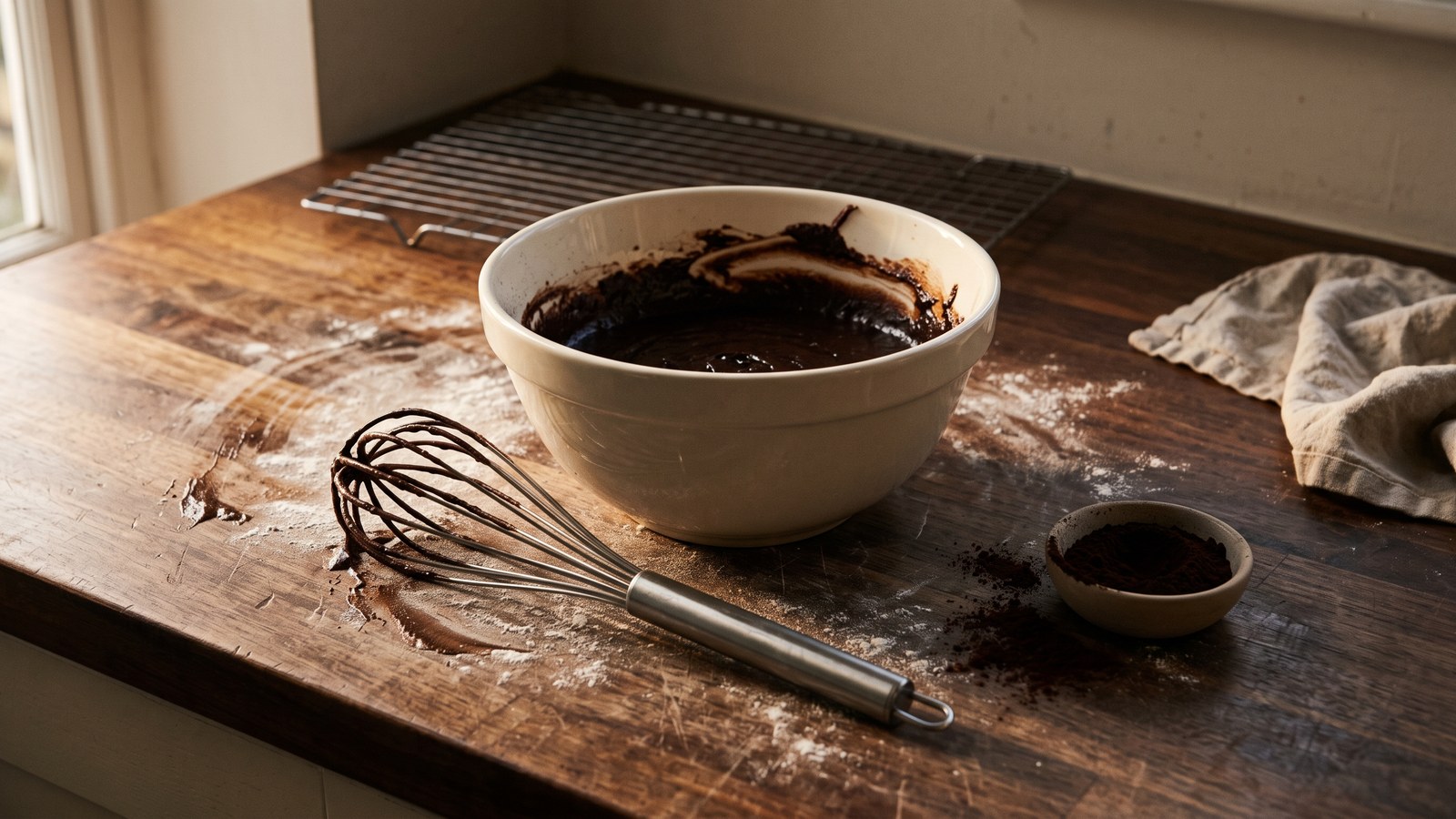
There’s a real reason it works, and it’s the same reason this substitution is possible at all. Dark roasting — of coffee beans, of cocoa beans, of chicory root, of barley — runs the same Maillard chemistry and produces overlapping families of aroma compounds, pyrazines chief among them, which is where the roasted, nutty, faintly bitter character in all three comes from. Add roast compounds to cocoa and you are reinforcing notes cocoa already has rather than introducing a foreign one.
Roasted chicory sits squarely in that same chemistry. A technical guide for flavour formulators describes roasted chicory’s profile (opens in a new tab) in exactly those terms — pyrazines for roasted and nutty character, furans for caramel — and lists baked goods and dark-chocolate confectionery among its standard applications, at use levels of roughly 1–10%. The food industry has been doing this on purpose for years. It just isn’t in home recipes.
So the requirement is not “coffee.” The requirement is roast character plus bitterness, in a form that disappears into a batter. Caffeine was never doing any of the work.
The caffeine question, done honestly
Before the substitutions, the arithmetic — because I’d rather you swap for a good reason than a wrong one, and because the honest number here cuts against the swap.
USDA FoodData Central lists instant coffee powder (opens in a new tab) — entry 171893, if that link ever moves — at 3,142 mg of caffeine per 100 g, and puts a teaspoon at about a gram. Espresso powder is the same sort of dried extract milled finer, so a teaspoon of it packs heavier — call it one to two grams, which lands a teaspoon somewhere around 30 to 60 mg. Run that through the standard recipe amount:
| Caffeine | |
|---|---|
| 1 tsp espresso powder | ~30–60 mg |
| 1½ tsp — the whole 9x13 pan | ~47–94 mg |
| One brownie, pan cut into 16 | ~3–6 mg |
| One 8 oz cup of decaf, for scale | ~2–7 mg |
| One 8 oz cup of brewed coffee | ~70–140 mg |
| Any roasted root or grain powder | 0 mg |
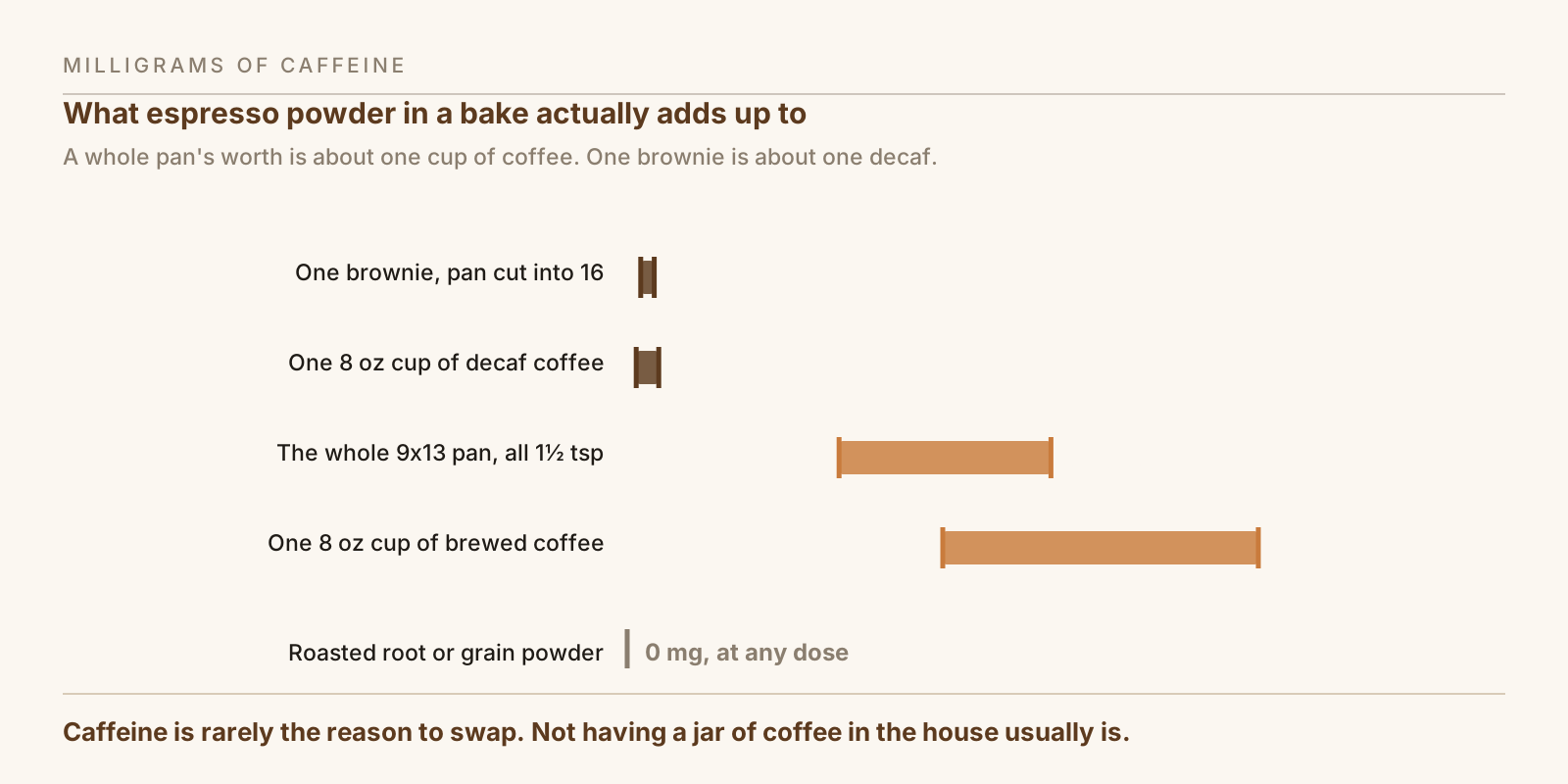
One brownie is a decaf-sized dose, not a coffee-sized one. If you were expecting the swap to remove a meaningful amount of caffeine from your day, it mostly doesn’t — a whole pan carries about what one cup of coffee does, and you are not eating the pan in one sitting. (Probably.)
Which does not make the swap pointless. It relocates the reason:
- You don’t keep coffee in the house. This is the big one, and it’s most of the search traffic for this question. A recipe calls for a teaspoon of espresso powder, you have no coffee at all, and buying a jar for one teaspoon is absurd.
- You’re baking for someone at genuine zero — by choice, by medical instruction, during pregnancy, or for religious observance — where “not much” isn’t the same as “none.”
- It’s for small children, where a few milligrams in a brownie sits alongside the theobromine in the cocoa and the whole thing is being eaten at 4pm.
- Several servings, several days. Three brownies and a slice of the cake you made with the rest of the batter is a different sum from one brownie.
And if none of those apply, the honest answer is that a teaspoon of espresso powder in a pan of brownies is not a caffeine problem, and I’m not going to invent one. What follows is still useful — it’s a pantry substitution as much as a caffeine one.
The one property that decides everything
Here is where most substitution advice goes wrong. It treats “caffeine-free coffee alternative” as one thing. In a batter it is three things, and they behave completely differently.
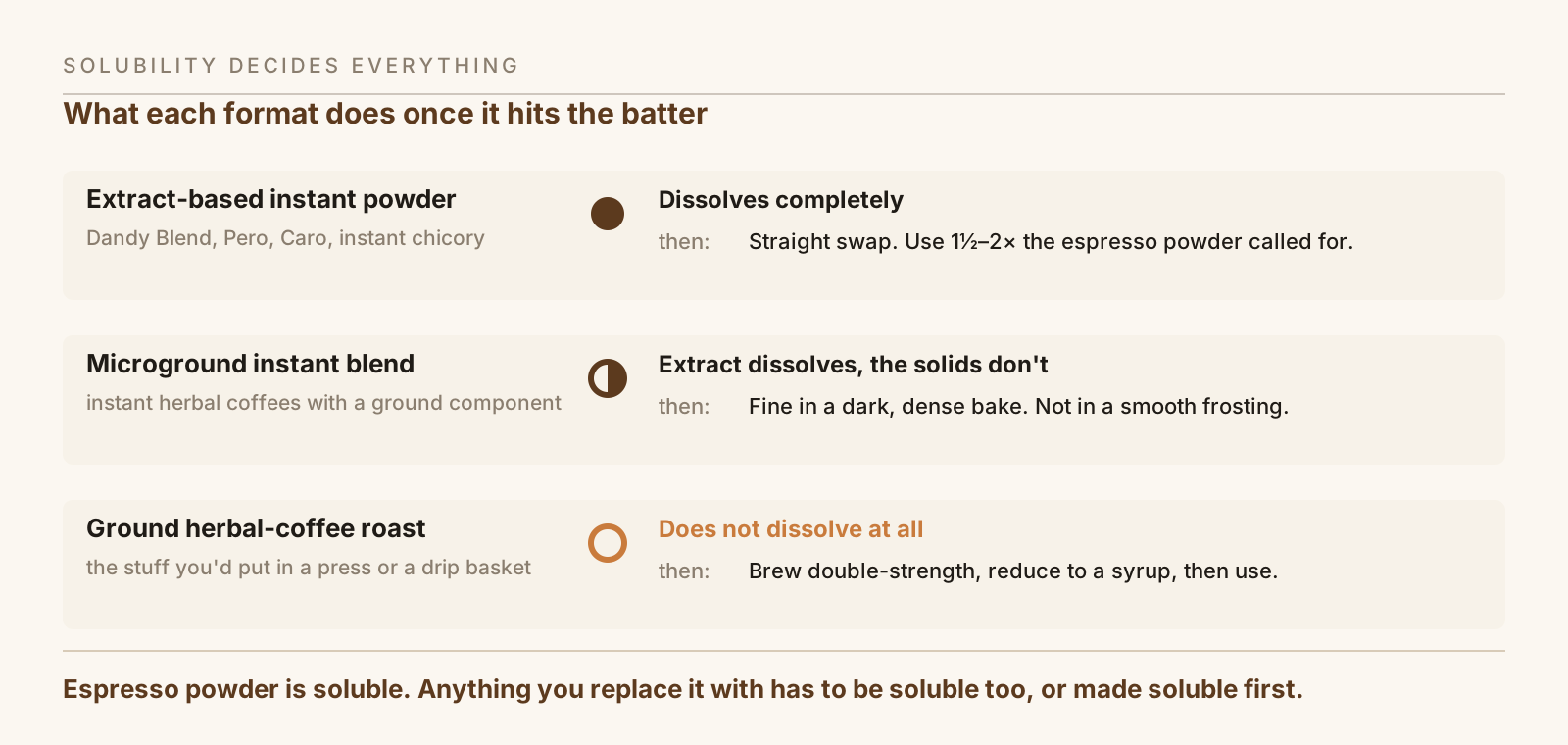
Extract-based instant powders are the real answer. Dandy Blend, Pero, Caro and plain instant chicory are all made the same way espresso powder is: the roasted material is brewed, the liquid extract is dried, and what’s left is a soluble powder. The flavour-formulator guide above notes that powdered soluble chicory is highly water-soluble and can go straight into dry blends, which is precisely the property we need. Pero is barley, malted barley, chicory and rye (opens in a new tab) and nothing else; Dandy Blend is roasted extracts of barley, rye, chicory and dandelion. Both go into a batter and vanish. Our instant roundup covers how they taste in a mug, which is a related but separate question.
Microground instant blends are a partial yes, and you need to know which you’ve bought. Several of the newer instant herbal coffees are not pure extract — they’re an extract plus a finely ground component, which is where their body comes from. Teeccino’s instant line (opens in a new tab) is a clear example: the French Roast lists roasted chicory extract and roasted barley extract alongside a microground blend of carob, ramón seeds and date seed, and the brand’s own preparation instructions tell you to whisk or froth it rather than stir, which is a tell. In a dark, dense, fudgy bake those solids are undetectable and the flavour is genuinely good. In a pale cake, a smooth buttercream or a ganache you want glossy, you will find them. The dandelion blends in that line are built without barley or rye and are labelled gluten free, which matters below.
Ground herbal-coffee roasts are not a substitute at all in this form. The coarse grounds you’d put in a French press or a drip basket never dissolved and never will. Don’t grind them finer and hope, either — you’ll get silt instead of gravel. They have a route in, and it’s the syrup below.
How much to use
Start at 1½ times the espresso powder the recipe calls for, and be ready to go to 2×.
The reasoning is straightforward: espresso powder is dried coffee extract, which is unusually concentrated in roast character per gram, and roasted roots and grains are less so. King Arthur suggests about 50% more when substituting ordinary instant coffee for espresso powder, which is the same adjustment for the same reason, so 1½× is a well-worn starting point rather than one I’ve invented.
| Recipe calls for | Use |
|---|---|
| ½ tsp espresso powder | ¾–1 tsp instant chicory/grain powder |
| 1 tsp | 1½–2 tsp |
| 1½ tsp (a 9x13 pan of brownies) | 2¼–3 tsp |
| 1 Tbsp | 1½–2 Tbsp |
Two practical notes. Dissolve it in the wet ingredients rather than the dry — a teaspoon of hot water, melted butter, or the melted chocolate itself, whisked smooth before it meets the flour. It’ll incorporate either way, but this removes any chance of a streak. And taste the batter, which for a brownie is safe if there’s no raw egg in your recipe and worth doing on your finger regardless. You’re checking for one thing: does the chocolate read deeper, without any distinct roasted flavour arriving on its own? If you can taste “chicory” as a separate note, you’ve gone too far. Pull back next time; the batch is fine.
The reduced-brew route, for ground roasts
If ground herbal coffee is what you have, you can still get there — you just have to make it soluble first, which means brewing and then reducing.
This is the same reduction as the herbal-coffee dessert sauce, stopped earlier and left unsweetened. Brew at double strength — twice the grounds, not twice the time, since over-steeping roasted roots makes them ashy rather than stronger. Then simmer it down hard: 250 ml of double-strength brew reduces to roughly 2–3 tablespoons in ten or twelve minutes, and what’s left is dark, thick and genuinely intense. Use 1–2 teaspoons of it in place of a teaspoon of espresso powder.
The one adjustment that matters: you’ve just added liquid to a recipe that expected powder. Subtract the same volume from another liquid in the recipe — the milk, the water, the coffee some chocolate cakes call for. One or two teaspoons out of a cup of milk is a rounding error in most batters, but in a stiff cookie dough or a delicate sponge it’s worth being deliberate about. If the recipe has no liquid to subtract from at all, this route isn’t the one; use an instant powder.
The reduction keeps in a jar in the fridge for a couple of weeks unsweetened, longer with sugar, and one brew makes enough for several bakes.
What you lose, and how to close it
I’d rather tell you this than let you find it in a cake.
Espresso powder brings two things to a chocolate recipe. One is roast bitterness and depth, and roasted chicory, barley and dandelion deliver that honestly — it is what they are made of. The other is a slight brightness, a faint acidity that cuts against sugar and keeps a very sweet bake from going flat. Roasted-root and grain brews are widely described — by drinkers and by the brands themselves — as lower in acidity than coffee, and it’s one of the things people like about them in a mug. In a sweet bake it’s the one place that costs you.
Three small corrections, in the order I’d reach for them:
- A pinch more salt. Salt does a surprising amount of the same work — sharpening, separating flavours, stopping sweetness from smothering everything. An extra ¼ teaspoon in a pan of brownies is usually the whole fix.
- A splash of something sour, if the recipe already has a liquid to trade against: a tablespoon of buttermilk, yoghurt or sour cream swapped in for the same volume of milk. Chocolate cakes take to this particularly well.
- A little more cocoa, not more powder. The instinct when a chocolate bake tastes flat is to add more of the roasted thing. Past a point that just makes it taste of roasted root. Another teaspoon of cocoa is usually the better answer.
There’s a fourth thing worth knowing rather than fixing: carob. If you’re already reaching for a caffeine-free chocolate register, carob behaves quite differently from cocoa — sweeter, milder, no bitterness of its own — and it is not a swap for either the cocoa or the espresso powder. It’s a third ingredient with its own rules.
Where this works, and where it doesn’t
Works well. Brownies, chocolate cake and cupcakes, chocolate chip cookies, ganache, chocolate frosting and buttercream (with an extract powder, not a microground one), chocolate ice cream base, chocolate tarts, and — outside dessert entirely — chilli, mole-style sauces and dry rubs for meat, where a spoonful of dark roasted powder does the same deepening job it does in a brownie.
Works, with a caveat. Anything pale or delicate: blondies, vanilla or coffee-flavoured buttercream, panna cotta. The colour shows. Use an extract powder, use less than you think, and accept that a “coffee” buttercream made this way tastes roasted rather than of coffee.
Doesn’t work. Anything where coffee flavour is the point rather than the support. A tiramisu is the clean example — there the coffee is a structural, foreground flavour and a soak, not a teaspoon of background, which is why that recipe rebuilds the soak rather than substituting a powder into it. Same for a proper coffee cake, or an iced mocha where the drink is the dish. Those need a brewed, foregrounded, deliberately strong herbal coffee, which is a different piece of work.
The gluten note that matters more here
We raise this in most recipe posts and it usually reads as a footnote. In baking it isn’t one, because you are already standing over a bag of flour and the person you’re baking for may have told you why they can’t have it.
Barley and rye contain gluten (opens in a new tab). Most instant coffee substitutes on the shelf are built on one or both — Pero is barley, malted barley, chicory and rye; the classic orzo and roasted barley brews are exactly what they say. If gluten is a real constraint rather than a preference, the reliable routes are plain instant chicory root or instant dandelion root, neither of which is a cereal grain, or a blend explicitly labelled gluten free.
One wrinkle worth naming: at least one manufacturer states that its extraction process removes the gluten from the barley and rye it uses, and markets the result as gluten free. That may well be true — extraction genuinely does separate soluble compounds from the grain — but it’s a manufacturer’s claim about their own process, not something I can verify, and it isn’t the kind of thing to take from a recipe blog. Read the current label, and if you’re baking for someone with celiac disease, ask them what they’re comfortable with rather than deciding on their behalf.
What’s different, honestly
Made with an instant chicory or grain powder at 1½–2×, a pan of brownies is, to my palate, very close. The chocolate is deeper than it would be with nothing; the difference against the espresso-powder version is a small loss of brightness that a pinch of salt mostly covers. Nobody has ever asked me about it, which is the only review that matters for an ingredient whose entire job is to be invisible.
Made with a reduced brew, it’s slightly better on flavour and slightly more work, and it’s the version I use when I’ve already got a press going.
Made with ground herbal coffee straight into the batter, it’s gritty, and I’d rather you heard that here than found it out on a Sunday.
The thing I’d actually take away from all this is the reframe: espresso powder was never a coffee ingredient in these recipes. It’s a roast ingredient. Once you see it that way, the shelf of caffeine-free roasted powders in the alternatives aisle stops being a consolation and starts being a cupboard staple that happens to also make a decent mug. Which is roughly the argument this whole site is making, one recipe at a time.
Sources & further reading
- Baking with espresso powder — what it is and how bakers use it (opens in a new tab) — King Arthur Baking
- Instant espresso powder makes the best brownies (opens in a new tab) — America's Test Kitchen
- Chicory as a natural flavoring: roast chemistry, solubility, and use levels in baked goods (opens in a new tab) — Perfumer & Flavorist
- Beverages, coffee, instant, regular, powder — caffeine per 100 g (FDC 171893) (opens in a new tab) — USDA FoodData Central
- Sources of Gluten — barley and rye are not gluten-free (opens in a new tab) — Celiac Disease Foundation
Reader conversation (5)
We read every response. Selected reader notes below.
I wish I’d read the microground paragraph a fortnight ago. I made a chocolate buttercream with an instant herbal blend, whipped it for ages wondering why it looked slightly dirty rather than glossy, and there were tiny specks all through it. Tasted lovely. Looked like it had been dropped. So: confirmed, you are right, and it is specifically the smooth stuff where it shows — the same tin went into a tray of brownies the next day and was completely invisible. Question: would sieving the powder first help at all, or is that pointless because the particles are the whole problem?
Sieving won’t save a buttercream, unfortunately — the microground component isn’t a few oversized lumps you can screen out, it’s the entire non-extract half of the product, and it’s already milled finer than your sieve. What does work is switching format rather than fixing it: use a pure extract powder for anything glossy or pale, and save the microground blend for the dark dense bakes where you found it disappears. Thank you for reporting the negative result as precisely as the positive one; that’s more useful to the next person than either on its own.
Reading this as a Dutchman is slightly funny, because chicory in the baking is not an exotic substitution here, it is just something my grandmother did. A spoon of it went into the ontbijtkoek and into anything with dark syrup, and nobody would have described it as a coffee alternative — it was a cupboard thing next to the cocoa, and it cost about nothing. I think you may be underselling how ordinary this is outside the US. Here it sits on the normal shelf, at the normal price, and the “wellness” framing your market puts on it is genuinely strange to see.
This is the second time in a week a European reader has made this exact point, and it’s landing harder each time. A reader in Lyon told us the same thing about chicorée soluble a couple of days ago: same root, same processing, ordinary grocery aisle, a fraction of the US price. Two independent reports of the same effect from two countries is starting to look less like an anecdote and more like the story — that a meaningful part of what Americans pay for these products is category positioning rather than production. We’re going to write it properly. The baking use is a good extra piece of evidence, because an ingredient you keep next to the cocoa is not a wellness purchase.
Thank you for actually doing the arithmetic instead of just saying “a small amount.” I’m 22 weeks and I’ve read a hundred pages that manage to be reassuring without ever giving me a number. One thing though — I think the per-brownie framing slightly undersells it for someone in my position. I’m not eating one brownie. I’m eating one after lunch and one at 9pm for about four days, and I’m also having a decaf every morning, and it’s the total I’m supposed to be watching, not any single item. Not a criticism of the number, just of where you put the emphasis.
That’s a fair correction and we’d rather take it than defend the framing. You’re describing exactly the case where the arithmetic flips: a single serving is trivial, four days of two servings plus a daily decaf is a real running total, and the whole point of a daily ceiling is that it sums across items nobody thinks of as caffeine. We’ve tried to say that in the bullet about several servings, but you’re right that it sits below the headline number and should probably sit beside it. As always, your OB is the person to set your ceiling — but the reason to swap in your situation is arithmetic, not caution, and that’s a better reason.
Most of my espresso powder never sees a dessert. It goes in chilli, in a dry rub for pork shoulder, and in a red mole where it’s doing the same job you describe — making everything else taste more like itself. You mention this in one line at the end of the “works well” section and then move on. Does the chicory swap hold up in savoury cooking, where there’s no sugar to balance against and things sit on the heat for hours? That’s the part I actually want to know, and I’ve never found anyone who’s written about it.
You’ve found the gap, and it’s a bigger one than the line we gave it. Everything in this piece is reasoned from sweet applications, where sugar is doing half the balancing work, and we shouldn’t quietly imply it transfers. Two things genuinely change in a savoury braise: there’s nothing sweet to push the bitterness against, and a long hold on the heat concentrates whatever you added rather than baking it off. Our honest position today is “probably yes, at a lighter hand, but we haven’t tested it.” That deserves its own article rather than a hedge in the comments, so we’re adding it to the list — savoury cooking with roasted roots, with the quantities actually worked out. Thank you for the shove.
Celiac here, and I want to flag how rare it is to see the gluten paragraph written the way you wrote it. You didn’t tell me a product is safe and you didn’t tell me it’s dangerous — you told me who is making the claim and left the decision with me. I have been caught out before by extraction-based products marketed as gluten free, not because anyone was lying but because “removed in processing” is a process claim and my gut responds to the actual result. Plain instant chicory it is. The flour is indeed the bigger variable, but you’d be amazed how often the small ingredient is the one nobody checked.
Have something to add? Email us and we may include it in a future update.