Does coffee raise your cholesterol? What cafestol, kahweol, and your brew method actually change
Coffee itself isn't the variable — how you brew it is. Two compounds in coffee oil, cafestol and kahweol, raise LDL cholesterol in a dose-dependent way that's been shown in controlled trials since the 1980s, and a 2025 study found your office coffee machine delivers far more of them than a home drip filter does.

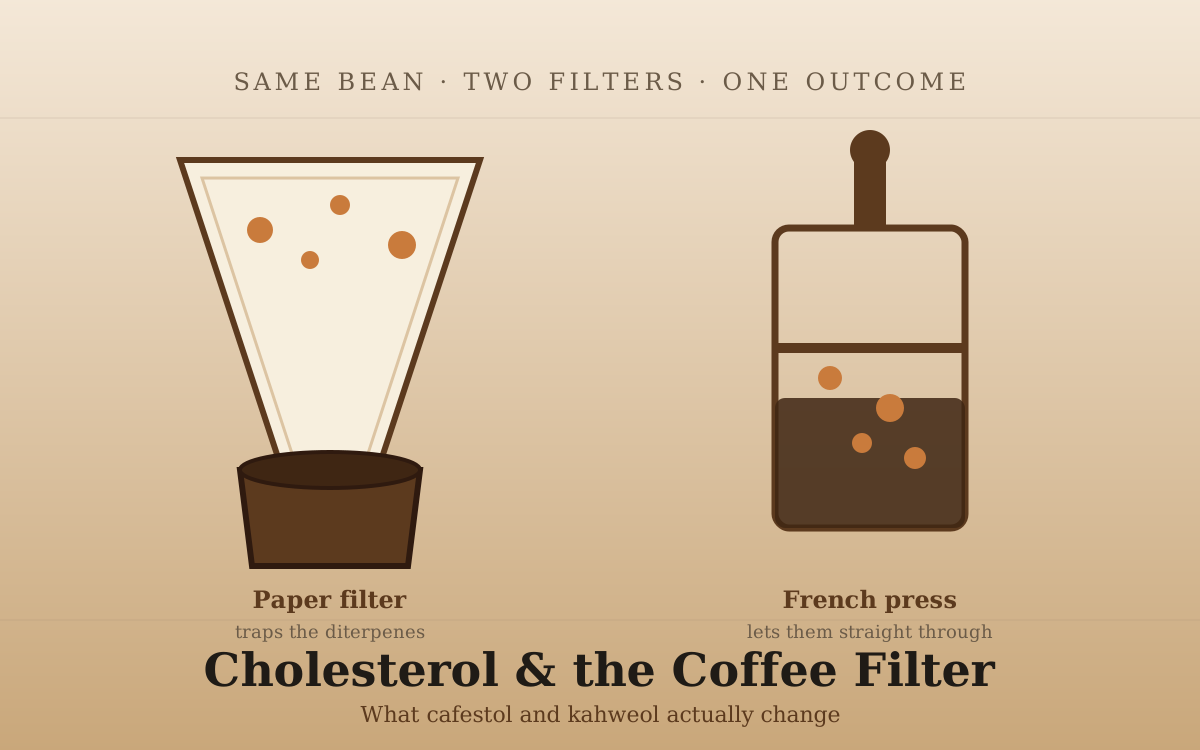
A patient told me recently that she’d switched from drip coffee to a French press “because it’s healthier — less processed, less paper waste.” I understood the instinct. I also had to tell her that for one specific measure, her cholesterol, she’d made the opposite trade. The paper filter she’d given up was the single most effective piece of equipment in her kitchen for keeping her LDL down.
That’s a strange thing to say about a $4 cone of filter paper, so let me back up. This isn’t about whether coffee, broadly, is good or bad for you — the research on coffee and cardiovascular health overall is reassuring for most people, and we’ve covered the caffeine side of that question in our piece on caffeine and blood pressure. This is narrower and more mechanical: two specific compounds in coffee’s natural oil raise LDL cholesterol, a paper filter catches most of them, and a lot of the ways people brew coffee — including, it turns out, a lot of workplace coffee machines — don’t use one.
Cafestol and kahweol: the two molecules that actually do this
Cafestol and kahweol are diterpenes, a type of lipid, and they occur naturally in the oil of the coffee bean. They aren’t contaminants or a processing byproduct — they’re just part of what coffee is, chemically, before you brew it.
The mechanism has been worked out in real detail. Cafestol acts as an agonist on a receptor in the liver called the farnesoid X receptor (FXR), and activating that receptor suppresses two enzymes the liver needs to convert cholesterol into bile acids. With that conversion pathway dialed down, cholesterol backs up in the liver, which in turn downregulates the LDL receptors that would normally pull LDL particles out of your bloodstream. Fewer working LDL receptors means LDL clears more slowly and accumulates in circulation — which is the textbook definition of a rise in “bad” cholesterol. Kahweol appears to act similarly, though it’s been studied less than cafestol.
None of that mechanism depends on caffeine. It’s a lipid-and-liver-receptor story, not a stimulant story, which is the first thing worth separating out before we go further.
The new evidence: your office coffee machine is basically unfiltered coffee
The reason this is worth revisiting now, rather than just citing decades-old trials, is a 2025 study out of Sweden that measured cafestol and kahweol directly in coffee from real workplace brewing machines — the kind sitting in break rooms, not lab-brewed samples — and compared them against home drip, French press, percolator, and boiled coffee.
The finding that got attention: workplace machine coffee had a median cafestol concentration of about 176 milligrams per liter, nearly 15 times higher than the 12 milligrams per liter found in home drip, paper-filtered coffee. That’s higher than French press or percolator coffee in the same dataset. The likely explanation is filter type — many workplace machines use a reusable metal or nylon mesh basket rather than a paper filter, and mesh is built to hold back grounds, not the fine oil droplets that carry cafestol and kahweol. Paper does both.
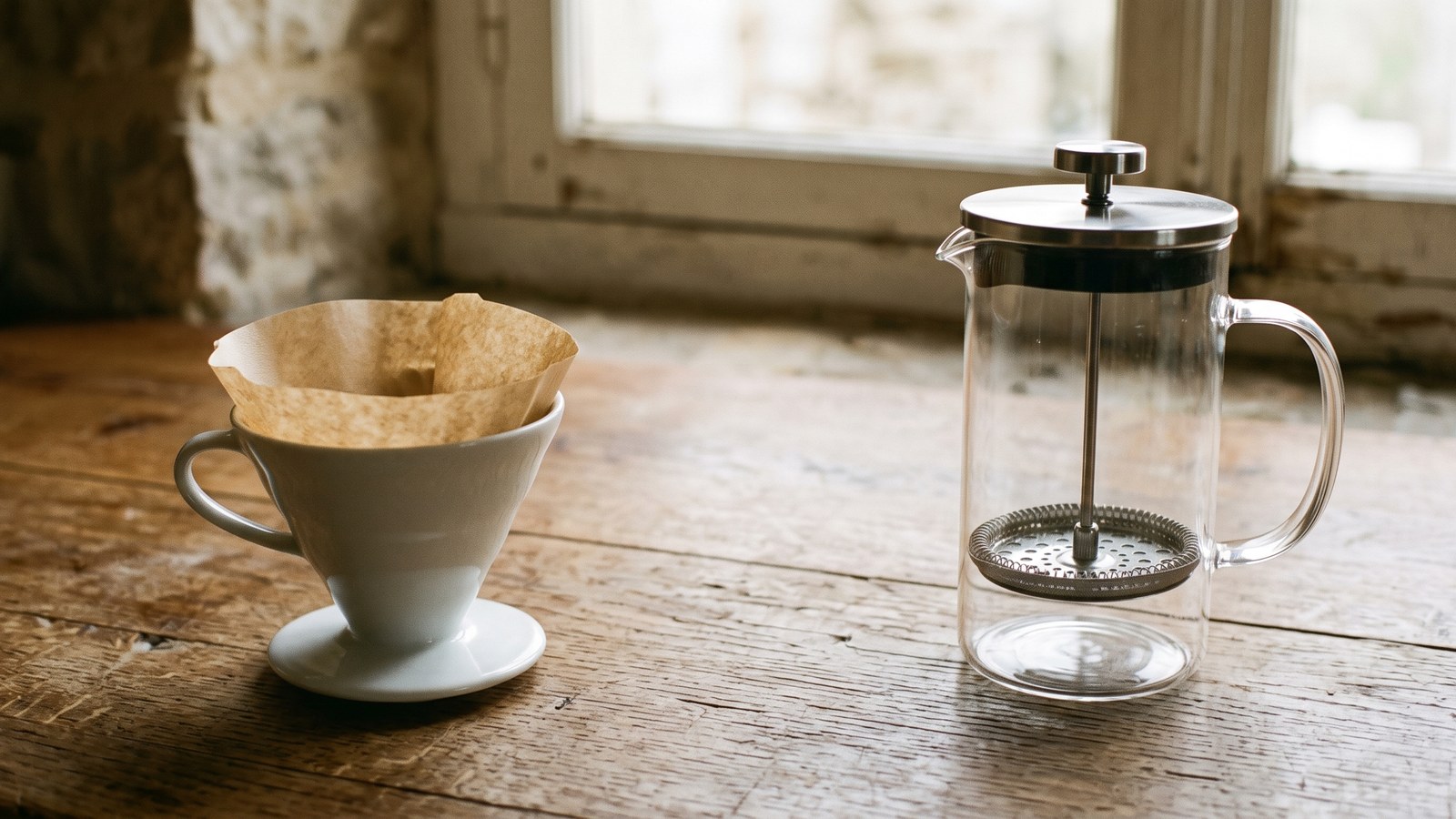
Cafestol by brewing method, from zero to 939 milligrams per liter
Concentration numbers are easier to reason about side by side than one at a time, so here’s the same study’s full range, plus the structural zero for a coffee-bean-free brew, arranged from lowest to highest:
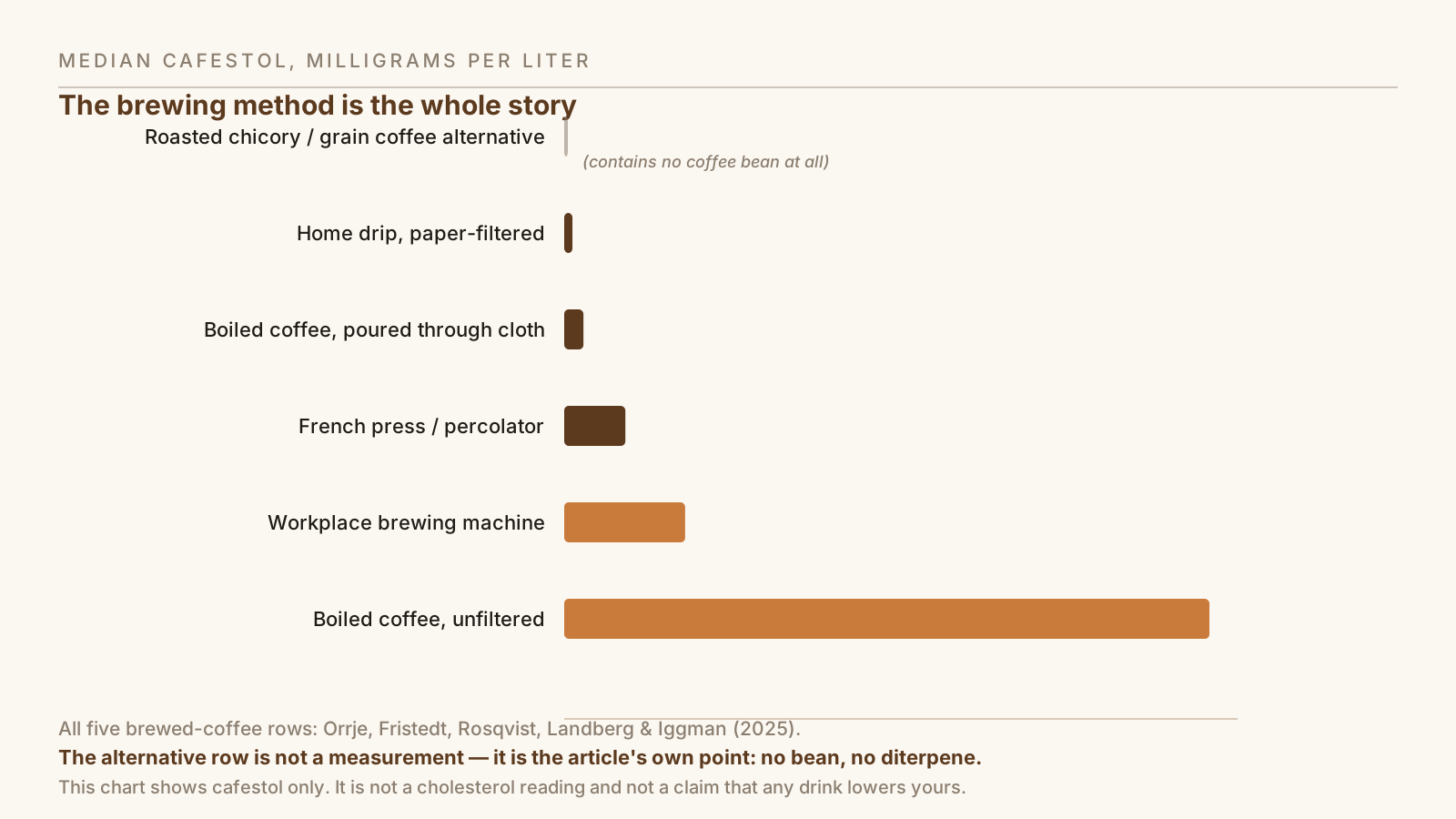
A few things jump out. First, the gap between paper-filtered and everything else is large — even boiled coffee strained through cloth, at 28 milligrams per liter, more than doubles the paper-filtered figure, and cloth is still catching some of the oil. Second, the traditional Scandinavian method of boiling grounds directly in water with no filter at all produces a concentration nearly 80 times higher than paper-filtered drip. That’s not a subtle difference; it’s the reason Scandinavian cardiovascular research has driven so much of what we know about coffee and cholesterol in the first place — countries with a strong boiled-coffee tradition gave researchers a natural population to study.
Espresso is worth a brief separate note: several analyses have found its cafestol content varies enormously, in some samples from roughly 36 to well over 2,000 milligrams per liter, depending on the machine, the puck, and the shot. It isn’t in the chart above because that variability makes a single median misleading, but the takeaway is the same — espresso uses a metal filter basket, not paper, so don’t assume it’s automatically the “cleaner” option just because the serving is small.
How much this actually moves your LDL
Concentration in the cup is one thing; what it does to your blood is another, and this part has been tested directly, not just inferred.
The clearest demonstration is also one of the oldest: a 1989 randomized trial published in the New England Journal of Medicine put over a hundred healthy adults on either four to six cups of boiled coffee a day, the same amount of filtered coffee, or no coffee, for nine weeks. The boiled-coffee group’s LDL rose well above the filtered-coffee group’s — and when the boiled-coffee drinkers were switched to filtered coffee for a second phase of the study, their numbers came back down. That reversibility matters: this isn’t a permanent injury from past unfiltered coffee, it’s an ongoing effect that tracks your current brewing habits.
Later work put a number on the dose-response relationship directly. In a controlled trial isolating purified cafestol and kahweol, researchers found that each 10 milligrams of daily cafestol intake raised total cholesterol by roughly 0.13 mmol/L, or about 5 mg/dL. A 2001 meta-analysis pooling multiple randomized trials found a similar pattern at the population level: the average LDL increase across all included coffee trials was modest, but that average was pulled almost entirely by the trials using unfiltered or boiled coffee, while trials using filtered coffee showed little to no measurable rise. In other words, the effect is real and dose-dependent, but it’s concentrated almost entirely in a subset of brewing methods — which is good news if you’re willing to pick a different one.
To be clear about what this doesn’t show: none of this research suggests coffee causes heart disease outright, and observational research on coffee drinkers overall, filtered or not, is generally neutral to favorable on long-term cardiovascular outcomes. What it shows is narrower and more actionable — a specific, well-characterized mechanism by which one brewing choice measurably raises one blood marker, independent of everything else going on in your diet.
Does decaf fix this? No — it’s the same bean
This is the mix-up I hear most often in clinic, and it’s an easy one to make: people assume “decaf” means “with the problematic stuff removed,” full stop. Decaffeination removes caffeine. It doesn’t touch the bean’s natural oil, so cafestol and kahweol are present in decaf coffee at roughly the same levels you’d expect from the brewing method used, independent of the caffeine content.
A French press decaf carries the French press cafestol load. A filtered decaf carries the filtered load. If your goal is specifically to reduce cafestol and kahweol exposure, switching to decaf without also switching your brewing method doesn’t accomplish that — you’d still want the paper filter. This is worth knowing on its own, and it pairs with a mirror-image point we’ve made about caffeine specifically: as we cover in herbal coffee vs. decaf, decaf and genuinely caffeine-free herbal coffee solve different problems, and this is one more example of that — decaf changes caffeine content, not the bean’s other properties.
Where coffee alternatives fit, and where the label can mislead you
Here’s the one place a coffee alternative has an honest, structural advantage on this specific question, and it’s worth stating precisely so it doesn’t turn into a bigger claim than it is: cafestol and kahweol are coffee-bean lipids. A brew made from roasted chicory, carob, barley, or dandelion root doesn’t contain any coffee bean, so it doesn’t contain any cafestol or kahweol, at any concentration, brewed by any method. That’s not a benefit these drinks have earned through better processing — it’s the same reason apple juice has zero cafestol. There’s no bean, so there’s nothing for a filter to catch or a press to let through.
That’s genuinely useful information if this specific mechanism is something you’re trying to avoid, and it’s a real reason a roasted-chicory blend like Teeccino’s French Roast (opens in a new tab) — or Dandy Blend, Cafix, Pero, or a plain roasted chicory — sidesteps the question entirely, brewed however you like, French press included. Our French press and pour-over guide covers how these actually brew if you want the ritual without this particular trade-off.
What it isn’t is a cholesterol-lowering claim, and I want to be plain about that distinction. LDL is shaped by diet overall, genetics, activity level, and other factors far larger than any one beverage choice; removing cafestol and kahweol from your morning cup doesn’t override the rest of that picture, and no coffee alternative has been shown to lower anyone’s cholesterol. It removes one specific input. That’s worth having accurately, not inflated.
One label caveat while we’re here: “coffee alternative” isn’t always what it sounds like. Some products marketed as mushroom coffee blend actual ground coffee in with the mushroom extract, for flavor and because a little caffeine is part of the appeal for some drinkers. If avoiding cafestol and kahweol specifically is your goal, check the ingredient list for the word “coffee,” “arabica,” or “robusta” rather than assuming a wellness-adjacent name means bean-free — a genuinely bean-free product will list chicory, roasted barley, dandelion root, or carob instead.
What to actually do with this
If you already know your LDL runs high, or you’re managing cholesterol with your clinician, this is one of the more concrete, low-effort levers available to you:
- Switch to a paper filter if you’re not already using one. This is the single highest-leverage change, based on the research above — a drip machine or a pour-over cone with a paper filter, not a reusable metal mesh basket.
- Know what your workplace machine is actually doing. If your office coffee comes from a machine with a mesh or metal filter rather than paper, treat it more like French press coffee than like home drip, at least for this specific question.
- Don’t assume decaf solves it. If cafestol is your concern, the fix is brewing method, not caffeine content.
- An occasional French press or boiled coffee isn’t a crisis. This research is about sustained daily intake over weeks, the way the underlying trials were designed. One vacation’s worth of Turkish coffee isn’t the same exposure as a daily habit.
- If cholesterol management is already part of your care plan, mention this to your clinician rather than adjusting alone — brewing method is one input among several they’re already tracking for you.
And if you’re curious what a fully bean-free morning cup looks like brewed the same way you’re used to, our best herbal coffee and best chicory coffee roundups cover the options that sidestep this question by ingredient rather than by technique.
Sources & further reading
- Cafestol and kahweol concentrations in workplace machine coffee compared with conventional brewing methods (opens in a new tab) — Nutrition, Metabolism and Cardiovascular Diseases (Orrje, Fristedt, Rosqvist, Landberg & Iggman, 2025)
- The Effect on Serum Cholesterol Levels of Coffee Brewed by Filtering or Boiling (opens in a new tab) — New England Journal of Medicine (Bak & Grobbee, 1989)
- Cafestol, the Cholesterol-Raising Factor in Boiled Coffee, Suppresses Bile Acid Synthesis by Downregulation of Cholesterol 7α-Hydroxylase and Sterol 27-Hydroxylase in Rat Hepatocytes (opens in a new tab) — Arteriosclerosis, Thrombosis, and Vascular Biology (Post et al., 1997)
- Coffee consumption and serum lipids: a meta-analysis of randomized controlled clinical trials (opens in a new tab) — American Journal of Epidemiology (Jee et al., 2001)
- Effects of cafestol and kahweol from coffee grounds on serum lipids and serum liver enzymes in humans (opens in a new tab) — American Journal of Clinical Nutrition (Urgert et al., 1995)
- LDL: The 'Bad' Cholesterol (opens in a new tab) — MedlinePlus, U.S. National Library of Medicine
Reader conversation (5)
We read every response. Selected reader notes below.
Cardiac step-down nurse here — I wish every patient with a statin prescription got told this before discharge instead of just “watch your diet.” I’ve had multiple patients genuinely surprised that their daily French press habit was working against their new medication. Bookmarking this to hand out.
That’s exactly the gap this piece is trying to close — brewing method rarely comes up in a med-management conversation, and it’s such a low-effort lever compared to most dietary changes clinicians ask people to make. Glad it’s useful on the floor, not just for home readers.
Genuinely didn’t know moka pot coffee wasn’t covered in the chart. Any idea where it falls? It’s metal filter, high pressure, feels like it should sit somewhere between drip and French press but I have no idea if that’s right.
Good catch, and an honest gap — the 2025 study this piece is built on didn’t test moka pots specifically, and I didn’t want to guess a number for a method that wasn’t measured. Structurally it uses a metal filter basket rather than paper, so I’d expect it to land closer to French press than to drip, but that’s a reasonable inference, not a tested figure. Worth its own measurement rather than us assuming.
The decaf section is the one that got me — I switched to French press decaf specifically because I thought I was making the “healthier” choice on every axis at once. Good reminder that one swap doesn’t fix every variable.
Appreciate that this didn’t turn into “so drink chicory coffee instead.” The bean-free point is fair but you were clear it’s not a cholesterol fix on its own — a lot of sites would’ve oversold that part.
In France this is basically kitchen folklore — everyone’s grandmother has an opinion on “café bouilli” versus filtre for exactly this reason, long before anyone had the biochemistry. Nice to see the actual mechanism behind something that’s been informal common knowledge here for decades.
Have something to add? Email us and we may include it in a future update.