Can you drink coffee before a fasting blood test? Even black coffee can nudge your glucose
Most lab sheets say water only. What two studies found about caffeine and blood sugar in the hour before a draw, why cholesterol looks steadier, and how to get through the morning.

The short answer
Follow the sheet your lab gave you. If it says fasting, that usually means no food, and many sheets say nothing but water. Coffee is the line people argue about, because black coffee has almost no calories.
The research suggests the argument is worth settling in favor of skipping it. Two studies found higher blood glucose after caffeine in the hour before a draw. Cholesterol looks steadier, but that doesn’t help much if the same blood is also being used for glucose.
I’m not a clinician, and this isn’t medical advice. It’s a look at what the studies found, so you can ask your lab a better question.
What the glucose studies found
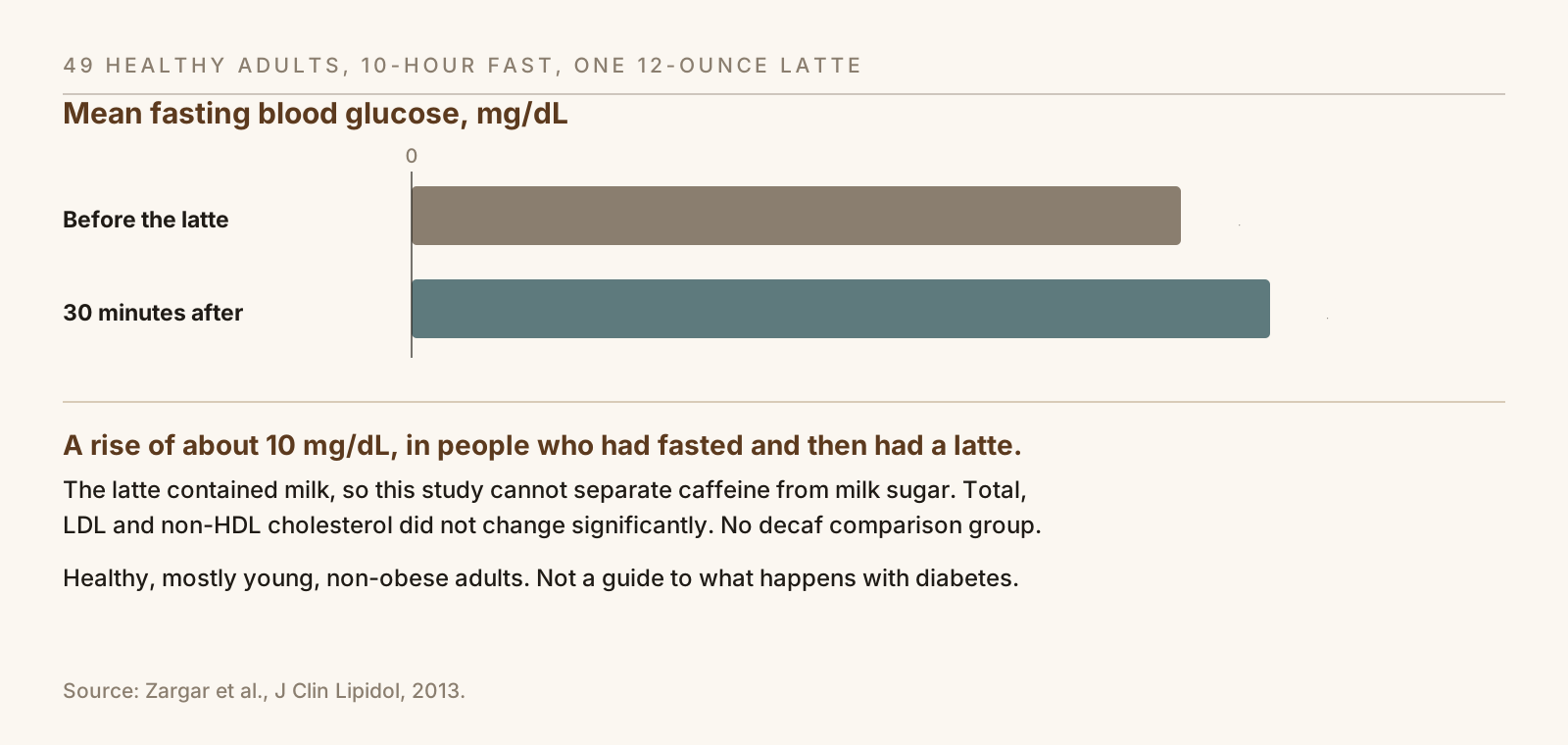
The first is a small trial. In 2013, researchers at Oregon State and Oregon Health & Science University took a 10-hour fasting blood sample from 49 healthy adults, gave each a 12-ounce café latte made with 2% milk, and sampled again 30 minutes later. Average fasting glucose rose from 87.2 to 97.3 mg/dL, an increase of almost 12% (P < .001).
The second is much larger and looser. In the UK Biobank, up to 447,794 people gave a non-fasting blood sample and said whether they had drunk a caffeinated beverage in roughly the previous hour. Those who had showed clinically and statistically higher glucose than those who hadn’t. The gap was larger in people aged 55 and over, in people with more body fat, and after longer fasting times, and it varied with genes involved in caffeine metabolism.
Cholesterol is steadier
In the same latte study, total cholesterol, LDL and non-HDL cholesterol did not change significantly. Triglycerides dipped from a median of 76 to 75 mg/dL, and HDL rose a little, from 54.4 to 56.4 mg/dL. Those are small shifts.
There’s a wider point here. A 2016 joint consensus statement from the European Atherosclerosis Society and the European Federation of Clinical Chemistry and Laboratory Medicine concluded that fasting isn’t routinely required for a lipid profile, because average changes after ordinary meals are small. That is guidance for labs and clinicians, not a license to change your own instructions. Your order may include glucose, or your clinician may have a reason for fasting, and that is theirs to decide.
What these studies can’t say
- The latte had milk. Milk contains sugar, so the trial can’t separate the caffeine from the lactose. There was no black coffee, decaf or milk-only comparison.
- The people were healthy and mostly young. The 49 adults averaged 32 years old and weren’t obese. Nothing here tells us what happens in someone with diabetes.
- The big study is observational. People who drink caffeine an hour before a draw may differ in other ways from people who don’t, even after adjustment. It also asked about caffeine in general, not coffee alone.
- A 10 mg/dL bump is an average. It does not tell you what would happen to you, or whether it would move your result across a cutoff.
Getting through the morning
If you drink coffee daily, skipping it can bring a headache, fog and irritability by mid-morning. That is caffeine withdrawal, and it’s real even when the reason for skipping is short. A few things help:
- Book the earliest slot. The less time between waking and the draw, the less time you spend without your usual cup.
- Plan the coffee for right after. Pack it, or pick the cafe on the way home, and decide the night before.
- Check whether plain water is allowed. Many sheets allow it, and staying hydrated can make the draw easier. Confirm with your lab.
- Don’t swap in an herbal coffee without asking. A caffeine-free herbal roast contains no caffeine, but “fasting” instructions can cover more than caffeine. Our guide to herbal coffee vs decaf explains why decaf isn’t caffeine-free either, and how much caffeine is in decaf gives the typical range.
- If you’re already tapering, a gradual step-down in the weeks before keeps a single missed cup from landing as hard. Our guide to quitting caffeine without the headache lays out a schedule.
If you get tests like this often, our pieces on caffeine before a cardiac stress test and caffeine before surgery cover two other cases where the instruction sheet and the habit collide.
What to ask the lab
- Is this order for glucose, cholesterol, or both?
- Is black coffee allowed, or only water?
- If I took my usual medication with a sip of coffee, should I tell you?
- If I slip up, can I still be drawn, or should I reschedule?
Writing the answers on the order saves a second trip.
This article is general information, not medical advice. Follow the instructions from your clinician and lab.
Sources & further reading
- Recent consumption of a caffeine-containing beverage and serum biomarkers of cardiometabolic function in the UK Biobank (opens in a new tab) — British Journal of Nutrition, 2021 (Cornelis)
- The effect of acute café latte ingestion on fasting serum lipid levels in healthy individuals (opens in a new tab) — Journal of Clinical Lipidology, 2013 (Zargar et al.)
- Fasting is not routinely required for determination of a lipid profile (opens in a new tab) — European Heart Journal, 2016 (EAS and EFLM joint consensus statement)
Reader conversation (4)
We read every response. Selected reader notes below.
I had a coffee before my annual labs once and the nurse just wrote it on the form. Wish I had known to ask first.
Useful that you pointed out the latte had milk. Most summaries of that study just say coffee raised glucose.
That was the part that stuck with me too, Tomasz. The study cannot tell caffeine from the milk sugar.
The earliest-slot tip is the real one. I book 7 a.m. and the headache never gets going.
Good reminder that the lab, not a blog, decides what fasting means for my order.
Have something to add? Email us and we may include it in a future update.