Caffeine before a cardiac stress test: why the instructions say no coffee, and no decaf either
Some heart stress tests use a drug that caffeine blocks, which is why the instructions ask you to skip it for 12 to 24 hours. What a 332-patient study found, what 'no caffeine' includes, and how to get through the gap.

If a doctor has booked you for a cardiac stress test, the instruction sheet may contain a line that stops regular coffee drinkers cold: no caffeine for the day before. Sometimes it also says no decaf. It reads like a fussy rule until you learn what the test is actually doing.
The short version
Some stress tests don’t use a treadmill. They use a drug that makes the heart work as if you were exercising. Caffeine blocks the receptor those drugs act on, so a recent cup can make the test less informative. That is why the instructions ask for roughly 12 to 24 hours without it. This is general background, not medical advice. Your test, your clinic and your health history decide the real rule, so the sheet you were handed wins over anything here.
Why caffeine gets in the way
Adenosine is a molecule your body makes naturally. It is also the one caffeine works against: as we explain in our caffeine half-life piece, caffeine sits in the adenosine receptors and keeps them from doing their job. That is how it keeps you alert.
Pharmacologic stress tests use adenosine itself, or a drug called regadenoson that acts on the same receptor family, to widen the heart’s blood vessels. A 2020 paper in the Journal of Nuclear Medicine Technology puts it directly: caffeine is a competitive antagonist of adenosine receptors, so it is typically withheld 12 to 24 hours before stress with regadenoson. If caffeine is still in the way, the drug may not do its job as well.
What a 332-patient study found
In 2015, researchers at Indiana University published a study in PLoS One of 332 people having regadenoson stress tests. They asked about coffee habits and measured how much heart rate and blood pressure rose after the drug.
- People who never drank coffee, and people whose last coffee was more than 24 hours before, looked alike.
- People whose last coffee was 12 to 24 hours before had a smaller rise in heart rate and systolic blood pressure than non-drinkers.
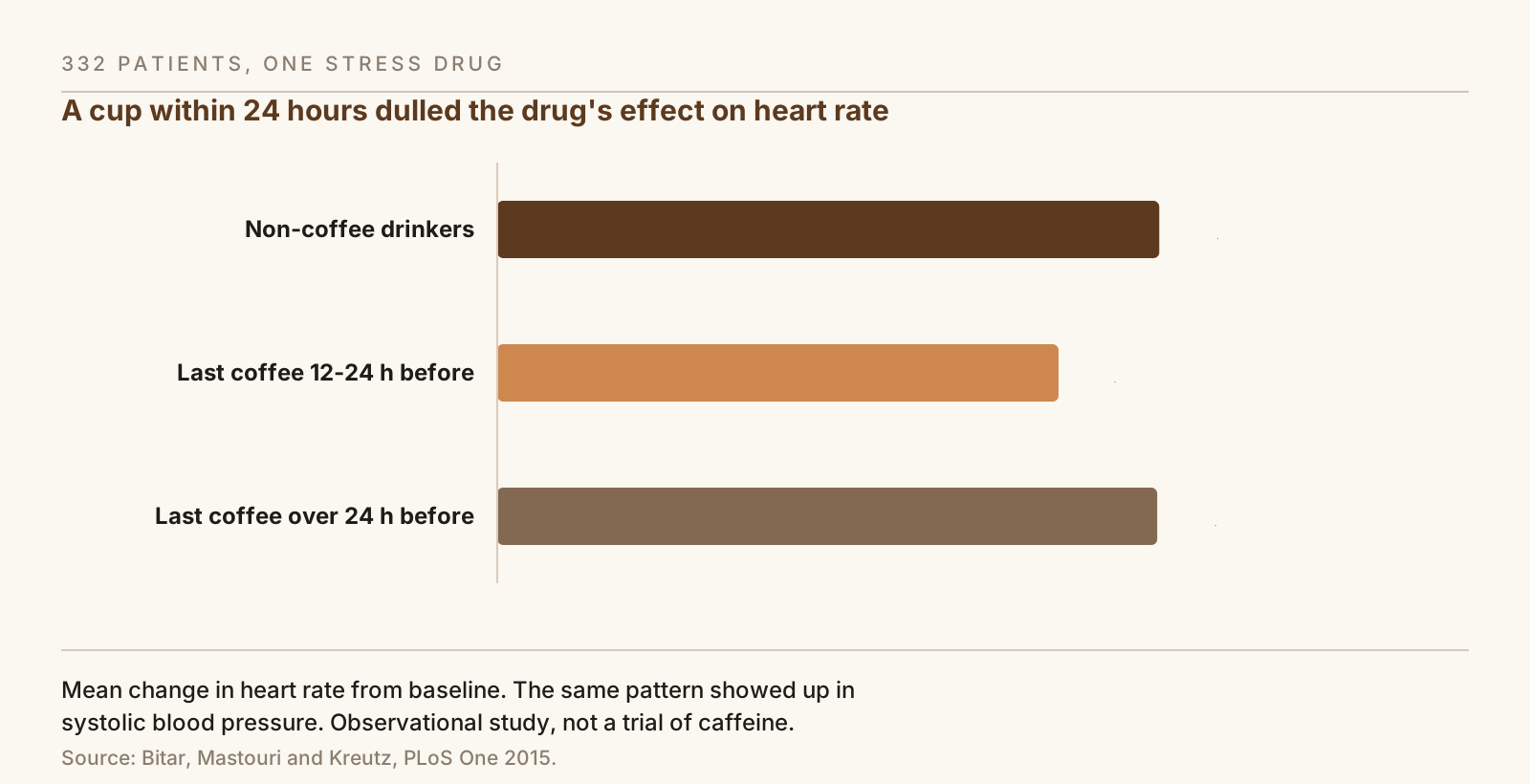
The authors concluded that caffeine within 24 hours may reduce the effect of regadenoson. This was an observational study, not an experiment where people were assigned to drink coffee, so it shows an association rather than proof. It also looked at heart rate and blood pressure responses, not at how often a test gave a wrong result.
A second, smaller study (101 patients, all of whom had abstained for at least 12 hours) pulls the other way on comfort. Regular caffeine users reported less chest pain and needed less of the rescue drug aminophylline than non-users. The authors read this as reassuring: stress testing in daily caffeine drinkers is common and safe. It doesn’t mean you should skip the instructions.
What ‘no caffeine’ includes
Check the sheet, because the list can be longer than coffee. Cleveland Clinic’s instructions for an adenosine stress test, for instance, set the window at 24 hours and name coffee, tea, soft drinks and chocolate. They also say to avoid decaffeinated products because these contain trace amounts of caffeine, and some over-the-counter products such as Excedrin, Anacin, NoDoz and diet pills. (If you wonder how much a decaf cup carries, our guide to caffeine in decaf has the range.)
Other clinics set different windows, and a treadmill test may have no caffeine rule at all. Don’t assume. Ask.
Getting through the gap
For a daily drinker, a 12 to 24 hour pause is exactly the span in which withdrawal tends to start. Headache, fogginess and irritability are common, and a test day is a bad day to feel them. A few options to weigh:
- Taper in the days before. Dropping from three cups to one over a week means less to miss. Our no-headache tapering guide lays out the steps. Don’t make this change if your doctor has said not to alter anything before the test.
- Move the last cup earlier. If your window is 12 hours, a morning test means a cutoff the evening before. Plan the day around that.
- Keep the ritual. The warm mug is half the habit. A caffeine-free herbal coffee such as Teeccino’s French Roast (opens in a new tab) can fill it, alongside options like Pero or roasted chicory. Note that French Roast contains barley, so it isn’t gluten-free, and almonds. If your sheet lists chocolate, ask whether a carob-based blend counts, since carob is often used as a chocolate stand-in.
- Hydrate and eat what you’re allowed. Many tests have food and drink rules of their own. Follow those first.
What to ask the testing team
A short list worth putting on a sticky note:
- How many hours before the test is my cutoff, and does it count decaf?
- Does the rule cover chocolate, energy drinks and my usual pain reliever?
- Is a caffeine-free herbal drink acceptable?
- If I have a headache that morning, what can I take?
You’re not being difficult by asking. They would rather answer now than reschedule you.
Related reading
If you’d like the bigger picture on stopping, see our overview of the best caffeine-free coffee alternatives and the piece on caffeine before surgery, which covers a different medical reason to plan around your cup.
Sources & further reading
- Caffeine Consumption and Heart Rate and Blood Pressure Response to Regadenoson (opens in a new tab) — PLoS One, 2015 (Bitar, Mastouri, Kreutz)
- Daily Caffeine Consumption Is Associated with Decreased Incidence of Symptoms and Hemodynamic Changes During Pharmacologic Stress with Regadenoson (opens in a new tab) — Journal of Nuclear Medicine Technology, 2020
- What Is an Adenosine Stress Test? (opens in a new tab) — Cleveland Clinic
Reader conversation (4)
We read every response. Selected reader notes below.
My cardiology office told me 24 hours and then added “and no decaf.” I assumed it was a typo. Now I know why.
It surprises a lot of people. Decaf has a little caffeine, and some clinics count it. Your office’s wording is the one to follow.
Three cups a day and I was dreading the headache. Tapering the week before worked better than I expected.
Useful that you pointed out it is an observational study. The chart looks more dramatic than a single sheet of instructions does.
Fair point. The chart shows group averages, so treat it as the reason behind the rule rather than a prediction for you.
I wish someone had told me about the chocolate rule before I ate a granola bar on the way in.
Have something to add? Email us and we may include it in a future update.