The same jar of French chicory costs 2 to 2.5 times more in the US — and it isn't the shipping
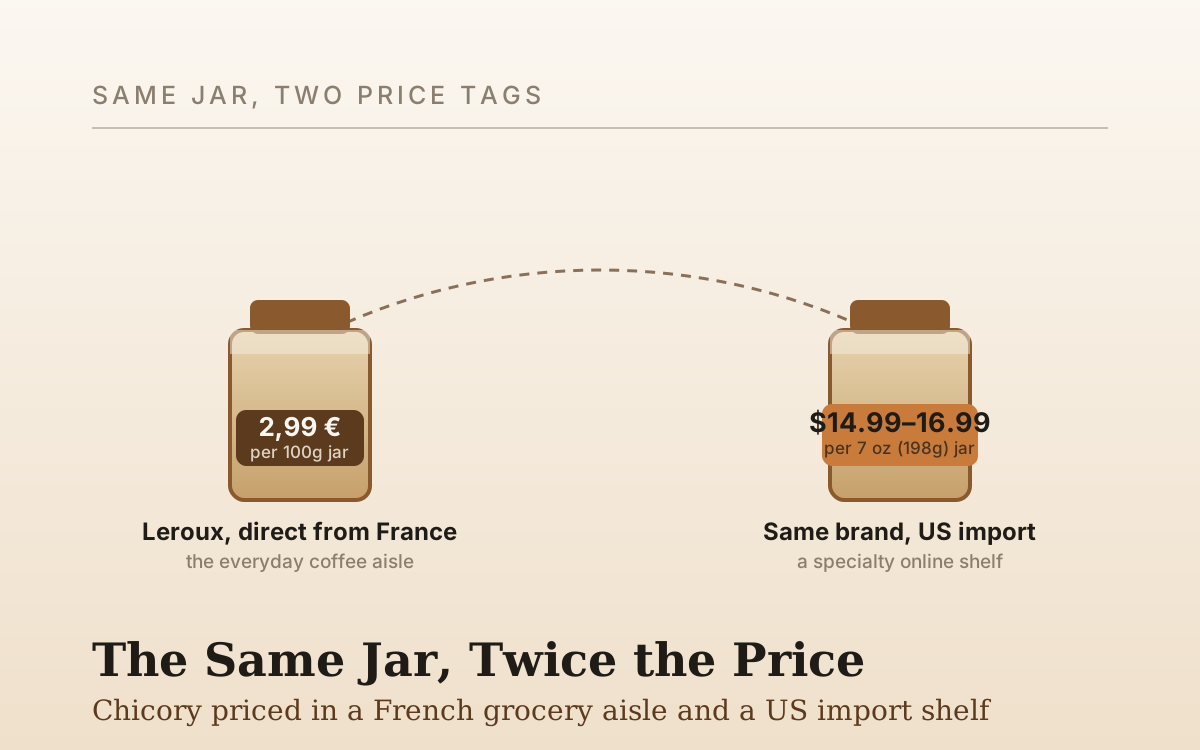
Marguerite D. in Lyon spotted a controlled experiment we'd been missing: the identical jar of Leroux instant chicory sells for €2.99 direct from the French brand and $14.99–$16.99 imported to the US — 2.2 to 2.5 times the price per gram. Wholesale chicory root costs about the same in both countries, so the gap isn't the farm. It's the aisle.

Marguerite D. in Lyon read our piece on wholesale-to-retail chicory markups and wrote in with the one variable it had been fudging. We’d attributed the six-to-sixteen-fold gap between wholesale chicory and US retail chicory to roasting, packaging, logistics and margin — all real. What we hadn’t done was compare the same finished product across a border.
“In France,” she wrote, “chicorée soluble sits on the shelf next to the coffee, at a price nobody thinks twice about. I don’t understand why the same jar is a wellness purchase where you live.” That’s close to a controlled experiment: hold the product constant, change only the country, and see what’s left over. So we ran it.
What Marguerite noticed
The reason this is checkable rather than just a vibe is that one French brand, Leroux, sells the identical product — 100% roasted French chicory, spray-dried into an instant powder — on both sides of the Atlantic. Same ingredient, same processing, same company. If the price still moves once it changes shelves, the shelf is the variable, not the chicory.
The same jar, priced twice
Leroux’s own site lists Chicorée Soluble Nature — a 100-gram glass jar, 100% French roasted chicory, no additives — at €2.99, direct from the brand. At roughly 1.16 dollars to the euro in late August 2026, that’s about $3.47.
The same product line, imported and sold as a 7-ounce (198-gram) jar on US Amazon, was $14.99 at the time of writing — Amazon’s own listing flagged it as the lowest price in 30 days, a 12% discount off a $16.99 typical price. Converted to the same unit as the French jar:
$14.99 ÷ 198.4 g × 100 = $7.56 per 100 g (at the discounted price) $16.99 ÷ 198.4 g × 100 = $8.56 per 100 g (at the regular price)
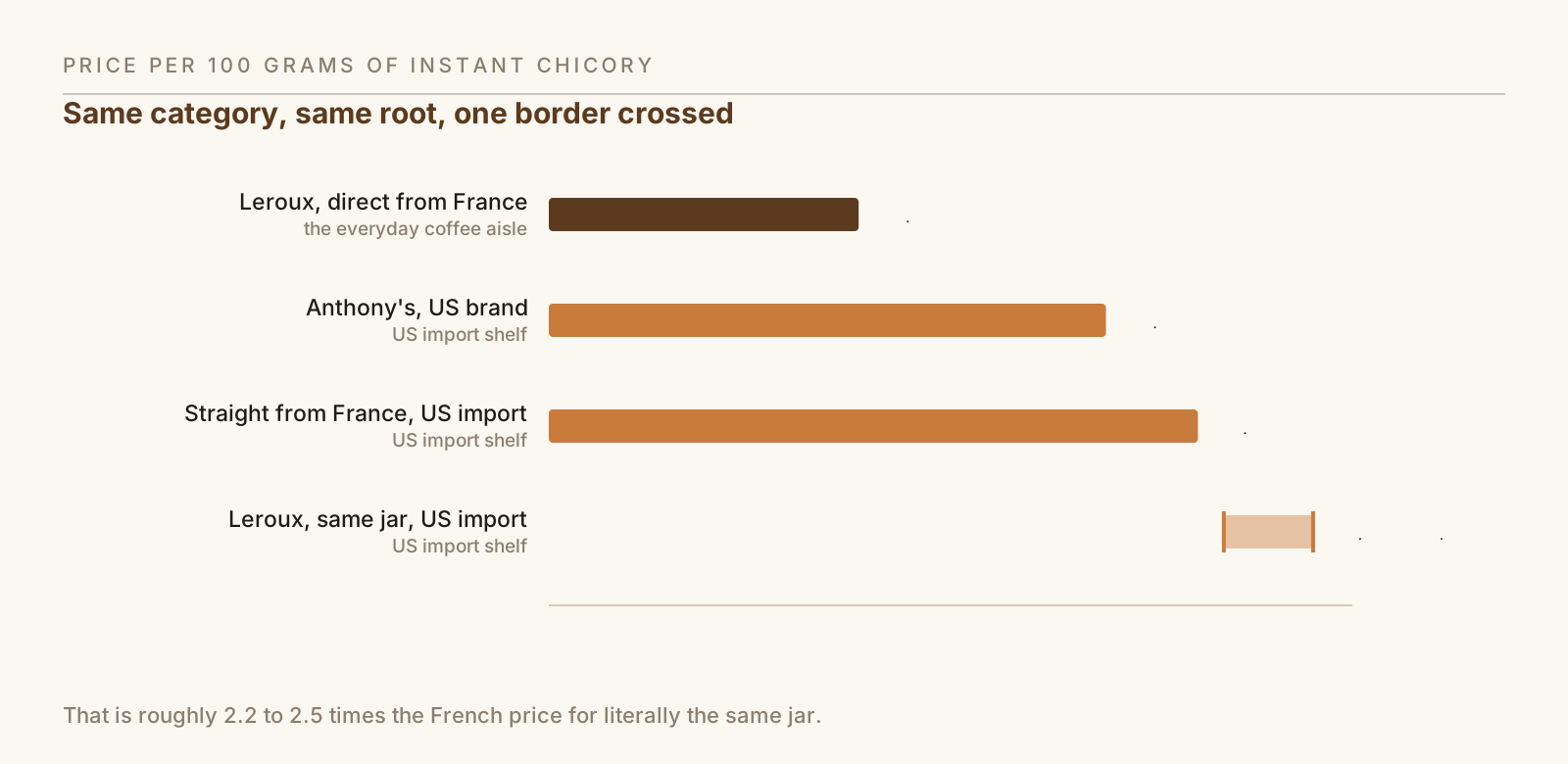
That’s roughly 2.2 to 2.5 times the French price, for a jar that left the same French factory either way. Nothing about the chicory itself changed. What changed is which country’s shelf it landed on.
Not a one-brand fluke
One brand’s pricing decision could be a Leroux story rather than a category story, so we checked whether other pure instant chicory sold in the US clusters near the same number.
It does. Straight from France, another imported French chicory brand, sells its own 7-ounce jar at $14.40 — $7.27 per 100 grams. Anthony’s, a US brand rather than an import, sells 8 ounces of instant chicory root at $14.19 — $6.24 per 100 grams. Three different sellers, two different countries of origin for the finished product, and all three land within about 20% of each other, every one of them well above the French direct price.
That rules out “importing costs money” as the whole story — Anthony’s isn’t obviously importing a French jar, and it still prices near the imported brands, not near the French one. Whatever is setting this price band, it’s a US-market thing, not a shipping-cost-of-one-specific-brand thing.
Ruling out the farm
The tempting next explanation is that chicory is simply cheaper to grow in France — centuries of cultivation, established processing infrastructure, economies of scale. We wanted to check that rather than assume it, because it’s the kind of explanation that sounds right and would let everyone off the hook.
It doesn’t hold up. Export unit values for raw chicory root — tracked by the same source, using the same UN Comtrade methodology, for both countries — put the United States at about $1.24 a pound and France at about $1.45 a pound. France’s own figure is not lower. If anything, it runs slightly higher.
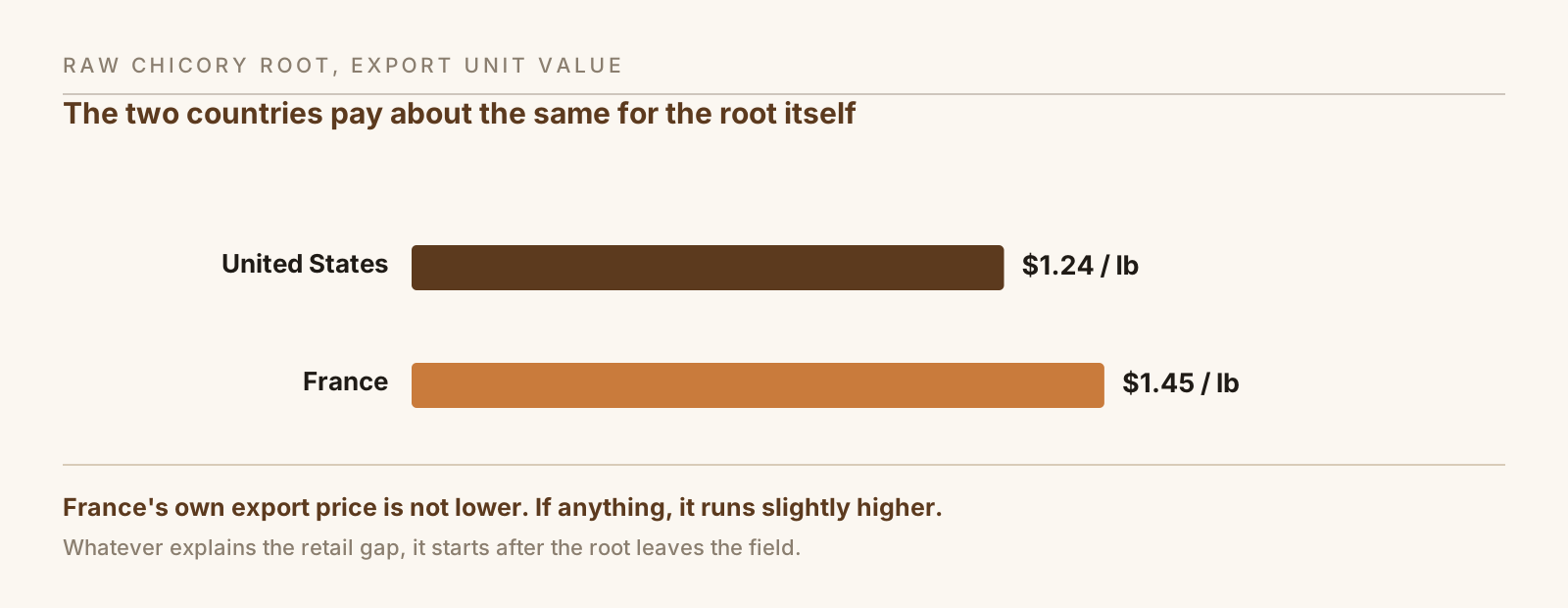
One honest caveat: export unit value is a proxy for wholesale price — it measures what crosses a border, not necessarily what a domestic processor pays at the farm gate — and the two figures on our chart are dated slightly differently on the source page. But they’re built the same way for both countries, which makes them a fair apples-to-apples comparison of raw material cost even if neither is a precise farm-gate number. And the U.S. does grow some chicory domestically (Nebraska has commercial acreage), though the country still imports a substantial share of its processing-grade root from Europe — so even the “grown here” premise for a US brand isn’t guaranteed to be true. Either way, the raw ingredient isn’t the lever. It’s what happens to it after.
What “positioning” actually means
So if it isn’t the root and it isn’t simply importing, what is it? The honest answer is category positioning, and it’s visible in where the two versions of this product actually sit.
In France, chicory shares shelf space with regular coffee at Leclerc, Auchan, Carrefour, Intermarché and Super U — a mainstream, low-margin grocery staple that generations of French households have bought without thinking about it, the same way an American buys a jar of instant coffee. That’s not a recent branding trick; roasted chicory has been an everyday French pantry item since the wartime coffee shortages normalized it, concentrated historically around the Nord-Pas-de-Calais region where Leroux itself is based. High volume, wide distribution, intense retailer competition on a commodity item with a century of habit behind it: that combination compresses margin at every step.
In the US, pure single-ingredient chicory doesn’t occupy that role. It’s sold almost entirely online, marketed under a “coffee alternative” or wellness framing to a comparatively small, self-selecting audience rather than shelved as an everyday grocery item next to Folgers. Smaller volume per SKU, a marketplace platform taking its own cut, and a shopper base that’s opted into a health-and-wellness purchase rather than an out-of-habit one — all of that supports a higher unit price without anyone needing to be gouging anyone.
We want to be careful not to overstate this into a scandal, because it isn’t one. Getting a shelf-stable jar of anything across an ocean, warehoused, and sold in smaller lots than a supermarket buys by the pallet is genuinely more expensive to execute, and a lot of that cost is real. The finding here isn’t “US chicory brands are ripping you off.” It’s narrower and more useful than that: a meaningful part of the US price is what aisle the product is sold in, not what’s in the jar — and that’s a cost lever a shopper can occasionally see around, which a production cost never is.
The blend counterpoint
Here’s the part that keeps this from being a tidy “imports bad, domestic good” story, because the numbers don’t actually sort that way.
Teeccino’s French Roast (opens in a new tab) isn’t pure chicory — its own product page lists it as roasted chicory root, barley, carob and ramón seed, blended for a coffee-like body. An 11-ounce (311.85-gram) bag runs $18.49 at its regular price, which works out to $5.93 per 100 grams — noticeably less than the $7.56–$8.56 that pure imported chicory commands on Amazon, and not far off the low end of the whole US chicory band.
That’s genuinely interesting, because a blend is more processing, not less: several roasted ingredients instead of one, plus the flavor-engineering work of getting them to taste coherent together. If US pricing were simply “more processing costs more,” a blend should cost more than a single ingredient, not less. It doesn’t, because the blend is priced and shelved as a mainstream herbal-coffee product rather than a specialty single-origin import — which is exactly the positioning argument from the section above, just running in the other direction. One honest limit on this comparison: it isn’t apples to apples. Comparing a pure chicory jar to a five-ingredient blend measures two different products, not just two different prices, and the blend’s barley content also means it isn’t gluten-free the way plain chicory is — worth knowing if that matters to you.
What this means for you
If you’re buying pure chicory in the US and cost matters to you, this is a case for buying it like a domestic bulk grocery product rather than an imported specialty one where you can. Our cost-per-cup arithmetic already found loose roasted chicory from a US bulk seller running around 18–23 cents a cup — cheaper per gram than any of the imported jars in this piece, because it’s positioned and packaged as a commodity ingredient rather than a boutique import, the same forces at work here in miniature. It’s a coarser grind meant for brewing rather than an instant powder, so it isn’t a direct swap for Leroux — our chicory brewing guide covers the difference and how to make the loose version taste like something.
If you specifically want a French import brand like Leroux, we looked for a cheaper US channel than Amazon before writing this and didn’t find one. Our grocery-store guide found roasted-grain coffees like Inka in the international aisle at mainstream US supermarkets, but not single-ingredient French chicory brands specifically — so “check the international aisle” is good advice for a barley-and-chicory blend and, as far as we could verify, not for Leroux itself. We’d rather say that plainly than repeat advice we couldn’t confirm.
And if what you actually want is a coffee-like daily drink rather than pure chicory for its own sake, the blend counterpoint above is worth sitting with: a blended herbal coffee positioned as an everyday product can cost less than a “purer” single-ingredient import, precisely because of the shelf it’s sold from rather than what’s in the jar. Where the money actually goes in this category was never only about roasting and packaging. Sometimes it’s simply about which aisle you’re standing in.
Sources & further reading
- Chicorée Soluble Nature — 100g jar, official price (opens in a new tab) — Leroux
- Leroux Instant Chicory Coffee, 7 oz — US price and 30-day price history (opens in a new tab) — Amazon.com
- Straight from France Instant Chicory Coffee Substitute, 7 oz (opens in a new tab) — Amazon.com
- Anthony's Instant Chicory Root, 8 oz (opens in a new tab) — Amazon.com
- Chicorée Leroux soluble, 100g — French retail price range (opens in a new tab) — Sans Caféine
- Chicory price in the United States — export unit value (opens in a new tab) — Selina Wamucii
- Chicory price in France — export unit value (opens in a new tab) — Selina Wamucii
- EUR/USD exchange rate history (opens in a new tab) — Wise
- French Roast Chicory Herbal Coffee — ingredients and pricing (opens in a new tab) — Teeccino
Reader conversation (5)
We read every response. Selected reader notes below.
I honestly wasn’t sure you’d take a stray comment on a totally different article and turn it into real reporting, but you did — and you found a cleaner version of my point than I made it. I was comparing loose supermarket chicorée to whatever I assumed Americans pay; you found the same brand, same jar, sold in both places, which is a much harder number to argue with. Glad the raw root turned out not to be the excuse, too. That was the part I was least sure about when I wrote in.
Thank you for pushing us to check rather than just theorize — “hold the product constant, change the country” turned out to be doable with Leroux specifically because they sell into both markets under the same name. That’s what made this checkable instead of a vibe. Appreciate you reading closely enough to catch a hole in our own numbers.
UK’s the same story with Leroux — sold in most big supermarkets here for not much more than the French price, since we’re a short hop across the Channel. Always assumed the US price was purely a shipping thing given the distance. Interesting that the same-priced Anthony’s, which I’d guess isn’t shipped from France at all, sits right in the same band.
The Teeccino comparison is the part that actually changed my thinking here. I’d have bet the blend costs more because it’s “fancier,” not less because it’s shelved differently. Worth remembering next time I assume more ingredients automatically means a higher price.
Appreciate that you flagged the international-aisle advice as unverified instead of just repeating the obvious-sounding tip. I’ve gone looking for pure chicory brands in a “European foods” aisle before and come up with barley coffee and nothing else, so this matches what I’ve actually seen on a shelf.
Been buying the Amazon Leroux for years assuming it was already about as cheap as chicory gets in the US. Good to know the “expensive” feeling I had every time I reordered wasn’t just me being cheap — there’s an actual 2x-plus gap to a version I’ll just never have access to unless I’m in France anyway.
That’s really the honest bottom line for a US-based reader — knowing the gap exists doesn’t make it disappear, since the French price isn’t one you can actually shop your way into from Chicago. What it does do is make “positioning, not production” a more useful mental model than “imports are just expensive,” especially once you’re deciding between a pure import and a domestic blend like the Teeccino comparison in the piece.
Have something to add? Email us and we may include it in a future update.