Caffeine-free coffee alternatives, ranked by cost per cup: what these actually cost to drink every day
We priced every caffeine-free format in cents per finished cup — loose grounds, bagged blends, instant, pods, cans — and showed the arithmetic so you can redo it with your own brand. The spread is about ninefold, the cheapest lever is not the one brands advertise, and switching from home-brewed coffee usually costs you more, not less.

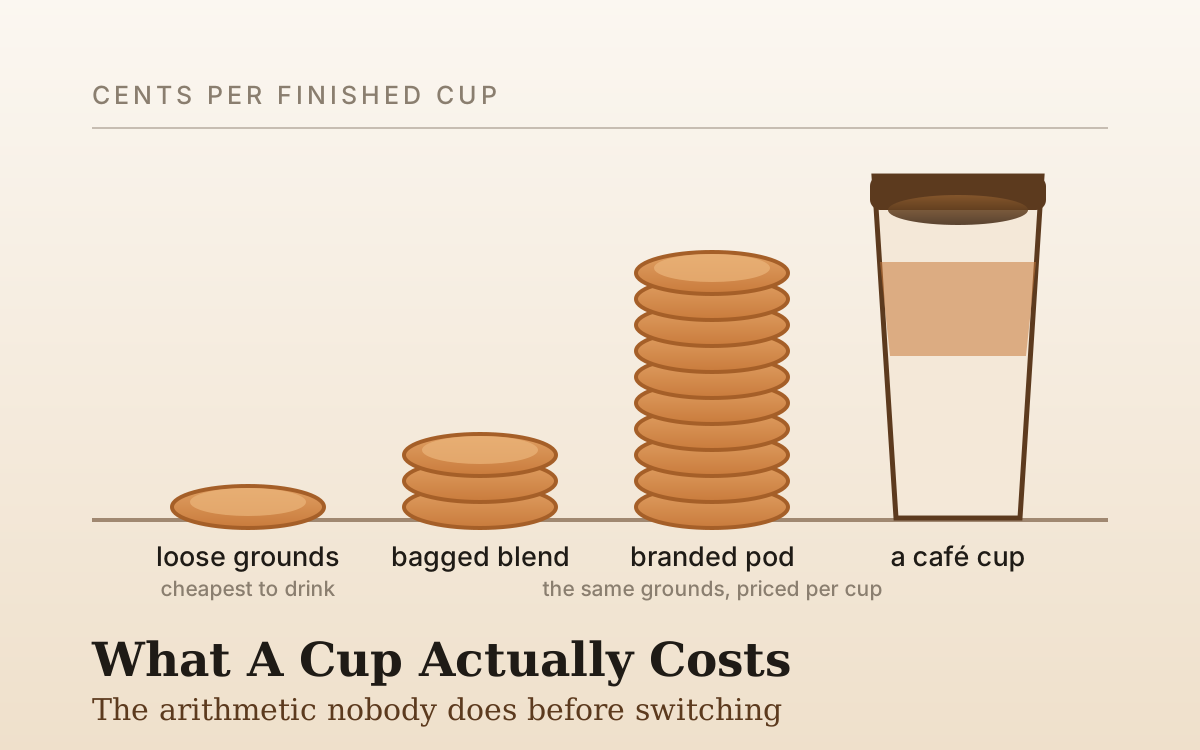
We have now written about every shelf in this category. Instant powders. Pods and K-Cups. Cans and bottles. Grounds for a press or a pour-over. Liquid concentrate.
Every one of those pieces ended on taste and convenience. Not one of them priced the habit.
That is a real omission, because cost is what decides which of these you are still drinking in November. Owen P. wrote in after the concentrates piece with the sentence that got this article commissioned: the best-tasting option and the one that survives a bad month are different products. He is right, and the gap between them is mostly money.
So here is the arithmetic, done out loud.
The only formula you need
Ignore the price on the front of the bag. It tells you almost nothing, because these formats hold wildly different amounts of wildly different densities of stuff.
There is one calculation that makes everything comparable:
Cost per cup = (package price ÷ package weight in grams) × grams you actually use
That is it. Price per gram, times your dose. Everything below is that formula applied, and the reason we are showing it rather than just publishing a league table is that prices move constantly and your dose is your own — with the formula you can redo any line here in fifteen seconds with whatever is in front of you.
Two conversions you will need: one ounce is 28.35 grams, and one pound is 454 grams.
The dose is where every comparison lives or dies
Here is the part almost every cost comparison gets wrong, including some we have read from brands who should know better.
For anything you brew from grounds, cost per cup is a function of how strong you make it, and strength is entirely your choice. Double the scoop and you have exactly doubled the price of the drink. That makes “cents per cup” for grounds a statement about a dose, not about a product — and a comparison that hides its dose is not a comparison at all.
So we are stating ours plainly, and using it consistently for every ground product below:
- 8 grams per 8-ounce cup for anything roasted and brewed — chicory, herbal blends, barley, grain roasts. That is a normal, slightly rounded tablespoon, and it is close to what most people we hear from actually use in a mug.
- 2 grams for instant powders, which is the standard label serving and, unusually, is also what people really use.
- One unit for pods and cans, because those are priced per cup by construction.
If you brew stronger than that — and if you have read our piece on why iced herbal coffee tastes watery you know we actively recommend double-dosing for iced drinks — scale the grounds lines up accordingly. A 16-gram iced dose doubles those numbers. That is not a hidden cost, it is just physics, and it applies identically to coffee.
Why “servings per container” is a dosing claim, not a yield
This is the single most useful thing in this article, so we are giving it its own section.
Packages advertise a servings-per-container number. That number is not a measurement of how many cups you will get. It is the package weight divided by the manufacturer’s suggested serving, and suggested servings run light.
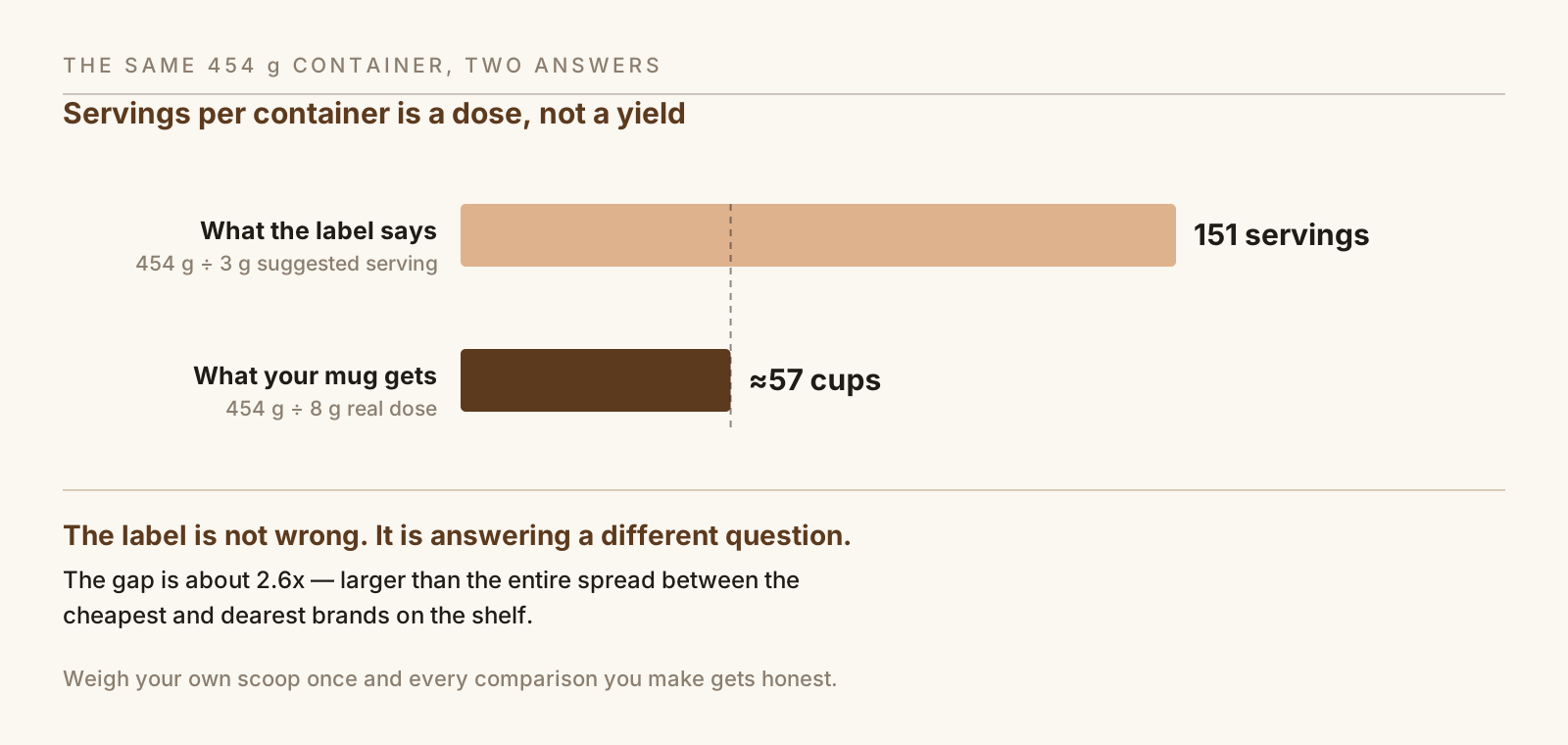
A concrete, checkable example. Frontier Co-op’s roasted chicory root granules come in a 16-ounce container and the label claims 151 servings at one teaspoon each. Sixteen ounces is 454 grams, so 454 ÷ 151 tells you their serving is about 3 grams. That arithmetic is internally consistent — nobody is lying. But three grams makes a thin, pale cup. At the 8-gram mug dose we defined above, that same container yields about 57 cups, not 151.
The label is not wrong. It is answering a different question than the one you are asking. And the gap is nearly threefold, which is more than the entire difference between the cheapest and most expensive brands on the shelf.
The same caution applies to brewing guidance. Teeccino’s own brewing tips (opens in a new tab) suggest one level tablespoon per two cups of water for a medium brew, and the page is candid that it is a starting point — “some people like it strong while others prefer it weaker.” Readers who tell us they love the stuff are almost all brewing well above that. Which is fine. It just means the cost per cup they are living with is not the one implied by the bag.
Weigh your own scoop once. A cheap kitchen scale, one measurement, and every price comparison you make for the rest of your life gets honest.
Cents per cup, across the shelf
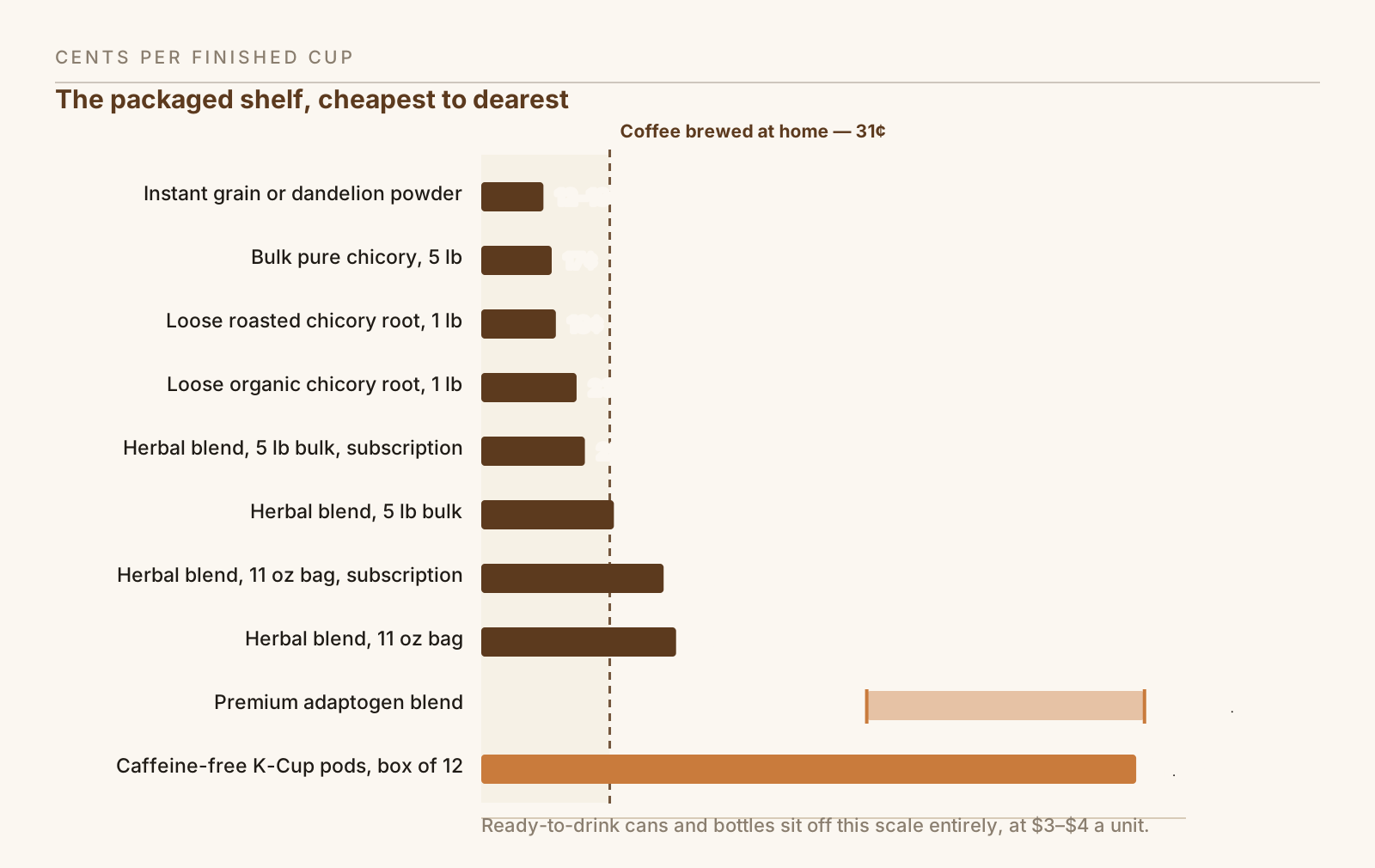
All grounds at 8 grams, instant at 2 grams, pods and cans as sold. Prices are examples we could verify from the seller’s own page at the time of writing, not promises — regional availability and pricing move, which is exactly why the formula matters more than the table.
| What | Cents per cup | Package | Cost per gram |
|---|---|---|---|
| Bulk pure chicory, 5 lb | 17¢ | $46.99 | $0.021 |
| Loose roasted chicory root, 1 lb | 18¢ | $9.97 | $0.022 |
| Instant grain or dandelion powder, 200 g jar | 12–18¢ | typical $12–18 | — |
| Loose organic chicory root, 1 lb | 23¢ | $12.99 | $0.029 |
| Herbal coffee blend, 5 lb bulk on subscription | 25¢ | $72.00 | $0.032 |
| Herbal coffee blend, 5 lb bulk | 32¢ | $89.99 | $0.040 |
| Herbal coffee blend, 11 oz bag on subscription | 44¢ | $16.99 | $0.054 |
| Herbal coffee blend, 11 oz bag | 47¢ | $18.49 | $0.059 |
| Premium adaptogen blend (brand’s own figure) | 93¢–$1.60 | — | — |
| Caffeine-free K-Cup pods, box of 12 | $1.58 | $19.00 | — |
| Ready-to-drink can or bottle | $3–4 | per unit | — |
| For reference: coffee you brew at home | 17–31¢ | $9.46/lb | $0.021 |
| For reference: a café hot coffee | $3.75 | — | — |
| For reference: a café cold brew | $5.58 | — | — |
The café figures are the median US menu prices reported by Toast, drawn from a very large panel of restaurant locations — $3.75 for a regular hot coffee as of June 2026, and $5.58 for cold brew. The home-coffee reference uses the US average retail price of ground roast coffee, $9.457 a pound in June 2026, at 8 grams and at a more realistic 15-gram mug dose.
The packaged spread is about ninefold, from 17 cents to $1.58. That is a bigger range than most people imagine exists inside a single category, and it is almost entirely a function of format rather than quality.
What a year of it costs
One cup a day, 365 days. This is where the numbers stop being abstract.
| One a day for a year | Cost |
|---|---|
| Loose chicory at 18¢ | $64 |
| Instant powder at 15¢ | $55 |
| Herbal blend, bulk on subscription, 25¢ | $93 |
| Coffee brewed at home, 31¢ | $114 |
| Herbal blend, 11 oz bag, 47¢ | $173 |
| Caffeine-free pods at $1.58 | $578 |
| Café hot coffee at $3.75 | $1,369 |
| Café cold brew at $5.58 | $2,037 |
Leaving a daily café habit for a bagged herbal blend saves you about $1,200 a year. Leaving it for loose chicory saves you about $1,300. Those are genuinely large numbers, and if a café run is the thing you are replacing, essentially any option on this list is a financial win alongside whatever else you are hoping for.
The uncomfortable part: you may be paying more
Now the version we do not see written anywhere, because it is not a good sales pitch.
If you are replacing coffee you brewed at home, most of these cost you more. Home-brewed coffee is one of the cheapest hot drinks in the world — around 31 cents in a decent mug at current US retail prices. Against that:
- Loose chicory at 18¢ saves you about $47 a year.
- Instant powder at 15¢ saves you about $59 a year.
- A bulk herbal blend on subscription at 25¢ is roughly break-even.
- An 11-ounce bag of herbal blend at 47¢ costs you about $59 more a year.
- Caffeine-free pods at $1.58 cost you about $464 more a year.
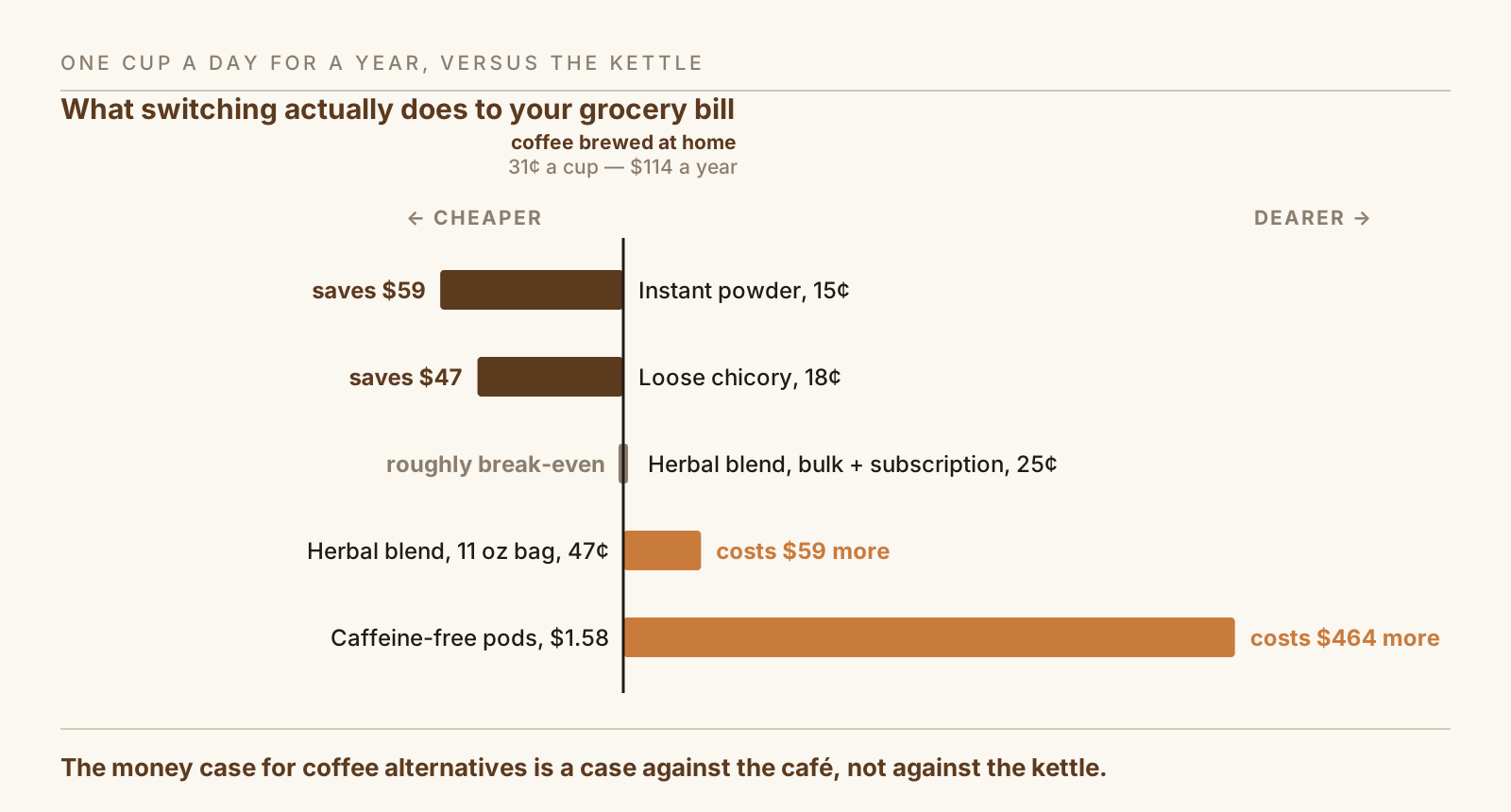
None of that is an argument against switching. People leave caffeine for sleep, for anxiety, for a gut that has stopped tolerating it, for pregnancy — reasons that make sixty dollars a year irrelevant. But we have watched enough people go in expecting a saving and quietly resent the grocery bill four months later that it is worth saying flatly: the money case for coffee alternatives is a case against the café, not against the kettle. Budget for it as a lateral move and you will not be ambushed.
Why pods and cans cost what they do
It is tempting to read the expensive end of that table as brands charging what they can get away with. Mostly it is structural, and worth understanding because it tells you which formats you can economise on.
Pods are priced per cup by construction. A box of 12 caffeine-free K-Cups at $19 is $1.58 a cup and there is no dose to adjust — the manufacturer set it. Inside each one is a few grams of the same roasted roots you can buy loose for 18 cents. The difference is the moulded cup, the filter, the individual seal, the box, and the fact that you press one button. Some of that is real cost and some of it is convenience margin, and the ratio is not knowable from outside.
Cans and bottles ship water. Ready-to-drink lands at $3–4 a unit because you are buying a beverage-grade can, refrigerated logistics, retail shelf space, and a drink that is about 95% water sold at retail margin. That is why RTD sits in café territory rather than pantry territory. It is a genuinely useful format when you need something cold from a fridge in a petrol station, and a bad daily habit if cost matters.
Concentrates sit in between, priced per teaspoon, and the homemade cold-steep version collapses straight back to the grounds cost — which is the whole reason we recommended it.
Grounds are the only format where you control the price, because you control the dose. That is a bigger deal than it sounds.
The four levers that actually move your cost
Ranked by how much they change the number, largest first.
1. Buy a refillable pod instead of pre-filled ones. If you have a Keurig and want to keep using it, a stainless refillable pod filled with loose grounds takes you from about $1.58 to about 18 cents a cup. That is a nine-to-one saving and it is the single largest lever in this entire category. We covered the mechanics in the pods roundup; the short version is that it works, and the grind matters more than the pod does.
2. Buy bulk. In our arithmetic, moving from an 11-ounce bag to a five-pound bag of the same herbal blend went from 47 cents to 32 cents — about a third off. Layer a subscription discount and it reaches 25 cents, roughly half the original. Among blends we drink regularly, Teeccino (opens in a new tab) is the one where this gap is easiest to see, because the same roast is sold in both an 11-ounce bag and a five-pound bag. Two honest caveats before you commit: five pounds of roasted grounds is three to five months of daily drinking and roasted botanicals do go flat, so store it sealed and cool and be realistic about your own consistency. And blends built on barley or rye are not gluten-free, while chicory-heavy ones carry a lot of inulin, which is a real issue for some sensitive guts — buying five pounds before you know how you get on with a product is the expensive kind of thrifty.
3. Buy the ingredient rather than the blend. Loose roasted chicory, dandelion root or barley bought by the pound is the cheapest way into this category by a clear margin. You give up the flavour engineering — a good blend genuinely tastes more like coffee than single-ingredient chicory does, which is the point of the extra money — and you have to work out your own dose and grind. Our chicory brewing guide and the chicory-versus-dandelion comparison are the places to start.
4. Weigh your scoop. Free, takes a minute, and if you discover you have been using twelve grams where eight would do, you have just cut your annual cost by a third without buying anything.
Where the money actually goes
One number for perspective, because it explains the whole shape of this table.
Wholesale US chicory trades in a range of roughly 62 cents to $1.56 a pound. Loose roasted retail chicory runs about $10 to $13 a pound. So somewhere between six and sixteen times the raw-material cost is added on the way to your cupboard.
That is not a scandal, and we want to be careful not to imply it is. Roasting, granulating, food-safety testing, packaging, warehousing, shipping a heavy low-value product and retail margin are all real, and roasting in particular is where a raw root turns into something that tastes like a drink. But it does explain two things cleanly: why bulk formats save so much (you are buying less packaging and less handling per gram), and why nothing in this category will ever be as cheap as its raw ingredient sounds like it should be.
What to buy, by budget
Cheapest that is still good: loose roasted chicory root by the pound, ground medium-coarse, brewed in a press. Around 18 cents. It is one flavour and that flavour is roasty and slightly sweet rather than genuinely coffee-like, but at $64 a year it is hard to argue with.
Best value that tastes like coffee: a herbal coffee blend in bulk, ideally on subscription. Around 25–32 cents. The blends are where the flavour work happens, and bulk is what makes them affordable daily rather than a treat.
If you need it to be effortless: instant grain or dandelion powder, 12–18 cents. It is the format whose label serving is honest, it needs no equipment, and it is the cheapest packaged option on the table. Teeccino versus Dandy Blend covers the taste trade-off.
If you have a pod machine: buy a refillable pod and loose grounds, not pre-filled boxes. Same drink, roughly a ninth of the price.
If you want it cold and out of a fridge: make a cold-steep concentrate on Sunday rather than buying cans. About 36 cents a glass at a double dose, against $3–4 a can and $5.58 for a café cold brew.
Where not to economise: the first bag. Buy the small one, of two or three different things, and find out what you will actually drink before you buy five pounds of anything. The most expensive caffeine-free coffee in the world is the bulk bag you bought before you knew, sitting open at the back of a cupboard. Our grocery-store guide and the main alternatives roundup are both built for that first-bag stage.
And if you are in the first fortnight of quitting, cost is not your problem yet — that period has its own rules, and the thing you drink then only has to get you through it. Optimise the price later, once you know what you are optimising.
Sources & further reading
- Toast Menu Price Monitor — median US menu price for a regular hot coffee, June 2026 (opens in a new tab) — Toast
- Coffee prices by year — US average retail price per pound of ground roast coffee (BLS series) (opens in a new tab) — US Inflation Calculator
- Teeccino — brewing tips, including the recommended grounds-to-water ratio (opens in a new tab) — Teeccino
- Sip Herbals — signature roast single-serve pods, box count and price (opens in a new tab) — Sip Herbals
- Rasa — original blend product page, including the brand's own stated cost per cup (opens in a new tab) — Rasa
- Chicory prices in the United States — wholesale price range (opens in a new tab) — Selina Wamucii
- Celiac Disease Foundation — barley and rye are not gluten-free grains (opens in a new tab) — Celiac Disease Foundation
Reader conversation (6)
We read every response. Selected reader notes below.
Slightly stunned to see my own sentence at the top, but yes — that is exactly what I meant and you’ve done more with it than I could. One thing I’d add now that the numbers are in front of me: my “bad month” wasn’t the bag price at all, it was the pod machine. I’d bought a Keurig specifically because I thought it would make the switch stick, and then quietly went back to instant coffee in February because £1.40 a cup for chicory in a plastic cup felt absurd once I noticed it. The refillable pod bit is the thing I wish I’d read eighteen months ago. Ordered one.
The machine being the expensive decision rather than the drink is a better version of your original point, and it’s a trap we hadn’t spelled out: buying hardware to make a habit stick can raise the per-cup cost enough to break the habit. Report back on the refillable — the grind is the fiddly part, and if you find a setting that doesn’t channel we’d like to publish it.
A note from this side of the Atlantic, because the numbers here are not the same and your table would mislead a French reader in one direction only. Chicory is a normal grocery item here, not a health-food item — chicorée soluble sits next to the coffee and costs a fraction of what you’ve listed, because nobody is selling it as a wellness product. What that tells me, reading your section on where the money goes, is that a lot of the American price is the positioning rather than the roasting. Same root, same process, very different shelf.
This is the most useful correction we could have had, and it isolates the variable neatly: identical product, identical processing, and the price difference tracks which aisle it’s sold in. We’ve been treating the six-to-sixteen-fold markup as processing plus logistics. Your shelf says a meaningful slice of it is category positioning. We’d like to price a proper transatlantic comparison rather than hand-wave it.
Weighed my scoop, as instructed, feeling faintly silly. Fourteen grams. I have been brewing at nearly double the dose in this article for two years and telling people herbal coffee was expensive. It is not expensive; I am heavy-handed. Recalculated my actual annual spend at about $300 rather than the $170 I’d have guessed. Genuinely the highest return I have ever gotten from a kitchen scale.
Thank you for the “you may be paying more” section. I quit caffeine in March for atrial fibrillation reasons, not budget reasons, and I got quietly irritated around month three that my grocery bill had gone up while every article I read implied I’d be saving money. Seeing it stated as arithmetic rather than as a sales pitch was oddly a relief. It wasn’t that I’d chosen badly. It’s that the saving was never there against the coffee I was already making at home.
One gap, offered constructively: your table prices the product but not getting it to the house. The bulk bags that come out cheapest per cup are mostly direct-from-brand, and once shipping is on the order the five-pound bag is a lot less far ahead of the grocery-store option than 25p versus 47p suggests. Locally I can buy a small bag on foot for nothing extra. I’d love the version of this table with delivery in it, because I suspect it reorders the middle.
You’re right and it’s a real hole, not a quibble. Every price in that table is the price at the seller’s page, which quietly assumes free delivery or a car — and the cheapest lines are disproportionately the direct-from-brand ones where that assumption is weakest. It probably does reorder the middle, and free-shipping thresholds interact with bulk in a way we ignored entirely. We’re going to redo it landed rather than patch this one.
The multiplier deserves a line. Two adults, three mugs a day between us, seven days. At your 47¢ bag figure that’s about $360 a year, not $173, and at the pod figure it would be over $1,700 — which is more than we spend on heating oil. Once there’s more than one person in the house the format decision stops being a preference and starts being a budget line. We went to the bulk bag last winter and I’d never go back.
Have something to add? Email us and we may include it in a future update.